
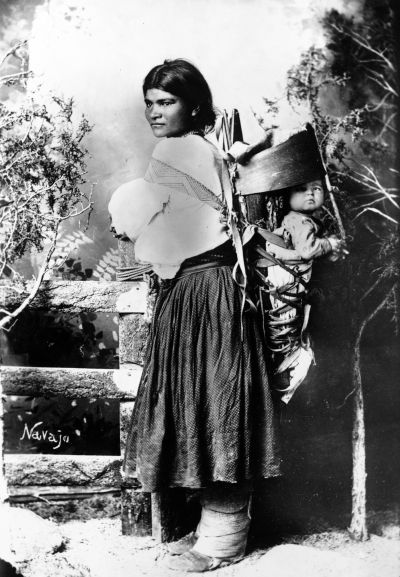
Few histories manage to be both an epic narrative and an intimate cultural portrait, but A History of the Navajo accomplishes exactly that. Hector George traces the Diné — "The People" — from their emergence through lower worlds to the 21st-century Navajo Nation, showing how a spiritual framework centered on Hózhó (harmony, balance, beauty) has sustained them through centuries of upheaval. The result is a history that refuses to treat Indigenous people as passive victims of colonial forces.
What the book is about
The book spans 25 chapters, moving chronologically from the Diné Bahaneʼ (creation stories) through the ancestral homeland of Dinétah, Spanish and Mexican colonial periods, the American invasion, the Long Walk to Bosque Redondo (Hwéeldi), the 1868 Treaty return, reservation expansion, the trading post economy, the devastating 1930s Livestock Reduction, World War II Code Talkers, uranium mining's toxic legacy, the Navajo-Hopi land dispute, water rights battles, and the formation of modern tribal government. George writes for a general audience but with scholarly rigor, drawing on oral tradition, archaeology, government records, and Diné scholarship. The narrative assumes no prior knowledge but rewards readers who want to understand how Diné cosmology — particularly the four sacred mountains and the principle of Hózhó — functions as a living historical framework rather than mere backdrop.
The Emergence as historical methodology
George opens with the Diné Bahaneʼ, the emergence narrative that describes the Holy People's journey through three lower worlds before arriving in the Glittering World (Niʼ Halgai). This isn't presented as mythology opposed to history; it's the Diné's own epistemological foundation. As George writes, "The entire epic of the Emergence... serves as a profound cosmological charter. It explains the origins of the world, the reasons for mortality, and the sources of both good and evil. More than that, it provides a blueprint for living." The four sacred mountains — Sisnaajiní, Tsoodził, Dookʼoʼoosłííd, Dibé Nitsaa — are established in this narrative, and they reappear throughout the book as the fixed coordinates of Diné identity. When the 1868 Treaty reservation is described as "centered within the four sacred mountains," the political act carries spiritual weight. This approach lets George treat the Long Walk not just as displacement but as a rupture in the Diné's relationship with their sacred geography.
Hózhó as an analytical lens
The concept of Hózhó — "a complex idea that encompasses beauty, harmony, balance, and health" — runs through the book as both cultural value and historical explanation. George shows how Diné leaders consistently invoked it during crisis points. At the 1868 treaty negotiations, Barboncito told General Sherman: "If we are taken back to our own country, we will call you our father and mother... We are all content for you to send us back." This wasn't mere diplomacy; it was a commitment to restore Hózhó by returning to the land where balance is possible. The principle appears again in the Navajo Nation courts' incorporation of "Diné bi beenahazʼáanii" (traditional legal concepts) emphasizing "restorative justice through mediation and restitution rather than punitive punishment." Even the 2005 Diné Natural Resources Protection Act banning uranium mining reflects Hózhó: protecting land and health over extraction revenue. George uses Hózhó to connect seemingly disparate events — the 1680 Pueblo Revolt alliance, the 1930s livestock reduction resistance, the 2020 COVID response — as a people repeatedly choosing balance over fragmentation.
The Long Walk and Hwéeldi as structural trauma
Chapters 7-10 form the book's emotional and historical core. George details Kit Carson's 1863-64 scorched-earth campaign with clinical precision: burning cornfields, slaughtering sheep, cutting down century-old peach orchards in Canyon de Chelly. The Long Walk itself — "a series of more than fifty separate, agonizing journeys" of 300-450 miles — killed hundreds through exposure, starvation, and summary execution of those who couldn't keep pace. At Bosque Redondo (Hwéeldi), "more than 2,000 Diné died... nearly a quarter of all who were imprisoned there" from alkaline water, crop failure, disease, and exposure. Yet George emphasizes Diné agency: leaders like Barboncito and Manuelito "never ceased in their demands to be allowed to go home," and the 1868 Treaty negotiation succeeded because "the Diné leaders spoke with one voice. Their people were unanimous. They would rather die in their own land than live prosperous lives elsewhere." The return journey becomes "a celebration, a spiritual rebirth" — the Long Walk Home. This reframing matters: the trauma is real, but the Diné response was collective political action grounded in their cosmology.
Resource extraction as a double-edged modernity
Chapters 17 and 22 trace how oil, gas, coal, and uranium transformed the Navajo Nation's economy while poisoning its land and people. The 1923 creation of the Navajo Tribal Council was "engineered... for the sole purpose of putting a single, legally defensible signature on an oil lease." The 1956 Aneth oil lease auction brought "over $30 million in lease-bonus payments in a single day," funding modern infrastructure. But uranium mining — driven by Cold War demand — left "over 500 abandoned uranium mines" and a health catastrophe: Navajo miners' lung cancer risk was "an astonishing 28 times higher" than non-miners, and the 1979 Church Rock spill released "94 million gallons of radioactive liquid... the largest accidental release of radioactive material in United States history." George doesn't simplify: the Navajo Transitional Energy Company (NTEC) now navigates "a complex future, balancing its ongoing coal operations with investments in clean energy." The 2025 approval of a "750-megawatt solar and battery storage project" signals a pivot, but the legacy of "a national sacrifice area" (MacDonald's phrase) persists in water contamination and the 30-40% of homes lacking running water.
Sovereignty built through institutional improvisation
Chapter 18 and 20 show the Navajo Nation government evolving from a BIA-created "business council" into "the largest and most sophisticated tribal government in the United States." The 1938 "Rules for the Navajo Tribal Council" became a de facto constitution. The 1959 establishment of the Navajo Nation Judicial Branch introduced courts that "began to formally recognize and incorporate traditional Diné legal principles" like Hózhó and Kʼé. The 1975 Indian Self-Determination Act ("Public Law 638") let the Nation "contract" federal programs, taking over law enforcement, schools, and health services. The 1989 Government Reform Act created a three-branch system with a popularly elected President. George notes the tension: "The relationship between the powerful executive office of the Chairman and the 88-member Tribal Council was often fraught." Yet the trajectory is clear — from a body convened only when the Indian agent called it, to a government that in 2024 negotiated a historic water rights settlement with Arizona directly, "nation-to-nation." The 2024 legislation making Navajo the Nation's official language caps this institutional maturation.
Who should read this
Readers seeking a comprehensive, Diné-centered history that integrates spiritual framework with political narrative will find this indispensable. It's especially valuable for those interested in how Indigenous governance adapts Western structures while maintaining cultural coherence, and for anyone studying environmental justice in Indian Country. The book's scope means it moves quickly through some periods — readers wanting deep analysis of, say, the Pueblo Revolt's specific impact on Diné clan formation or the intricacies of the 1974 Navajo-Hopi Land Settlement Act may need supplemental sources. But as a single-volume history that respects Diné epistemology while meeting academic standards, it occupies a rare and necessary space.
Read “A History of the Navajo” on MixCache.com →
Please log in or create an account to leave a comment.
No comments yet. Be the first to say something.