
The numbers told a story of annihilation. In 1930, Deere & Company booked $63 million in sales. Two years later, that figure had cratered to $8.7 million — a drop of eighty-six percent. The workforce at the Moline factories had been slashed from 4,800 to 1,270. The men who remained worked shortened weeks, their pay envelopes thinner every month. Across the Corn Belt, farmers were burning corn for fuel because it was cheaper than coal, and foreclosure sales dotted the countryside like grim festivals.
The Crash and the Collapse
The Great Depression did not arrive in the farm belt with the 1929 stock market crash; it had lived there for a decade. But the financial panic turned chronic sickness into acute crisis. Commodity prices collapsed. Credit vanished. Farmers who had borrowed heavily to buy the new Model D tractors — Deere's first mass-produced diesel, introduced in 1923 — found themselves unable to make payments on machines that now sat idle in barns.
For a manufacturer, the arithmetic was brutal. Every tractor in a farmer's shed represented an unpaid receivable on Deere's books. Standard business practice, then as now, demanded repossession: seize the asset, resell it, recover what cash you can. The company's bankers and auditors would have insisted on it. The ledger demanded it.
But Charles Deere Wiman, the great-grandson of the founder and the company's president, chose a different arithmetic. He directed the company's credit department to halt repossessions on American farms. Payment terms were extended. Partial payments were accepted. Some debts were simply carried, interest-free, until the harvest improved. The policy was never announced in a press release. It was communicated in quiet instructions to branch managers and dealers: do not take the machines back.
The Decision Not to Repossess
Wiman was thirty-eight years old in 1932, a colonel in the Army Reserve who would soon be called to active duty directing the War Production Board's farm machinery division. He had grown up in the company, literally — his childhood home stood on the bluffs overlooking the Moline factory. He knew the dealers by name. He knew the farmers by reputation. And he knew that a repossessed tractor was worth far less at auction than it was in a field, turning soil for a man who might someday pay.
The decision cost the company dearly. Cash flow, already strangled, slowed to a trickle. The balance sheet absorbed millions in non-performing receivables. At a time when competitors were liquidating inventory and writing off the farm sector, Deere doubled down on its customers' survival. The company also kept paying group insurance premiums for laid-off workers and allowed employees to draw on company savings accounts — small mercies that kept families in their homes.
There is no memoir in which Wiman explains the choice in grand terms. The company's internal memos from the period are blunt: "We are carrying these accounts." "No repossessions authorized." "Work with the customer." But the practical effect was electric. Farmers who had expected the green-and-yellow sheriff at the gate found instead a dealer asking, "What can you pay this month?" Word spread faster than any advertising campaign. In taverns and feed stores, at county fairs and Grange halls, the story traveled: Deere didn't take the farm.
The Human Cost and Company Response
The policy was not universal charity. Deere still pursued delinquent accounts in some international markets, and the company's financial records show aggressive collection efforts against commercial borrowers. But the American farmer — the core customer since 1837 — received a forbearance that bordered on recklessness.
Consider the alternative. International Harvester, Deere's chief rival, repossessed aggressively. So did Case, Minneapolis-Moline, and dozens of smaller implement makers. Their auction yards filled with nearly new tractors selling for pennies on the dollar. Deere's yards stayed relatively empty. The company's inventory of used equipment — a drag on profits in normal times — remained low because the machines never came back.
When the drought broke and commodity prices recovered in the mid-1930s, those same farmers returned to their dealers with cash in hand. They bought new Model As and Bs, the row-crop tractors that would define the next generation of mechanized farming. They bought combines, planters, and the new hydraulic hitches Deere engineers had kept developing even during the worst years. The loyalty was not abstract; it appeared in the order books.
The Long Shadow of Loyalty
Eighty years later, the story remains the foundation of the John Deere brand. Sales managers still tell it to new dealers. Farmers repeat it to their sons when the first green tractor pulls into the yard. It is the rare corporate legend that happens to be true in every particular: the sales figures, the workforce numbers, the forbearance policy, the survival.
Wiman never claimed credit. He returned from the war to lead the company through the post-war boom, the introduction of the Model R diesel, the first self-propelled combine, the push into industrial equipment. He retired in 1955, having presided over the transformation of a regional implement maker into a global powerhouse. But ask any Deere historian what defined the company's character, and they point to 1932 — the year the ledger said seize, and the president said no.
The tractors stayed in the fields. The farmers stayed on the land. And the company, against every rule of finance, survived to build the next one.
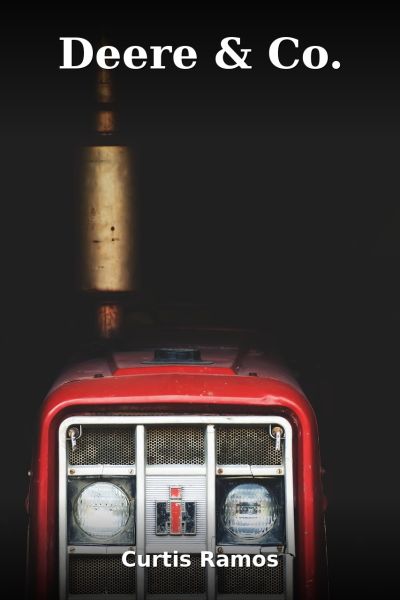
This is one episode in a much longer story. For the full account of the history of Deere & Company, read “Deere & Co.” by Curtis Ramos on MixCache.com.
Please log in or create an account to leave a comment.
No comments yet. Be the first to say something.