
The aircraft that lifted off from Banjul International Airport on the afternoon of January 21, 2017, was a chartered Gulfstream, its livery unmarked. On board sat Yahya Abdul-Aziz Jemus Junkung Jammeh, a 51-year-old former army lieutenant who had ruled The Gambia for 22 years. Behind him lay a nation of two million people, a slender ribbon of land wrapped around the river that gave the country its name, and ahead of him an uncertain exile in Equatorial Guinea. The flight lasted barely an hour. By the time the wheels touched down in Malabo, the only president most Gambian adults had ever known was no longer a head of state.
The Election That Wasn't Supposed to Happen
Six weeks earlier, on December 1, 2016, Gambians had gone to the polls in an election Jammeh had confidently predicted he would win. He had once boasted he would rule for a billion years. His Alliance for Patriotic Reorientation and Construction party controlled the machinery of state: the electoral commission, the security services, the state broadcaster. Opposition rallies had been banned or broken up. Independent newspapers had been shuttered or driven underground. The playing field, by any measure, was steeply tilted.
Yet when the Independent Electoral Commission chairman, Alieu Momar Njai, appeared on national television the following afternoon, the numbers he read out told a different story. Adama Barrow, a 51-year-old real estate developer who had never held public office, had won 222,708 votes to Jammeh's 208,487. A third candidate, Mama Kandeh, took 89,768. The turnout was 59 percent. In the commission's headquarters, staff members wept. In the streets of Serekunda and Brikama, young people poured out of compounds, honking horns, waving flags, disbelief hardening into joy.
Jammeh's first reaction stunned even his closest aides. He called Barrow to concede. "You have won," he told the president-elect, according to witnesses. "I will not contest the result." State television broadcast the concession. The regional bloc ECOWAS, which had deployed observers, issued a statement commending the peaceful transfer. For 48 hours, The Gambia breathed freely.
The Week the President Changed His Mind
Then, on December 9, Jammeh appeared on state television again. His demeanor had shifted. He declared the election "fraudulent," cited "serious and unacceptable abnormalities," and announced he would petition the Supreme Court to annul the result. He demanded fresh elections. The court, however, could not sit: Jammeh had sacked or driven into exile so many judges that it lacked a quorum. The petition went nowhere.
What followed was a week of escalating brinkmanship. Jammeh declared a state of emergency on January 17, 2017, four days before his mandate expired. Security forces occupied the electoral commission headquarters. The inspector general of police pledged loyalty to the outgoing president. Barrow, meanwhile, remained in Senegal, where he had been advised to stay for his safety. The African Union, the United Nations, and ECOWAS all called on Jammeh to step down. He responded by expelling the AU's special representative.
In Banjul, shops shuttered. Families stockpiled rice and cooking oil. Thousands fled across the border into Senegal's Casamance region, clogging the ferry at Barra and the border post at Karang. The economy, already fragile, shuddered. Remittance flows dipped. The tourism season, normally peaking in January, collapsed as European tour operators cancelled flights.
The Embassy Inauguration and the Warships
January 19 was the constitutional deadline. With Jammeh still ensconced in the presidential palace at State House, surrounded by the paramilitary "Junglers" unit loyal to him personally, ECOWAS made its move. A standby force — Nigerian, Senegalese, Ghanaian troops, backed by a Nigerian naval vessel offshore — assembled at the border. The message was unambiguous: if Jammeh did not yield by midnight, they would enter.
That afternoon, in a ceremony stripped of pomp, Adama Barrow raised his right hand in the conference room of the Gambian embassy in Dakar. The Senegalese foreign minister, the UN special representative, and a handful of diplomats looked on. Barrow swore to preserve, protect, and defend the constitution. No crowds, no military parade, no presidential sash. But the oath carried weight: the international community now recognised one president, and he was not the man in State House.
Jammeh's isolation deepened. His own vice president, Isatou Njie-Saidy, had resigned weeks earlier. The chief of defence staff, General Ousman Badjie, publicly declared the army would not fire on ECOWAS troops. The Junglers, numbering perhaps a few hundred, were no match for a regional intervention force. Even Jammeh's longtime allies in the region — presidents who had once feted him at summits — went silent.
The Mediators and the Departure
Two men arrived in Banjul on January 20 with a final proposal: Alpha Condé of Guinea and Mohamed Ould Abdel Aziz of Mauritania. Both were veterans of their own coups and transitions. They met Jammeh at State House for hours. The terms, later confirmed by multiple officials, were straightforward: Jammeh would leave immediately. He could take his personal effects. His security would be guaranteed. He would not face prosecution in The Gambia — at least not immediately. The TRRC, a truth commission already promised by Barrow, would investigate later.
At 9:40 p.m., state television aired a brief statement: Jammeh had "relinquished the mantle of leadership." No concession, no congratulations to Barrow. Just that phrase, read by an announcer. By midnight, a motorcade swept through the empty streets of Banjul toward the airport. The Gulfstream waited on the tarmac, engines running. No honour guard. No salute. The stairs folded up. The door sealed.
When dawn broke on January 22, Barrow crossed the border at Amdallai. Crowds lined the highway, children perched on fathers' shoulders, women ululating. At State House, the new president found the palace largely intact — no looting, no vandalism, a testament to the discipline of the ECOWAS force that had secured it hours earlier. The Junglers had melted away, some across the border into Casamance, others into the bush.
The crisis had lasted 22 days. No shots were fired. No lives lost to combat. The Gambia's democratic restoration, midwifed by regional resolve and a dictator's miscalculation, stood as a rare precedent in a continent where electoral defeats often trigger violence or negotiated power-sharing that leaves the old guard in place. Jammeh's plane, disappearing into the West African sky, carried with it the illusion that the ballot box could be outwaited. The country he left behind — smaller, poorer, but sovereign — began the slow work of remembering how to govern itself.
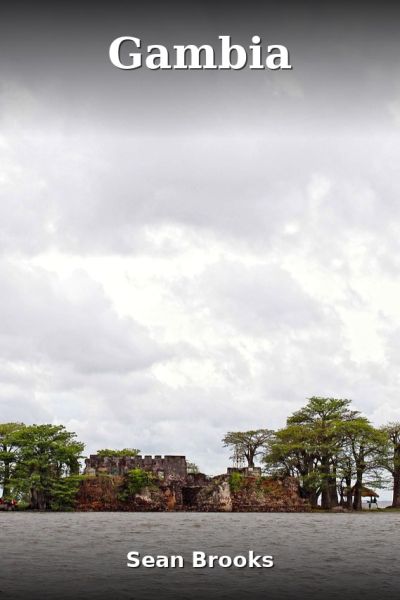
This is one episode in a much longer story. For the full account of the 2016-2017 Gambian political crisis, read “Gambia” by Sean Brooks on MixCache.com.
Please log in or create an account to leave a comment.
No comments yet. Be the first to say something.