
In the limestone bedrock beneath Puglia's ancient olive groves, a hidden world once hummed with the rhythm of the harvest. From November through May, entire crews of workers descended into the *trappeti ipogei* — underground olive mills carved into the rock — and did not emerge until the pressing season ended. They slept, ate, and labored in the cool, dim chambers where the region's "green gold" was extracted, a seasonal exile that shaped both the oil and the lives of those who made it.
The Subterranean Workshops
The *trappeti ipogei* dotted the landscape between Ostuni, Fasano, Monopoli, and Carovigno, areas still renowned for their concentration of monumental olive trees, some over a thousand years old. These mills were not merely below ground for convenience; the earth provided natural temperature control essential for quality oil, and the concealed entrances offered security against bandits and invaders who might seize the valuable product. Olive oil in the 17th century was a commodity traded from the port of Gallipoli to major European cities and even Russia, where Puglian *lampante* oil fueled lamps in palaces and streets.
Each *trappeto* was a self-contained operation. A massive stone basin held the olives, while a vertical millstone, turned by a blindfolded mule or donkey walking in circles, crushed them into paste. The paste was then spread onto fiber mats — *fiscoli* — stacked under a wooden press beam weighted with stones. Workers operated in shifts around the clock, the only light coming from oil lamps that burned the very product they were making.
Life in the Dark
The workforce lived in the mill for the entire season. They slept on straw pallets in side chambers, ate meals cooked over open fires, and rarely saw daylight. The air was thick with the scent of fermenting olive paste, woodsmoke, and the sharp, green perfume of fresh oil. A *capomastro* — master miller — directed the work, his knowledge of temperature, timing, and pressure passed down through generations. He decided when the paste had been *gramolatura* — churned — long enough for the oil droplets to coalesce, and when the press should be lowered.
The work was grueling. Olives had to be processed within twelve hours of harvest to prevent acidity and mold. Teams hauled sacks from the groves on muleback, emptied them into the basin, and fed the beasts that turned the millstone. The *fiscoli* mats, heavy with wet paste, were carried to the press and stacked by hand. After each pressing, the mats were scraped clean, a task assigned to the youngest workers. The extracted liquid — a mix of oil and vegetation water — settled in stone decantation vats, where the oil rose to the surface and was skimmed off with a copper ladle.
A Seasonal Exile
For the men who signed on each autumn, the *trappeto* was both livelihood and confinement. Many were landless laborers or smallholders whose own olives would be pressed alongside those of the local *masseria* owners. They received wages partly in cash, partly in oil — a liter per day was a common measure — which sustained their families through winter. The mill owner provided basic rations: bread, beans, salted fish, and wine. Disputes over the oil's quality or the division of the yield were settled by the *capomastro*, whose word was final.
When the last olives were pressed in late spring, the mills fell silent. The workers emerged blinking into the sunlight, carrying their year's supply of oil in tin cans or ceramic jars. The mules were led out, often weakened from months in the dark. The stone basins were scrubbed, the press beams raised, and the entrances sealed until the next November.
Traces That Remain
Several *trappeti ipogei* survive today, some restored as museums. In the countryside near Ostuni, visitors can descend the worn stone steps into a vaulted chamber where the millstone still sits in its basin, the press beam suspended above empty *fiscoli* racks. Soot blackens the ceiling from centuries of lamps. Niches in the walls once held the workers' few possessions: a change of clothes, a rosary, a knife. In one mill, a carved date — 1642 — marks the wall beside a ledge where the *capomastro* kept his accounts.
The practice faded only in the 20th century, when steel crushers, hydraulic presses, and electric lights made surface mills more efficient. But the oil from those underground presses built Puglia's reputation, and the memory of the men who lived half the year in darkness lingers in the groves above. When the harvest begins each autumn, the olives still fall into nets spread beneath the same ancient trees, and the first pressing still carries the taste of a labor that once asked its makers to vanish beneath the earth.
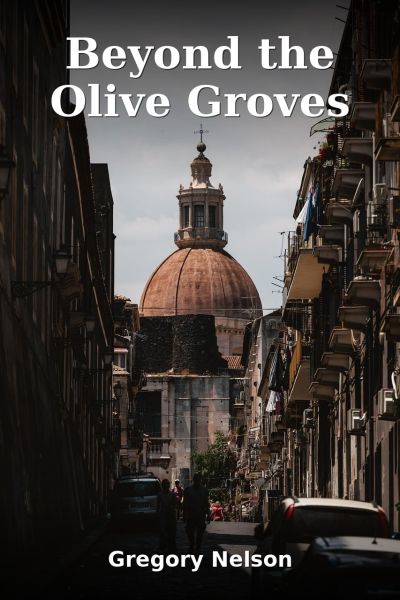
This is one episode in a much longer story. For the full account of the underground olive mills of Puglia, read “Beyond the Olive Groves” by Gregory Nelson on MixCache.com.
Please log in or create an account to leave a comment.
No comments yet. Be the first to say something.