
The warehouse smelled of dust and plastic. Kenneth Nnebue stood amid towering cartons of blank videocassettes, a surplus that had become a liability. He was an electronics trader on the Lagos mainland, a man who moved in the rhythms of the city's informal economy — buy, move, sell, repeat. But these tapes wouldn't move. The market had shifted, or perhaps he had simply overordered. Either way, capital was tied up in magnetic ribbon that no one wanted.
Most traders would have discounted the stock, written off the loss, and moved to the next hustle. Nnebue did something stranger. He decided to put something on the tapes.
The Gamble
Nnebue was not a filmmaker. He had no script, no crew, no actors on contract. What he had was a distribution network — the same channels that moved his electronics through Lagos's sprawling markets — and an intuition that the city's appetite for stories on screen was being starved. Cinemas had faded. The celluloid era of the 1970s oil boom had left behind abandoned theaters and a generation that remembered going to the pictures as a childhood treat. Television offered little beyond state programming. Video clubs — dark rooms with a VCR and a few benches — were springing up in neighborhoods, hungry for content.
He approached Okechukwu Ogunjiofor, a director working in television, and proposed a deal: make a film, shoot it straight to video, keep the budget microscopic. The script came from a writer named Kenneth Okonkwo, a story of betrayal, money rituals, and the corrosive hunger for wealth — themes that pulsed through Lagos's daily conversation. The title: Living in Bondage.
Production was chaos by any professional standard. Shooting took weeks, not months. Lighting was improvised. Sound was captured on the camera microphone. The cast mixed seasoned theater actors with newcomers. But the story held: a man sacrifices his wife for riches, only to be haunted by her ghost. It was morality play, thriller, and social commentary rolled into one, spoken in the cadences of Igbo and English that Lagosians actually used.
The Explosion
When the first copies hit the markets in 1992, Nnebue used his trader's instincts. He didn't wait for reviews. He flooded Idumota, Alaba, and the video clubs of Surulere and Yaba. The price was low — affordable for a rental, tempting for a purchase. Word moved faster than any marketing budget could buy. Market women told customers. Taxi drivers told passengers. University students copied tapes for friends.
Within months, Living in Bondage had sold over half a million copies. In a country where a theatrical release might hope for a few thousand tickets, the number was staggering. Nnebue's warehouse emptied. The tapes that had been dead stock became the seed of an industry.
Other traders watched. They had warehouses too, and they knew the distribution routes. Within two years, hundreds of titles flooded the market. Directors, writers, and actors who had been shut out of the moribund celluloid system found a new entry point. You didn't need a studio gatekeeper. You needed a camera, a story, and a trader willing to press the tapes.
The Model
The economics were brutal and brilliant. A film could be shot in weeks for the equivalent of a few thousand dollars. The trader-fronted costs, the filmmaker delivered the master, and the market decided the rest. Piracy was rampant — within weeks of a hit, unauthorized copies undercut the original — but the volume was so high that even leaked versions served as advertising. The goal wasn't a long theatrical run; it was saturation. Get the story into every video club, every home, every bus journey across the Third Mainland Bridge.
Lagos's geography became the distribution map. The bridges that linked island to mainland carried tapes in the boots of cars and the bags of conductors. The same danfo buses that ferried commuters from Ikeja to CMS became mobile cinemas, screens flickering above the heads of passengers stuck in gridlock. A film released on Monday could be watched in Kano by Friday.
The speed forced a new discipline. Filmmakers learned to write for the market, to shoot fast, to edit faster. Genres crystallized: the money-ritual thriller, the campus romance, the village intrigue, the pastor-versus-witch drama. They were not art-house fare. They were Lagos life reflected back at itself — the pressure to succeed, the fear of spiritual attack, the tension between tradition and the new wealth.
The Name and the World
By the early 2000s, a New York Times journalist wandering the stalls of Alaba International Market coined a label: Nollywood. The name stuck, a wry echo of Hollywood and Bollywood that Lagosians adopted with typical swagger. The industry was already the second-largest in the world by volume, churning out thousands of titles a year.
The tapes gave way to VCDs, then DVDs, then streaming. The traders who once hawked blank cassettes became studio heads. Nnebue himself built a production company. The video clubs faded, replaced by cinemas returning in sleek malls — Silverbird, Filmhouse, Genesis — where Nollywood premieres now draw red carpets. Netflix and Amazon Prime bid for licensing rights. The 2016 romantic comedy The Wedding Party grossed over 450 million naira at the domestic box office, a figure that would have been unimaginable in the era of the blank tape.
What It Revealed
The story is told in Lagos as a parable of the city's logic: scarcity breeds improvisation, improvisation becomes system, system becomes empire. Nnebue didn't set out to change African cinema. He set out to clear a warehouse. But he understood something fundamental about Lagos — that its millions, compressed into a fragile grid of islands and mainland, connected by bridges and battered buses, constituted a market waiting for a mirror.
Half a million cassettes. That was the spark. Today, the industry employs over a million people directly and indirectly, contributes billions to GDP, and shapes how Africa sees itself on screen. It began with a trader who looked at dead stock and saw not loss, but canvas. The tapes are gone, the warehouses repurposed, but the rhythm remains: see the gap, fill the gap, move fast, own the street.
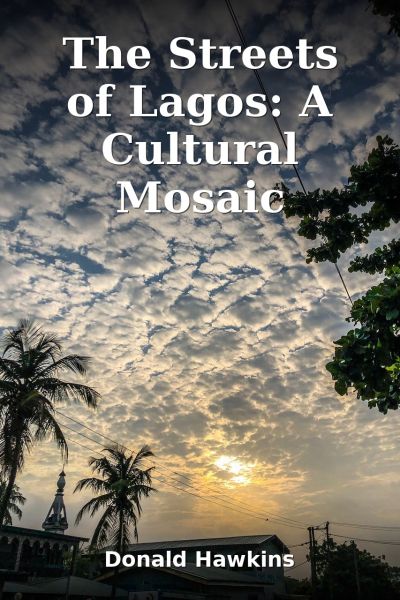
This is one episode in a much longer story. For the full account of the rise of Nollywood, read “The Streets of Lagos: A Cultural Mosaic” by Donald Hawkins on MixCache.com.
Please log in or create an account to leave a comment.
No comments yet. Be the first to say something.