
The streets of Istanbul fell into a hush broken only by the rhythm of marching boots and the clatter of copper trays. It was the 15th day of Ramadan, sometime in the 17th century, and the Janissaries — the sultan's elite infantry — were parading through the capital not with weapons drawn, but bearing gifts of baklava. Each tray held enough of the nut-stuffed, syrup-soaked pastry for ten men, a gift from the sultan himself. The procession, known as the Baklava Alayı, was part pageantry, part political theater, and entirely delicious.
The pastry that built an empire's reputation
Baklava's lineage stretches back to Assyrian cooks layering dough with nuts and honey in the 8th century BCE, but it was the Ottoman court that elevated it to high art. By the 15th century, the Topkapı Palace kitchens employed hundreds of chefs dedicated to perfecting the pastry. The earliest written record appears in palace accounts from 1473, noting baklava served at a special feast. A master chef's skill was measured by the thinness of his phyllo — legend held that a true master could roll dough so fine you could read a book through it. Some imperial baklava boasted 40 to 100 layers, each brushed with butter, each contributing to a flakiness that shattered at the touch.
The filling varied by region and season: pistachios from Gaziantep, walnuts from the interior, hazelnuts from the Black Sea coast. The syrup, poured cold over the hot pastry to create a signature sizzle, was scented with lemon juice, orange blossom water, or rosewater. This was not mere confectionery; it was culinary diplomacy, a edible emblem of the empire's reach and refinement.
The ceremony that fed the faithful
The Baklava Alayı began as a Ramadan tradition under Sultan Murad IV or his successors, institutionalized by the 1600s. On the 15th day of the holy month — the "middle" of fasting — the sultan ordered trays of baklava prepared for the Janissary corps. The soldiers gathered in the palace courtyards, where cauldrons of the pastry waited. A ceremonial officer would call each unit forward. Ten men received one tray, lifted it onto their shoulders, and marched out through the palace gates into the city.
The route wound through Istanbul's narrow lanes, past mosques and markets, the scent of butter and nuts preceding the column. Civilians lined the streets to watch. For the Janissaries, it was a rare public honor; for the sultan, a reminder that his power rested on their loyalty, sweetened by generosity. The procession ended at the barracks, where the baklava was shared among the ranks. No records survive of what happened to the empty trays, but the ritual itself became so embedded in Ottoman culture that it persisted for over a century.
A craft measured in layers
Behind the pageantry lay an exacting craft. Phyllo dough — from the Greek for "leaf" — required flour, water, salt, and immense patience. Women in households across the empire stretched small balls of dough across entire tables until they turned translucent. In palace kitchens, specialized artisans produced hundreds of sheets daily. The nuts were chopped by hand, never ground, to preserve texture. Pistachios from Gaziantep, prized for their vivid green and delicate flavor, became the gold standard; so distinctive was the regional version that Gaziantep baklava later earned Protected Geographical Indication from the European Union.
Shapes carried meaning. The classic diamond cut maximized syrup absorption. Fıstıklı Sarma — pistachio rolls — resembled cylindrical scrolls. Bülbül Yuvası, "nightingale's nest," formed a cup to cradle extra nuts. Each shape altered the ratio of crunch to syrup, a geometry of pleasure refined over generations. The syrup itself had to hit the pastry at the precise moment: hot baklava, cold syrup, the thermal shock sealing in moisture.
When the marching stopped
The Baklava Alayı ended in 1826, when Sultan Mahmud II abolished the Janissary corps in a violent restructuring known as the Auspicious Incident. The soldiers who once carried trays through Istanbul were disbanded, their barracks burned. But the pastry outlived the regiment. Baklava migrated from palace to pastry shop, from Ramadan to weddings, circumcisions, and the two Eids. Families still gather to make it, assigning tasks — one rolls dough, another chops nuts, a third tends the syrup — turning labor into communion.
In modern Turkey, the sight of a baklava tray still carries ceremonial weight. A host offering it signals generosity; a guest refusing a second piece risks offense. The pastry appears at engagement parties, where the groom's family sends elaborately arranged trays to the bride's home, and at funerals, where its sweetness softens grief. Tourists in Istanbul's historic peninsula can still buy baklava from shops whose recipes predate the republic, though few know their treat once marched behind a sultan's decree.
The procession is gone, but its logic endures: food as fidelity, sweetness as statecraft, a pastry so potent it once moved an army to march for dessert.
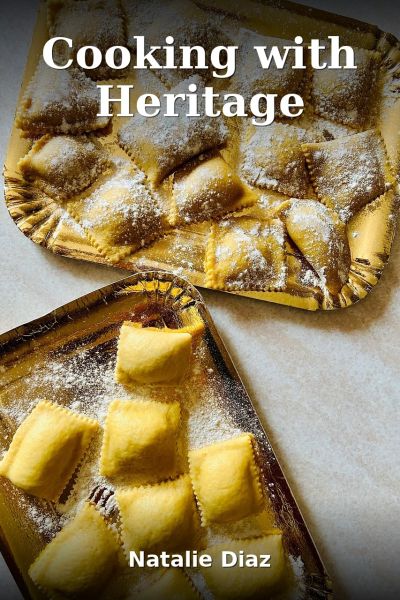
This is one episode in a much longer story. For the full account of Turkish baklava and Ottoman culinary traditions, read “Cooking with Heritage” by Natalie Diaz on MixCache.com.
Please log in or create an account to leave a comment.
No comments yet. Be the first to say something.