
The canoes slipped through the turquoise water toward the Spanish ships anchored off Cozumel in 1519. Hernán Cortés had just landed, and his men were preparing to march toward the Aztec Empire. From the shore, a figure emerged — bearded, dark-skinned, his face marked with blue tattoos, his ears and nose pierced with jade ornaments. He wore a cotton loincloth and carried a paddle. The Spaniards stared. This was no Maya lord. This was one of their own.
The Wreck and the Parting
Eight years earlier, in 1511, a caravel commanded by Juan de Valdivia had smashed onto the Scorpion Reefs off Jamaica during a hurricane. Twenty-odd survivors clambered into a small boat without sails, oars, or provisions. Thirteen days of thirst and starvation carried them westward to the Yucatán coast, near present-day Quintana Roo. The Maya who met them were not the docile islanders the Spanish had encountered in the Caribbean. They were heirs to a centuries-old civilization, warriors in padded cotton armor, rulers of stone cities.
Valdivia and several others were seized immediately and sacrificed, their bodies eaten in ritual. The rest were enslaved. Among them were two men who would take radically different paths: Jerónimo de Aguilar, a clergyman, and Gonzalo Guerrero, a sailor.
Aguilar clung to his identity. He prayed, resisted assimilation, and learned the Yucatec Maya dialect while waiting for deliverance. Guerrero, pragmatic and adaptable, chose survival through transformation. He learned the language, adopted the dress, and distinguished himself in war. The batab (chief) of Chactemal, Nachan Can, made him a nacom — a military leader. Guerrero tattooed his face in the Maya style, pierced his ears and nose, and married the chief's daughter, Zazil Há. They had children, likely the first mestizos born of a European father who entered indigenous society not as a conqueror but as a kin.
The Refusal
By 1519, Cortés had heard rumors of bearded men living among the Maya. He sent word to Cozumel, and Aguilar appeared, weeping with joy, clutching his breviary. He became Cortés's indispensable interpreter, the first link in the linguistic chain — Nahuatl to Maya to Spanish — that would make the conquest possible.
But Guerrero did not come. When messengers reached him at Chactemal, he sent back a reply that stunned the Spaniards. He would not return. His face was tattooed, his ears pierced, his life bound to a Maya wife and children. "I am a cacique and a captain," he reportedly said, "and my face is marked. How would the Spaniards receive me?" He had become what the conquerors sought to destroy: a European who chose the world they came to dismantle.
Between Two Worlds
Guerrero's refusal was more than personal. It exposed the fragility of the categories the Spanish imposed — Christian vs. heathen, civilized vs. savage, European vs. Indian. He had crossed the line not under duress but by choice, and he had thrived. The Maya accepted him as a leader; the Spanish could only stare.
His children, born of a Spanish father and a Maya noblewoman, embodied a future the conquerors never imagined: a fusion not of domination but of kinship. Guerrero himself vanishes from the record after 1519. Some say he died fighting the Spanish in later battles; others that he lived out his days in Chactemal. What remains is the fact of his choice — a sailor from Palos who became a Maya captain, and never looked back.
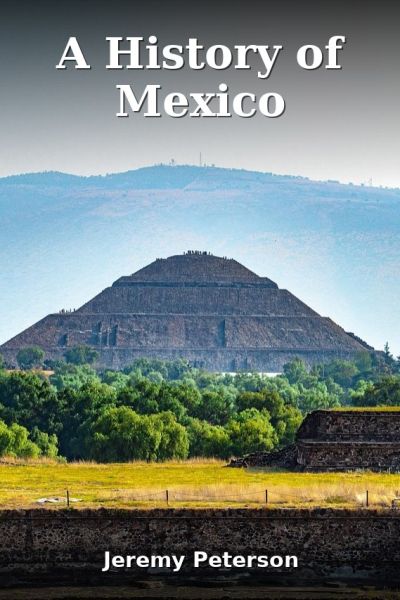
This is one episode in a much longer story. For the full account of the Spanish conquest of Mexico, read “A History of Mexico” by Jeremy Peterson on MixCache.com.
Please log in or create an account to leave a comment.
No comments yet. Be the first to say something.