
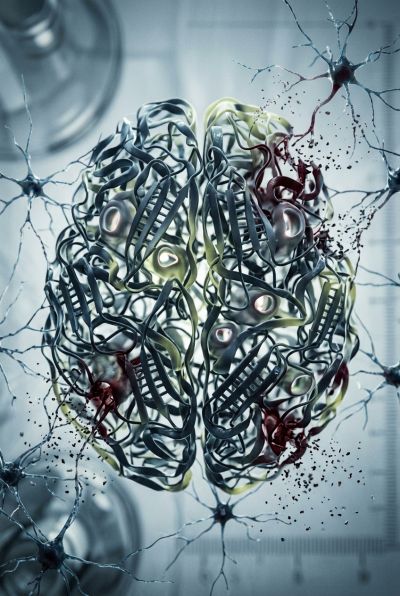
In the theater of biology, prions are the actors who refused to follow the script. They possess no DNA, no RNA, no genetic instruction manual—yet they replicate, evolve into distinct strains, and jump species barriers with devastating efficiency. Adrian Voss's Prions and Prion Diseases captures this biochemical rebellion in a single, authoritative volume that moves from the windswept fields of 18th-century sheep farms to the cryo-EM structures resolving prion folds at near-atomic resolution.
What the book is about
The book spans 25 chapters organized as a logical progression: first the fundamental science (Chapters 1–5), then the full spectrum of human and animal diseases (Chapters 6–11), followed by clinical diagnosis and biomarkers (Chapters 12–15), transmission and public health (Chapters 16–18), therapeutic development (Chapters 19–22), and finally the ethical and social landscape (Chapters 23–25). Voss writes for clinicians, researchers, and students who need a current, thorough reference—he assumes familiarity with molecular biology but defines every prion-specific concept. The text synthesizes decades of literature into a coherent narrative, consistently linking molecular mechanism to clinical reality and policy consequence.
The protein-only hypothesis: from heresy to Nobel Prize
Chapter 1 recounts how the scrapie agent's resistance to UV radiation at 260 nm—the wavelength that damages nucleic acids—first suggested a pathogen without a genome. Tikvah Alper's radiation experiments in the 1960s and Stanley Prusiner's decade-long purification effort culminated in the 1982 Science paper coining "prion" and the protein-only hypothesis. The book details the knockout-mouse proof: mice lacking PRNP were "completely resistant to scrapie and did not propagate any prions in their brains," settling the debate. Voss also covers the final vindication—synthetic prions generated in vitro from recombinant protein that caused transmissible disease, fulfilling Koch's postulates for a protein agent.
Strains without genes: conformation as information
One of the book's most striking sections explains how a single polypeptide encodes heritable strain diversity. Chapter 4 shows that distinct prion strains—like the "drowsy" and "hyper" scrapie isolates—produce reproducible incubation periods, lesion profiles, and PrPSc glycoform ratios. Cryo-EM now reveals these strains as different three-dimensional folds: "the heritable information of a prion strain is, quite literally, written in the geometry of its protein fold." The species barrier emerges from amino-acid mismatches between donor PrPSc and host PrPC, and adaptation is a process of conformational selection. The BSE-to-vCJD jump illustrates the stakes: the BSE strain maintained its signature glycoform profile across cows, cats, and humans.
A diagnostic revolution: amplifying the shape
Chapters 14 and 15 trace the shift from surrogate markers (14-3-3, tau) to direct detection of PrPSc. The centerpiece is RT-QuIC, which Voss calls "a paradigm shift" because it "harnesses the prion's own sinister replication strategy." The assay mixes CSF with recombinant PrP and Thioflavin T, then shakes the plate cyclically; fluorescence reports real-time amyloid formation. Sensitivity exceeds 90% and specificity approaches 100% for sCJD. Second-generation RT-QuIC now works on nasal brushings (97% sensitivity) and skin biopsies, while the same principle has been adapted for α-synuclein and tau, turning prion amplification into a platform for all protein-misfolding disorders.
Therapeutics: from repurposing failures to gene silencing
Chapters 19 and 20 deliver a sober lesson in drug development. Quinacrine and pentosan polysulfate shone in cell culture but failed in humans—quinacrine even selected resistant strains. The breakthrough is antisense oligonucleotides (ASOs) that degrade PRNP mRNA. Preclinical data are "nothing short of spectacular": a single CSF injection of ASOs in symptomatic mice "significantly slow the disease and extend survival by as much as 55%." The first human PrP-lowering ASO, ION717, entered a Phase 1/2a trial in late 2023. Immunotherapy faces the blood-brain barrier and epitope-dependent neurotoxicity; nanobodies and PrPSc-specific antibodies are the next frontier.
Prion-like spread in Alzheimer's and Parkinson's
Chapter 11 extends the prion principle to common dementias. Aβ and tau in Alzheimer's, α-synuclein in Parkinson's, and TDP-43 in ALS all propagate via seeded nucleation. The evidence includes transmission of Aβ pathology to humans via contaminated growth hormone, and host-to-graft Lewy body spread in fetal-neuron transplant patients. Distinct tau and α-synuclein strains—resolved by cryo-EM—explain different clinical phenotypes. Voss emphasizes the crucial distinction: these are "prionoids," not infectious between individuals under normal circumstances, but the mechanistic overlap offers a unified therapeutic target.
Who should read this
Neurologists, neuropathologists, and infectious-disease specialists will find a current, citation-dense reference that connects molecular structure to diagnostic criteria and public-health policy. Graduate students in neurodegeneration get a single volume that replaces years of literature searches. Readers without a strong biology background may struggle with the density of structural detail and assay methodology; the book does not simplify for a lay audience. For its intended readership, however, it is an indispensable map of a field where the pathogen is a shape, the genome is irrelevant, and the stakes range from a single misfolded molecule to a global food crisis.
Read “Prions and Prion Diseases” on MixCache.com →
Please log in or create an account to leave a comment.
No comments yet. Be the first to say something.