
On the horizon east-northeast of Malta, a forest of sails appeared on 18 May 1565. Hundreds of Ottoman vessels carried an estimated thirty to forty thousand soldiers, artillery, and supplies toward the island’s harbours. The invading force aimed to seize Malta as a stepping stone for further Ottoman expansion into Europe, and the defending force — a mixture of about six hundred Knights of St. John, nine hundred Spanish troops, eight hundred Italian soldiers, two hundred unaffiliated fighters from Sicily and Greece, and a Maltese militia — numbered barely six thousand, including servants and galley slaves.
The Ottoman Threat Looms
The Ottoman commanders, Mustafa Pasha leading the land forces and Admiral Piyale Pasha in charge of the fleet, initially disagreed on where to strike first. Mustafa favoured an attack on the ancient capital Mdina, followed by a land assault on the coastal forts. Piyale, however, convinced him to target Fort Saint Elmo, believing its capture would allow the Ottoman fleet to anchor safely in Marsamxett Harbour. Grand Master Jean Parisot de Valette had anticipated this move and had already concentrated heavy artillery and a significant garrison within the star‑shaped fort.
Fort Saint Elmo, completed in 1552, guarded the entrances to both the Grand Harbour and Marsamxett Harbour. Its initial garrison consisted of roughly one hundred fifty Knights, six hundred soldiers — predominantly Spanish — and sixty armed galley slaves. Defenders could be reinforced by boat from the main Christian strongholds of Birgu (Vittoriosa) and Senglea across the Grand Harbour.
The Siege of Fort Saint Elmo
The Ottoman bombardment began on 27 May. For nearly a month the fort endured relentless artillery fire from Turkish cannons positioned on Mount Sciberras, which overlooked the fort, and from batteries on the north arm of Marsamxett Harbour. The fighting was fierce. On 3 June, Janissaries managed to breach part of the fort’s defences. By 8 June the defenders, low on men and ammunition, sent desperate messages to Grand Master de Valette begging for evacuation. He famously refused, urging them to hold out to buy time for promised reinforcements from Sicily.
Throughout June the Ottomans launched repeated assaults on the damaged walls. During a particularly ferocious all‑out attack on 16 June, every available defender — Knights, slaves, and Maltese soldiers — fought with incredible bravery and managed to repel the Turks. Around this time, Dragut Reis, a renowned Barbary corsair and one of the Ottomans’ most competent naval commanders, was mortally wounded by a stray cannonball while inspecting trenches near the fort — a significant blow to the Ottoman leadership.
Despite the heroic resistance, Fort Saint Elmo finally fell on 23 June after holding out for twenty‑eight days. The defenders, numbering over fifteen hundred men, were all killed, with the exception of a handful of Knights captured by corsairs and nine Maltese defenders who escaped by swimming across to Fort Saint Angelo. The Ottomans secured the fort, allowing Piyale Pasha to move his fleet into the sheltered Marsamxett Harbour, but the victory came at a staggering cost: Turkish losses were estimated at between six and eight thousand men, including half of their elite Janissaries. In a grim exchange, Mustafa Pasha had the bodies of fallen Knights decapitated and their headless corpses floated across the bay on mock crucifixes. De Valette ordered the beheading of all Turkish prisoners and had their heads fired back into the Ottoman camp from his cannons.
The Battle for Birgu and Senglea
With Fort Saint Elmo taken, the Ottomans turned their full force on the main Christian strongholds: Birgu, where the Knights had their headquarters, and Senglea, fortified by Fort Saint Michael. Both areas were subjected to relentless bombardment from about sixty‑five siege cannons. One historical account suggests that approximately one hundred thirty thousand cannonballs were fired during the siege. The Ottomans dug trenches on Corradino Hill across French Creek from Senglea and positioned batteries on the higher grounds of Bormla. They also assembled hundreds of barges within the inner part of the Grand Harbour to launch amphibious assaults on Senglea.
The defenders of Birgu and Senglea, though vastly outnumbered, continued their determined resistance. Grand Master de Valette, whose leadership and unwavering resolve were instrumental in galvanising the defenders, famously refused a suggestion from his council to abandon Birgu and Senglea and withdraw to the more secure Fort Saint Angelo. He knew surrendering those key positions would be catastrophic. The fighting was brutal and hand‑to‑hand, with both sides suffering heavy casualties under the blistering summer sun.
On 7 August, after weeks of relentless pounding, the Ottomans launched another massive assault against Fort Saint Michael and Birgu. Parts of the city walls were breached, and for a terrifying moment it seemed the siege was lost. At this critical juncture, a small cavalry detachment led by Captain Vincenzo Anastagi, performing a routine patrol from Mdina, stumbled upon the unguarded Ottoman field camp. They launched a daring raid, burning tents and slaughtering the sick and wounded. The chaos caused by this unexpected attack led Mustafa Pasha to believe that Christian reinforcements had arrived, and he inexplicably ordered a retreat, squandering a crucial opportunity.
The long‑awaited Sicilian relief force, known as the Grande Soccorso, finally arrived on 7 September. Led by Don García Álvarez de Toledo, the Viceroy of Sicily, this force landed on Malta, boosting the morale of the exhausted defenders. Although the exact numbers of this relief force are debated, its arrival proved decisive. The news of reinforcements, combined with the heavy Ottoman losses and the approach of winter storms, convinced the Ottomans that further efforts were futile.
Aftermath and the Birth of Valletta
By 8 September 1565 the last Turkish troops had been driven from the island, and their artillery had been loaded onto their ships. The Great Siege of Malta, which had lasted nearly four months from 18 May to 8 September, concluded with a resounding Christian victory. The Ottoman Empire had lost an estimated twenty‑five to thirty‑five thousand men from combat and disease, while the Knights and Maltese suffered significant casualties — including a third of their number and a third of the island’s total population. Birgu and Senglea were essentially levelled, and the countryside ravaged.
The victory was celebrated across Europe, shattering the perception of Ottoman invincibility and halting their advance into the western Mediterranean. As Voltaire later remarked, "Nothing is better known than the siege of Malta." The Knights, although battered, were hailed as heroes, and their prestige soared. Grand Master Jean Parisot de Valette was lauded for his unwavering leadership and strategic acumen.
The aftermath immediately focused on rebuilding and further fortification. It became clear that a new, stronger fortified city was desperately needed. The site chosen was the Sciberras Peninsula, the same promontory the Ottomans had used as a base during the siege and where Fort Saint Elmo had bravely fallen. Work on this ambitious project began on 28 March 1566, just months after the siege concluded. The new city was to be named Valletta in honour of the heroic Grand Master Jean Parisot de Valette.
Pope Pius V, recognising the strategic importance of Malta and the Knights’ valour, sent his foremost military engineer, Francesco Laparelli, to design the city. Laparelli proposed a revolutionary grid system for the urban plan — a stark departure from the medieval organic layouts — prioritising defensive capabilities, efficient water and sanitation, and air circulation. The Church of Our Lady of Victories holds the distinction of being the first building erected in Valletta, raised on the very spot where a thanksgiving Mass was celebrated after the Ottoman retreat. While Grand Master de Valette laid the foundation stone, he did not live to see the city completed, passing away in 1568. His successor, Grand Master Pierre de Monte, continued the monumental work, and by 1571 the Knights officially transferred their headquarters from Birgu to their new, magnificent capital, Valletta.
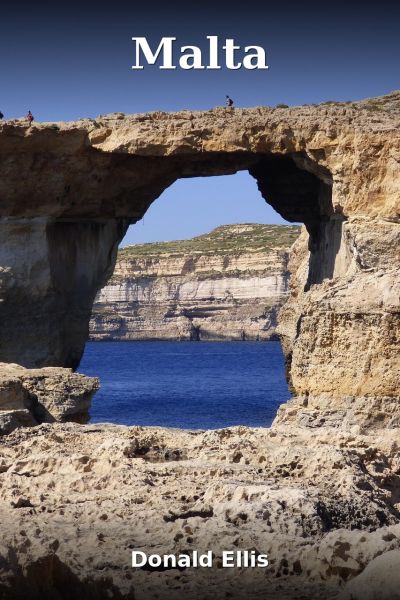
This is one episode in a much longer story. For the full account of malta, read “Malta” by Donald Ellis on MixCache.com.
Please log in or create an account to leave a comment.
No comments yet. Be the first to say something.