
The olive oil glistens on a thousand backs, turning skin to burnished bronze under the June sun. Drums pound a rhythm that has not faltered in six centuries. In the Sarayiçi arena, two men circle, slip, lock arms, and vanish into a tangle of limbs — a single knot of muscle and will that the crowd reads like scripture. This is Kırkpınar, the oil-wrestling festival of Edirne, holder of the Guinness record for the world's longest continuously contested sporting event. Its origin, however, is not a record book entry but a ghost story told in the shadow of the Balkans.
The Match That Outlasted Night
Sometime in the 1360s, Sultan Orhan — second ruler of the Ottoman line — marched his army westward across the Thracian plain. To keep his soldiers sharp during a lull in campaigning, he allowed them to wrestle. Forty men paired off in the grass. Most bouts ended quickly. One did not. Two soldiers, Ali and Selim, proved so evenly matched that neither could throw the other. They grappled through afternoon, through dusk, through the cold dark hours. When the first light struck the field, the other wrestlers found the pair still locked together, dead from exhaustion, fingers fused into each other's leather trousers.
The men buried them where they fell. By morning, forty clear springs had erupted from the grave, each one feeding a separate stream. The soldiers named the place Kırkpınar — Forty Springs — and swore they would return each year to wrestle in memory of the pair who refused to yield. The sultan, hearing the tale, decreed the contest an annual obligation. The date was set for early summer, the Friday after the equinox, and the rule was simple: the last man standing became başpehlivan, chief wrestler, and earned a golden belt.
Rituals Older Than The Republic
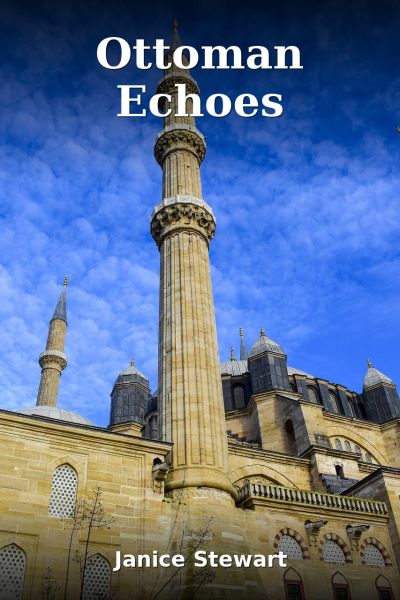
Six centuries later, the ceremony begins not in the arena but in the Selimiye Mosque. On Friday morning, two thousand wrestlers in knee-length leather trousers called kıspet file into the vast prayer hall designed by Mimar Sinan. They stand shoulder to shoulder, oiled skin catching the light from 101 tulip-patterned Iznik tiles, and listen to a mevlid — a chant for the Prophet's birthday — dedicated to the souls of Ali and Selim. No other sporting event in Turkey opens with communal prayer inside a UNESCO World Heritage site.
After prayer, the procession winds through Edirne's streets behind the Kırkpınar Ağası, the festival's master, who carries the golden belt on a velvet cushion. Forty davul drums and forty zurna shawms blast the Kırkpınar anthem, a melody unchanged since the 17th century. At the arena, the yağcı — the oiler — steps forward with a tin pail. He anoints each wrestler in a prescribed sequence: left shoulder, chest, left arm, cuff, right side, back. The oil is cold-pressed, local, and abundant; a single bout can consume three liters. Only then do the paired pehlivans perform the peşrev, a synchronized warm-up dance of stamps, arm swings, and sudden drops that doubles as a salute to the crowd and a test of balance on slick grass.
The Code Beneath The Slip
To the uninitiated, oil wrestling looks like chaos. In truth, it is a language. A pehlivan wins by pinning his opponent's shoulders to the earth, forcing him to sit, stripping his kıspet below the knees, or carrying him three steps without the man's feet touching ground. Strikes, chokes, and joint locks are forbidden. The cazgır — the herald — narrates each hold in verse, reciting the wrestlers' lineages and past victories. Until 1975, matches had no time limit; one famous final in 1924 lasted eight hours. Today the championship bout is capped at forty minutes, with a fifteen-minute scored extension if needed.
Behind the spectacle runs a moral architecture. A pehlivan is trained through a master-apprentice chain that traces back to the 14th century. He is expected to embody generosity, honesty, and respect for elders. The invitation to compete arrives each March as a red-based candle delivered to his home — a summons no serious wrestler refuses. Three consecutive golden belts earn a man the right to keep the belt forever; only a handful have done so. The cemetery beside the arena holds the graves of past champions, their headstones carved with the stylized wrestler's knot.
Springs That Never Run Dry
In 2010, UNESCO inscribed Kırkpınar on the Representative List of the Intangible Cultural Heritage of Humanity. The citation noted the festival's role in transmitting social values across generations. Yet the living heart of the event remains the oil, the drums, and the two names whispered at the mosque each June. Ali and Selim never received a belt. They never stood on a podium. They simply refused to let go, and in that refusal gave a city a ritual that has survived earthquakes, wars, the fall of an empire, and the redrawing of borders. Every summer, when the pehlivans rise from the grass slick and breathing hard, the forty springs flow again — not from the earth, but from the arms that still remember how to hold on.
This is one episode in a much longer story. For the full account of the Kırkpınar Oil Wrestling Festival, read “Ottoman Echoes” by Janice Stewart on MixCache.com.
Please log in or create an account to leave a comment.
No comments yet. Be the first to say something.