
On the evening of August 23, 1989, an estimated two million people stood shoulder to shoulder along highways, village streets, and city boulevards stretching more than 600 kilometers from Tallinn through Riga to Vilnius. They linked hands. For fifteen minutes, the three Baltic capitals were bound by a single, unbroken line of citizens — Estonians, Latvians, Lithuanians — each holding the hand of a stranger, each facing west toward a freedom they had been denied for half a century.
The date was no accident
Fifty years earlier, on August 23, 1939, Nazi Germany and the Soviet Union had signed a non-aggression treaty whose secret protocols carved Eastern Europe into spheres of influence. Latvia, Estonia, and Lithuania were assigned to Moscow. The pact paved the way for the Soviet occupation of the Baltic states in 1940, the subsequent Nazi invasion in 1941, and a second Soviet occupation in 1944 that lasted nearly five decades. By 1989, the Molotov-Ribbentrop Pact was still officially denied by the Kremlin. The Baltic Way was designed to make that denial impossible to sustain.
A movement built on song and memory
The human chain did not materialize spontaneously. It was organized by the Popular Front of Latvia, the Estonian Popular Front, and Lithuania's Sąjūdis — broad-based civic movements that had emerged during the glasnost opening under Mikhail Gorbachev. In Latvia, the Popular Front had grown from a reform movement into a de facto independence campaign, mobilizing hundreds of thousands through rallies, cultural festivals, and the recovery of suppressed national symbols. The movements coordinated logistics down to the kilometer: assigned meeting points, printed maps, arranged buses, and broadcast instructions on radio and television. Participants were asked to arrive by 6:00 p.m. local time, join hands at 7:00 p.m., and observe a moment of silence.
The chain that could not be broken
On the day, the numbers exceeded every forecast. In Riga, the chain threaded through the city center, across the Daugava River, and out along the Moscow highway. In rural stretches where population thinned, people drove from neighboring towns to fill the gaps. Helicopters and television crews captured images that circled the globe: a ribbon of humanity stitching together three nations the Soviet Union insisted had joined voluntarily in 1940. No speeches were made during the fifteen minutes. No slogans chanted. The silence itself was the statement — a living refutation of the lie that the Baltic peoples had welcomed incorporation.
Moscow's reaction
The Soviet authorities were caught between repression and exposure. Security forces filmed participants and noted license plates, but they did not intervene. A violent crackdown on a peaceful, televised demonstration of two million civilians would have shattered the reformist image Gorbachev was cultivating abroad. Within days, the Congress of People's Deputies in Moscow established a commission to investigate the Molotov-Ribbentrop Pact. In December 1989, the Congress formally condemned the secret protocols as "legally untenable and invalid." It was the first official Soviet acknowledgment that the Baltic annexation had no legal basis.
From chain to sovereignty
The Baltic Way did not immediately restore independence. That would take another two years of escalating confrontation — the Latvian Supreme Council's declaration of restoration on May 4, 1990; the January 1991 barricades in Riga when civilians again faced down Soviet special forces; the failed Moscow coup in August 1991 that finally cleared the path for full recognition. But the human chain shifted the psychological terrain. It proved that the desire for sovereignty was not the fringe sentiment of emigres or dissidents, but the collective will of a society that had preserved its identity through deportations, executions, and Russification. When Latvia's Supreme Council voted to restore independence, it did so in the name of a people who had already demonstrated, hand in hand across 600 kilometers, that they existed as a nation.
A template for peaceful resistance
Thirty-five years later, the Baltic Way remains the largest peaceful demonstration in the history of the Soviet bloc. Its logic — visibility, nonviolence, historical truth — has echoed in later movements from the Orange Revolution to the Hong Kong human chains of 2019. In Latvia, August 23 is now a national day of remembrance. The chain itself has no monument; the participants were the monument. Their fifteen minutes of silence forced a superpower to concede, on the record, that the foundation of its western empire was a falsified treaty. The world watched. The Kremlin blinked. And three small nations, holding hands in the twilight, took the first measured step back into history.
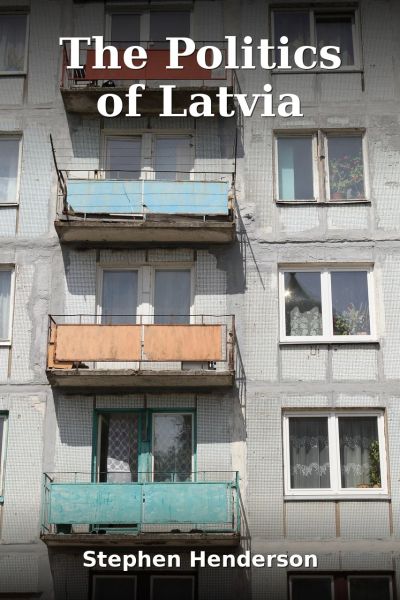
This is one episode in a much longer story. For the full account of Latvia's path to restored independence, read “The Politics of Latvia” by Stephen Henderson on MixCache.com.
Please log in or create an account to leave a comment.
No comments yet. Be the first to say something.