
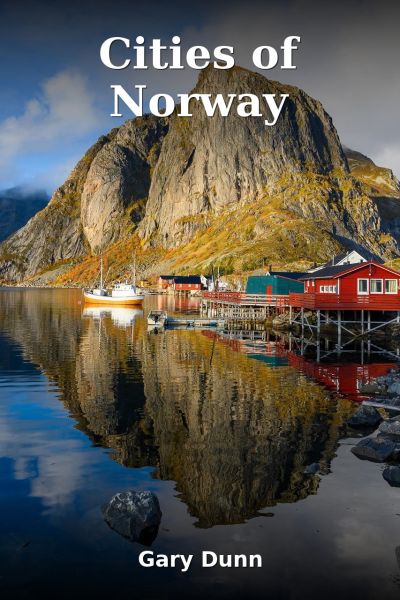
The wind came off the Atlantic hard and cold on the night of January 23, 1904. In the narrow lanes of Ålesund, where 850 wooden houses huddled across a cluster of islands, a single spark in a factory on the island of Aspøya caught the dry timber. Within minutes the gale had turned the blaze into a firestorm that leapt from roof to roof, crossing canals and bridges as if they were not there. By dawn the town was gone — 10,000 people homeless, the entire commercial centre reduced to smoking foundations, only a fringe of buildings on western Aspøya spared by a last-minute shift in the wind.
A city given a blank slate
Disaster on this scale usually leaves a town scrambling to rebuild exactly what it lost, faster and cheaper. Ålesund did the opposite. The municipal council, meeting in a borrowed schoolroom while the embers still smoked, voted to ban wooden construction in the centre and to widen the streets into a rational grid. They hired a planning officer, Fredrik Thiis, who insisted on a unified architectural language for the whole reconstruction. The style chosen was Art Nouveau — known locally as Jugendstil — then at the height of fashion in Germany, where many young Norwegian architects had trained.
The decision was radical. Ålesund had been a jagged, organic maze of tarred log houses, fish-drying racks, and salt warehouses. The new plan imposed symmetry, stone facades, and a palette of slate, brick, and pale render. It also required money the town did not have. A national appeal was launched; donations poured in from across Norway and from shipping interests in Britain and Germany. The most striking contribution came from Kaiser Wilhelm II, who had cruised the fjords near Ålesund for years and loved the coastline. He sent a personal cheque and dispatched German architects to advise on the rebuilding.
Young hands, a single vision
The design work fell to a cohort of architects in their twenties and thirties — men like Jens Zetlitz Monrad Kielland, Olaf Nordhagen, and Gunnar Schjelderup — who had studied in Berlin, Munich, or Dresden. They worked in a temporary drawing office set up in one of the few surviving buildings. Each was assigned a block, but Thiis enforced a strict pattern book: rooflines had to align, cornices continue across property boundaries, and every facade had to carry Jugendstil ornament — asymmetrical window surrounds, stylised floral reliefs, dragons and gulls cast in concrete, the occasional turret or onion dome punctuating the skyline.
Construction moved fast. Stone quarries on the mainland reopened; brick kilns ran day and night. By 1907, three years after the fire, the central islands were recognisably a new city. The pharmacy building, Svaneapoteket, became the showpiece: a corner tower crowned with a copper dome, its entrance flanked by carved swans, the whole facade alive with sinuous ironwork and coloured tile inlays. Opposite, the Borgund Bank rose in grey-green stone, its windows framed by whiplash mouldings that seemed to grow from the masonry. Even the humblest corner shop got a dated keystone and a lintel carved with seaweed motifs.
The view from Aksla
Today the clearest way to read the achievement is to climb the 418 stone steps from the town park to the Kniven viewpoint on Aksla, the "town mountain" that rises behind the harbour. From there the layout resolves into a single composition: the slate roofs stepping down to the water, the turrets and gables stitching the islands together, the canals reflecting the ornament like a mirror. The fire that could have erased Ålesund instead gave it a coherence no incremental growth could have produced. The town became the largest contiguous Art Nouveau ensemble in Scandinavia, a distinction it still holds.
The style itself did not last. By the 1920s functionalism had swept Norwegian architecture, and many of the original interiors were stripped or modernised. Yet the outer shell survived — through wartime occupation, through the oil boom that filled the harbour with supply vessels, through the tourism surge that now brings cruise ships to the same quays where cod was once salted. The Jugendstilsenteret, opened in the restored Svaneapoteket in 1997, displays the original watercolour perspectives the young architects pinned to their drawing boards: a city imagined whole, then built in stone before the mortar could cool.
Ålesund’s rebirth remains an anomaly in urban history: a catastrophe met not with nostalgia but with a collective leap into a style that was already passing its European peak. The kaiser’s money helped, the wind that spared Aspøya helped, but the decisive factor was a generation of architects who saw a blank slate and, for once, were allowed to fill it with a single, uncompromising vision. The turrets still catch the low Arctic sun each winter afternoon, exactly as they were drawn to do.
This is one episode in a much longer story. For the full account of the cities of Norway, read “Cities of Norway” by Gary Dunn on MixCache.com.
Please log in or create an account to leave a comment.
No comments yet. Be the first to say something.