
The ballot paper was short, but the weight behind it was immense. In 1981, voters in a scattered Pacific archipelago approved a constitution that banned nuclear, chemical, and biological weapons from their territory — a bold declaration for a nation that did not yet exist. Three years later, that same clause brought the independence movement to a halt. The United States, negotiating a Compact of Free Association that would grant sovereignty while retaining defense rights, insisted its nuclear-capable vessels must be free to transit Palau's waters. Palau's negotiators had agreed to the Compact in 1982. But the anti-nuclear provision, embedded in the supreme law of a not-yet-sovereign state, made ratification impossible without a constitutional override.
The clause that stopped a nation
The Constitution of Palau, which took effect on January 1, 1981, was drafted during a constitutional convention in 1979. Its framers, mindful of the Pacific's history as a nuclear testing ground, wrote Section 6 of Article I to prohibit "nuclear, chemical, biological, or radioactive weapons" from entering Palauan territory. The provision reflected a deep regional trauma: the Marshall Islands, just to the east, were still grappling with the legacy of 67 U.S. nuclear tests conducted between 1946 and 1958. Palau's leaders wanted a legal shield before they ever signed a defense agreement with the world's largest nuclear power.
That shield became a barrier. The Compact of Free Association, initialed in 1982 after years of negotiation, gave the United States "full authority and responsibility for defense and security matters in and relating to Palau," including the right to establish military facilities. In practice, the U.S. Navy needed assurance that its ships — some nuclear-powered, some potentially carrying nuclear weapons under a longstanding policy of neither confirming nor denying — could operate freely. The Palauan constitution said they could not. The two documents were mutually exclusive.
A series of referendums
What followed was a constitutional crisis played out at the ballot box. The Compact required approval by a majority of voters in a referendum. But the constitution required a 75% vote in a nationwide referendum to amend its anti-nuclear clause. Between 1983 and 1993, Palau held a series of referendums on the Compact. Each time, a majority voted in favor of the Compact — but never the 75% supermajority needed to lift the nuclear ban. The results hovered in the 60-70% range, enough to show popular desire for the Compact's economic and security benefits, but not enough to satisfy the constitutional threshold.
The stalemate lasted a decade. During those years, Palau remained a U.N. Trust Territory administered by the United States, its sovereignty suspended between a constitution it had written and a Compact it had negotiated. The U.S. Congress authorized Compact funding in 1986 contingent on ratification, but the money could not flow. Palau's first president, Haruo Remeliik, was assassinated in 1985, adding political violence to the constitutional deadlock. His successors, Thomas Remengesau Sr. and Alfonso Oiterong, served brief terms as the nation waited for a breakthrough.
The compromise that broke the impasse
By the early 1990s, geopolitical shifts created an opening. The Cold War's end reduced the strategic urgency of nuclear-armed deployments in the western Pacific. In Washington, the Clinton administration signaled flexibility. In Palau, a new referendum was scheduled for November 1993 — the eighth, by some counts. This time, the ballot offered a package: the Compact itself, plus a proposed constitutional amendment that would allow the nuclear ban to be overridden by a specific Compact provision. The amendment lowered the threshold for that specific override to a simple majority.
On November 9, 1993, 68% of voters approved the Compact and the linked amendment. The supermajority hurdle was cleared by changing the rules for a single exception. The Compact entered into force on October 1, 1994. Palau became the world's newest sovereign state, in free association with the United States.
What the standoff revealed
The episode exposed the tension between symbolic sovereignty and practical dependence. Palau's framers had used their constitution to assert a moral stance before they had the power to enforce it. The U.S., for its part, negotiated a Compact that respected Palau's right to self-government while insisting on the military flexibility it deemed essential. The decade of referendums became a civic education campaign by default: every vote forced Palauans to weigh economic aid, defense guarantees, and U.S. visa privileges against a nuclear-free ideal.
Today, the Compact's economic provisions have been renewed through 2043, committing roughly $889 million in U.S. assistance. The trust fund established in 1994 has grown to over $250 million. U.S. military exercises occur regularly in Palauan waters, and an over-the-horizon radar system operates on the islands. The anti-nuclear clause remains in the constitution, unamended in its general form. The 1993 referendum carved a narrow, Compact-specific exception — a legal sleeve that lets the U.S. military operate while the principle stands untouched on paper.
Palau's per capita enlistment in the U.S. armed forces exceeds that of any American state. Its citizens travel, work, and study in the United States without visas. The nation votes with the U.S. at the United Nations more consistently than almost any other country. Yet the constitution still says no nuclear weapons shall enter. The standoff ended not with a victory for either side, but with a procedural workaround that let both sides claim fidelity to their principles. The referendums themselves — repeated, inconclusive, then finally decisive — became the crucible in which Palau's democratic culture was forged.
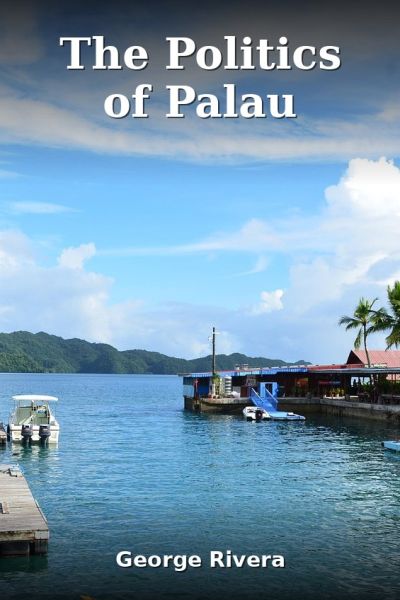
This is one episode in a much longer story. For the full account of the politics of Palau, read “The Politics of Palau” by George Rivera on MixCache.com.
Please log in or create an account to leave a comment.
No comments yet. Be the first to say something.