
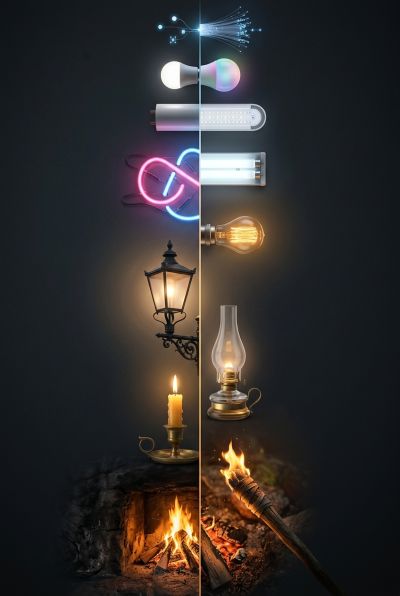
The methane seeping from the coal face had no smell. Miners knew it only by the way a candle flame would stretch tall and turn blue, a silent warning that the air itself had turned to fuel. In the early 1800s, British coal production surged to feed steam engines and iron furnaces, pushing shafts deeper into seams where firedamp — mostly methane — pooled in invisible pockets. The only light came from open candles or simple oil lamps. Every descent carried the risk that a single breath of flame would ignite the darkness.
The Disaster That Forced Action
On 25 May 1812, Felling Colliery near Gateshead erupted. A firedamp explosion tore through the workings, killing 92 men and boys. The blast was heard miles away. Bodies were recovered for weeks. The tragedy horrified the region and spurred local clergy and landowners to form the Society for Preventing Accidents in Coal Mines. They wrote to the most famous chemist in Britain: Sir Humphry Davy at the Royal Institution in London.
Davy was 36, a Cornishman risen from apprentice apothecary to scientific star. He had isolated sodium and potassium with voltaic piles, dazzled audiences with nitrous oxide demonstrations, and counted poets and princes among his friends. He approached the problem like a laboratory puzzle. In August 1815, he received samples of firedamp in sealed wine bottles. He measured its explosive limits, its ignition temperature, and — crucially — how flame behaved when forced through narrow metal tubes. He found that a flame would not pass through a tube if the metal conducted heat away fast enough to cool the gas below its ignition point.
The Gauze Breakthrough
The insight came in October 1815. A cylinder of fine iron wire gauze — 28 wires to the inch, 784 apertures per square inch — acted like a bundle of tiny tubes. Air could enter to feed the flame, but the mesh cooled any combustion products trying to escape. When Davy lowered a gauze-caged lamp into a firedamp mixture, the flame inside elongated and grew a blue cap, signalling gas concentration, but the explosion never crossed the mesh. He had turned the lamp into both a light and a gas detector.
Davy announced his results to the Royal Society in January 1816. Prototypes were rushed to northern pits. The establishment celebrated: Davy received £2,000 from grateful coal owners, a silver service, and a baronetcy. He refused to patent the lamp, declaring it a gift to humanity.
The Engineer in the North
Two hundred miles north, George Stephenson had reached the same destination by a different road. The 34-year-old enginewright at Killingworth Colliery had no formal education, no Royal Society fellowship, no London audience. He worked from the coalface upward, testing prototypes in the return airways of his own mine. His "Geordie lamp" relied on restricting airflow through narrow tubes and using the velocity of exhaust gases to prevent flame penetration. It was heavier, uglier, and built by a blacksmith — but it worked.
When Davy's priority was proclaimed, Tyneside erupted. Miners and engineers insisted Stephenson had built and tested his lamp first. A local subscription raised £1,000 and a silver tankard for him. The feud exposed a fault line in British science: the metropolitan theorist versus the provincial empiricist. Davy's lamp used gauze cooling; Stephenson's used aerodynamic quenching. Both principles were sound. Both men had saved lives.
The Paradox of Safety
Adoption was slow. Miners distrusted the dimmer light — a Davy lamp gave perhaps a quarter of a candle's glow — and resented the extra cost and maintenance. Some illegally punched holes in the gauze for brightness. Others tried to light their pipes from the flame. But the lamps spread, and with them came a grim irony. Because the lamps worked in atmospheres that would have exploded a candle, colliery owners drove workings into deeper, gassier seams previously deemed unworkable. The safety lamp did not eliminate explosions; it relocated them. Disasters continued at Wallsend, Hartley, and Senghenydd. The death toll kept climbing.
The Legacy in the Gauze
By the 1840s, improved versions — Clanny's glass-and-gauze hybrid, Mueseler's internal chimney — burned brighter and survived rougher handling. Locked lamps prevented tampering. The wire gauze remained the heart of every design. For a century and a half, the miner's lamp was less a light source than a scientific instrument: its blue cap read the air like a barometer. When electric cap lamps finally replaced flame in the mid-20th century, the gauze retired to museums.
Davy died in 1829, celebrated across Europe. Stephenson lived to become the "Father of Railways," his locomotive Rocket shrinking the distance between London and Newcastle. The two men met once, cordially, at a railway opening. They never discussed the lamp again. In the tunnels beneath the engineers' triumphs, the blue-capped flame still flickered — a borrowed star in a borrowed sky, holding the dark at bay one shift at a time.
This is one episode in a much longer story. For the full account of the Davy safety lamp and mining illumination, read “A History of Lighting” by Julian R Halberg on MixCache.com.
Please log in or create an account to leave a comment.
No comments yet. Be the first to say something.