
Harold sat in the circle of wheelchair-bound residents, his gaze fixed on nothing, his hands folded in his lap. For months, the staff at the nursing home had watched him withdraw further into the fog of advanced dementia. He rarely spoke. He showed no interest in the activities, the visitors, or even the meals placed before him. His world had shrunk to a narrow, quiet room where memories no longer seemed to live.
The session begins
A music therapist visited the unit once a week, carrying a portable speaker and a playlist curated for the era when the residents were young. She moved from person to person, making eye contact, singing softly. Most responded with a smile or a nod. Harold did not. He remained still, expressionless, as if the music simply did not reach him.
Then the therapist queued a jazz standard — a tune from the 1940s, the kind that once filled dance halls and late-night radio. The saxophone entered, smooth and low, followed by the brush of drums on a snare. The melody was unmistakable to anyone who had come of age in that decade.
A sudden spark
Harold's eyes widened. His right foot, resting on the footrest, began to tap. A rhythm emerged, faint but steady, perfectly in time with the brushwork. The therapist paused, watching. Then Harold's lips moved. A low hum rose from his throat, following the saxophone line note for note. A faint smile touched the corners of his mouth.
For perhaps ninety seconds, the man who had not spoken a sentence in weeks was present. He was not a patient with a diagnosis. He was a young man again, hearing a song that belonged to a night he never forgot.
What the moment revealed
The staff had seen music calm agitated residents, or prompt a sing-along of familiar hymns. But this was different. Harold's response was not participation; it was recognition. The melody had bypassed the damaged circuits of language and short-term memory and lit up a pathway laid down decades earlier, when the brain encoded music alongside emotion and movement.
Researchers have long noted that musical memory often survives when other cognitive functions fail. The neural networks that store well-known melodies are distributed differently from those that hold names, faces, or recent events. In dementia, the latter degrade first. The former can remain intact deep into the disease.
Harold's humming was not a cure. When the song ended, his foot stopped tapping. His gaze drifted back to the middle distance. He did not say her name when his daughter arrived an hour later. But the staff saw something they could not unsee: the person was still there, reachable, waiting in a room the disease had locked — until the right key turned.
Echoes in the hallway
The therapist added more jazz to the playlist. She began noting which residents responded to which eras, which instruments, which singers. Families were asked to share the songs their loved ones once danced to, the lullabies they sang, the records they played on Sunday mornings. The music sessions became less like entertainment and more like targeted retrieval — a way to visit the person still living inside the diagnosis.
Harold never spoke again. He declined steadily over the following months. But the staff never forgot the day the saxophone brought him back, if only for a chorus. They learned to listen for the hum. They learned that grace sometimes arrives in a minor key, lasting just long enough to remind you that no mind is ever truly gone — only waiting for its song.
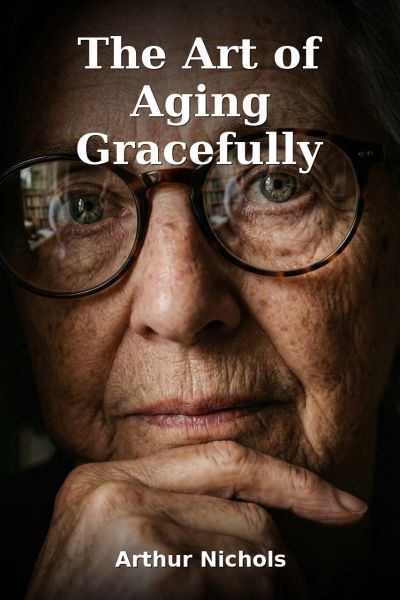
This is one episode in a much longer story. For the full account of aging and cognitive health, read “The Art of Aging Gracefully” by Arthur Nichols on MixCache.com.
Please log in or create an account to leave a comment.
No comments yet. Be the first to say something.