
In the first twenty days of January, the lobby of every city hall in the Philippines transforms into a staging ground for a very specific kind of endurance test. Business owners, corporate secretaries, and hired liaisons queue before dawn, clutching expanding folders stuffed with tax clearances, fire certificates, barangay endorsements, and proof of remittances to three separate social security agencies. The air hums with the low anxiety of deadlines: miss the window, and your legal right to operate evaporates. This is the annual Business Permit renewal — known wryly across the archipelago as "renewal season" — and it is the single most revealing ritual in the Philippine regulatory calendar.
The Pilgrimage to City Hall
The Mayor's Permit, issued by the Local Government Unit (LGU) where a business physically operates, expires every December 31st regardless of when it was first obtained. Renewal is not optional. It is a comprehensive compliance audit compressed into a three-week sprint. To get the new permit, a business must present a dossier that reads like a taxonomy of Philippine officialdom: the previous year's permit, proof of payment for the Local Business Tax (calculated on prior-year gross receipts), Real Property Tax receipts if the company owns its premises, clearances proving up-to-date contributions to the Social Security System (SSS), PhilHealth, and the Pag-IBIG Fund, a current Fire Safety Inspection Certificate from the Bureau of Fire Protection, a renewed Sanitary Permit from the City Health Office, an updated Barangay Clearance from the neighborhood captain, and a Community Tax Certificate (cedula) for the company and its signatories. Some LGUs demand more: environmental compliance certificates, zoning re-certifications, or notarized affidavits of no-pending-cases.
Assembling this packet requires coordination across finance, HR, legal, and facilities teams — and often across multiple external agencies. A delay in the Fire Safety Inspection Certificate, which itself requires a physical visit from BFP personnel, can stall the entire chain. A discrepancy in SSS remittances from six months prior can trigger a side-quest to the SSS branch office. The renewal is less a single transaction than a multi-front campaign.
A Landscape of Local Variation
What makes the ritual particularly nerve-wracking is that the rules shift at every city boundary. The Local Government Code of 1991 devolved substantial permitting power to municipalities and cities, and they exercise it with gusto. Makati, with its mature e-governance platform, may process a renewal in a single digital session. A neighboring municipality might still require physical submission of triplicate forms to three different windows, each staffed by clerks who interpret the same national law differently. One city accepts a scanned copy of the Fire Safety Inspection Certificate; another insists on the original with a wet-ink signature. The list of required clearances varies, the fees vary, the queuing systems vary. A business with branches in five cities effectively runs five different renewal projects simultaneously, each with its own logic and temperament.
This variability is not accidental. It reflects the genuine autonomy of LGUs to set local tax rates, enact ordinances on waste segregation or operating hours, and determine the stringency of inspections. But for the compliance officer staring at a spreadsheet of twenty branch deadlines, it feels like navigating a archipelago of bureaucratic micro-climates.
The Stakes of Non-Compliance
The pressure is not theatrical. Operating without a valid Mayor's Permit exposes a business to immediate closure orders, escalating fines, and the inability to defend itself in court — a statutory penalty that bars unpermitted entities from initiating lawsuits while leaving them vulnerable to being sued. For a company mid-contract with a major client, or in the middle of a BIR audit, a lapsed permit is a catastrophic liability. The renewal deadline is absolute; there are no grace periods codified in law, only the occasional discretion of a sympathetic official. That discretion, however, is exactly what a prudent compliance officer cannot bank on.
Strategies and Survival
Veterans of the January rush develop rhythms. They begin gathering documents in November. They schedule fire inspections in early December, before the BFP calendar clogs. They assign a dedicated liaison — often a junior legal associate or a specialized external consultant — whose sole January job is to live at City Hall. They build relationships with the receiving clerks, learning which window opens first, which officer prefers coffee, which form version was updated last week. They keep two complete sets of every document: one to submit, one to clutch when the inevitable "missing attachment" call comes.
Technology has softened the edges. Many LGUs now accept online applications through portals built under the Ease of Doing Business Act of 2018. But the portals vary in reliability, and most still require physical appearance for document verification or fee payment. The digital layer sits atop the analog foundation; it has not replaced it. A system outage on January 15th can reduce a high-tech submission to a paper chase in hours.
What the Ritual Reveals
The renewal season is more than a compliance exercise. It is an annual stress test of the relationship between Philippine enterprise and the state. It forces every business, from a sari-sari store to a multinational BPO hub, to prove its continued existence to the most immediate layer of government — the barangay, the city, the municipality. It compels a reckoning with the full stack of obligations: taxes paid, workers insured, fire extinguishers checked, waste segregated, zoning respected. In a system where national agencies often feel distant, the LGU is the government you touch. The Mayor's Permit is the receipt for that contact.
The ritual also exposes the human infrastructure of regulation. The clerks processing thousands of folders in twenty days are the same people who will inspect your fire exits in March, your sanitation in July, your zoning in October. The renewal is the moment the relationship resets. A business that treats it as a transaction — rude, rushed, incomplete — remembers the friction all year. One that treats it as a dialogue — prepared, polite, persistent — often finds the path smoother when the next surprise inspection arrives.
The Rhythm of the Archipelago
By the third week of January, the queues thin. The permits, printed on security paper with holographic seals, are framed on office walls across the country. The expanding folders return to storage. The compliance officer exhales, updates the calendar for next December, and turns to the next quarter's VAT return. The ritual is over — until the fire inspection letter arrives, or the SSS contribution notice, or the barangay captain requests a meeting about a new waste ordinance. In the Philippines, the permit is not a certificate you earn once. It is a covenant you renew, every January, in person, on paper, in the lobby of the city hall that watches over your door. The rhythm of the archipelago is not just typhoons and harvests. It is the sound of folders snapping shut, the stamp hitting the form, the clerk saying "Okay, ma'am, you're good for another year." And the business owner walking out into the traffic, already thinking about next January.
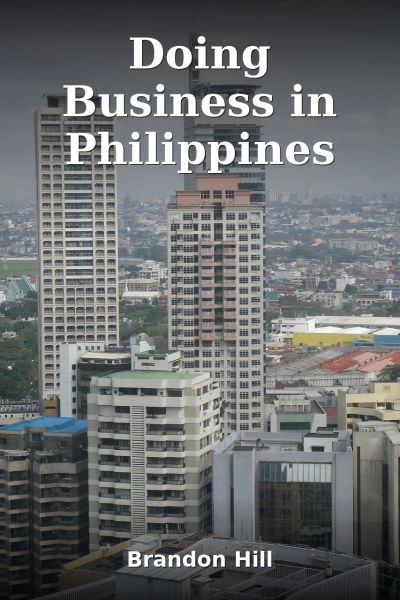
This is one episode in a much longer story. For the full account of the Philippine business permit renewal system, read “Doing Business in Philippines” by Brandon Hill on MixCache.com.
Please log in or create an account to leave a comment.
No comments yet. Be the first to say something.