
The ballot papers were simple: two boxes, one marked "Greater Autonomy," the other "Independence." For two weeks in November and December 2019, the people of Bougainville — an island chain geographically closer to the Solomon Islands than to Port Moresby — lined up at polling stations set up in schoolhouses, church halls, and open clearings. When the count was finished, 176,928 votes had been cast. Only 3,043 chose greater autonomy. The rest, 97.7 percent, chose independence.
A century of grievance
Bougainville's distinctiveness is geological as much as cultural. The island sits on a different tectonic plate from mainland New Guinea, a fact that blessed it with one of the world's largest copper deposits. In the late 1960s, the Panguna mine began operating under Bougainville Copper Limited, a subsidiary of Rio Tinto. By the time Papua New Guinea gained independence in 1975, the mine was generating nearly half the national government's export revenue. Landowners received royalties, but many felt the compensation was negligible compared to the environmental damage and the disruption of traditional life. The benefits, they saw, flowed to Port Moresby and overseas shareholders.
In September 1975, weeks before the rest of the country lowered the Australian flag, Bougainville declared itself the Republic of the North Solomons. The move was ignored internationally, but it forced the nascent PNG government to negotiate. The result was a provincial government with more autonomy than other provinces — a concession that did not resolve the underlying grievances over Panguna. Tensions escalated through the 1980s. In 1988, the Bougainville Revolutionary Army sabotaged the mine's power lines and forced its closure. A decade of civil war followed, killing perhaps 15,000 to 20,000 people — combatants and civilians — out of a population of roughly 200,000. A blockade cut off medicine, fuel, and news. The PNG Defence Force and the rebels both committed atrocities. By the time a ceasefire held in 1998, the mine was a flooded ruin and the island's infrastructure had collapsed.
The peace that built a nation within a nation
The Bougainville Peace Agreement, signed in 2001, was remarkable for its patience. It created the Autonomous Bougainville Government with its own president, cabinet, and house of representatives. It gave the ABG control over policing, education, health, and — crucially — the powers to negotiate the reopening of Panguna. Most importantly, it guaranteed a referendum on independence to be held 10 to 15 years after the first ABG election. The wait was deliberate: time to build institutions, to demilitarize, to prove that self-government could work.
When the referendum finally opened, the Bougainville Referendum Commission deployed hundreds of officials across some of the most difficult terrain in the Pacific. Voters traveled by foot, canoe, and truck. Former combatants manned polling stations together. International observers called the process credible. The result was a landslide that surprised even independence advocates. "We didn't expect it to be that high," one ABG minister said later.
The clause that keeps the island waiting
The Peace Agreement contained a carefully crafted constraint: the referendum outcome would be "non-binding" and subject to ratification by the PNG National Parliament. The framers intended this as a cooling mechanism — a requirement for dialogue, not a veto. But the wording has left Bougainville in limbo. The ABG, led by President Ishmael Toroama, a former BRA commander, has demanded that Parliament respect the mandate and set a timeline for independence. The national government, under Prime Minister James Marape, has acknowledged the result but insists on a "consultation process" before any parliamentary vote. Joint supervisory body meetings have occurred regularly since 2020, but no deadline has been set.
Economic viability looms over every discussion. Panguna remains closed. Reopening it would require billions in investment, agreement from thousands of landowners, and a solution to the acid mine drainage that still stains the Jaba River. Without it, an independent Bougainville would rely almost entirely on aid and fishing licences. The ABG argues that political sovereignty must come first; Port Moresby counters that a viable economy is a prerequisite for statehood. Meanwhile, the ABG's budget depends heavily on grants from the national government, which have sometimes arrived late or in partial amounts — a leverage point that both sides understand.
An unresolved sentence
Five years after the vote, the consultation continues. The Peace Agreement does not specify what happens if Parliament refuses to ratify. Some Bougainvilleans fear a return to violence; others believe the overwhelming mandate makes independence inevitable, whether Parliament votes for it or not. The PNG government faces its own pressures: other provinces watch closely, aware that a successful secession could inspire similar movements. For now, Bougainville governs itself more fully than any other region in the country, flies its own flag beside the national one, and waits for a Parliament 1,000 kilometres away to finish counting a vote the island cast decisively in 2019.
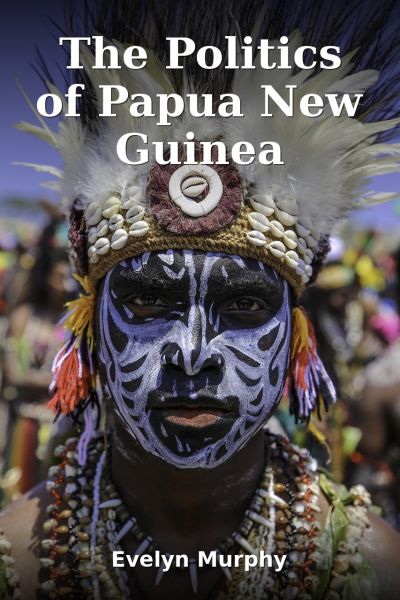
This is one episode in a much longer story. For the full account of Bougainville's independence referendum and its aftermath, read “The Politics of Papua New Guinea” by Evelyn Murphy on MixCache.com.
Please log in or create an account to leave a comment.
No comments yet. Be the first to say something.