
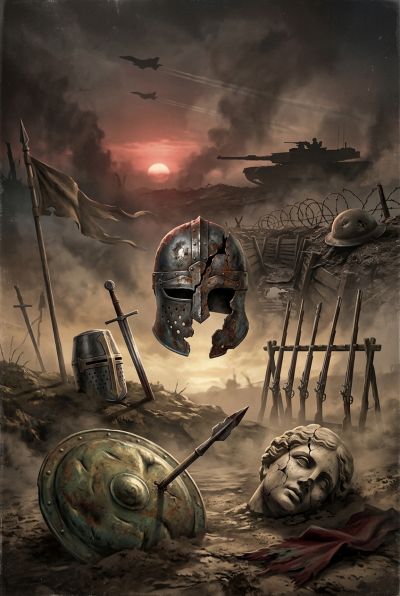
High in the Ötztal Alps, two hikers stumbled upon a brown leathery shape melting from the ice in September 1991. What they first assumed was a forgotten mountaineer from recent decades proved to be far older—and far more significant. The frozen corpse, later named Ötzi, carried secrets that would push back the timeline of human violence by thousands of years.
The Discovery in the Ice
Ötzi was approximately 45 years old when he died, his body naturally mummified by the alpine ice. Initial examinations suggested hypothermia, but deeper analysis told a different story. A flint arrowhead was lodged deep in his left shoulder blade, having pierced the subclavian artery. This single wound would have caused rapid blood loss, likely killing him within minutes. Equally telling was a deep, unhealed cut on his right hand—a classic defensive injury indicating he had gripped a weapon during a fight just one or two days before his death.
His equipment painted a picture of preparedness. Ötzi carried a copper-bladed axe, a high-status tool that required sophisticated smelting and would have been valuable property. He also had a flint dagger, a bow, and a quiver filled with arrows—some ready for use, others still being fletched. This was not the kit of a peaceful trader or solitary hunter; it was the gear of someone ready for confrontation. The healed fractures in his ribs and signs of arthritis suggested a life of physical strain, possibly from frequent travel or combat in rugged terrain.
A Warrior's Final Moments
The evidence points to a deliberate act of violence, not an accident. Ötzi did not die alone on a mountain pass; he was engaged in a conflict that ended with him fleeing or pursuing through the high valleys. The arrow came from behind and slightly below, suggesting he was either turning away or downhill when shot. The defensive wound on his hand shows he tried to ward off the blow, perhaps raising his arm to shield his body. After the arrow struck, he may have taken only a few steps before collapsing where the ice preserved him for over five millennia.
This solitary death fits into a broader pattern emerging from archaeology. Sites like Jebel Sahaba in Sudan (13,400 years old) and Nataruk in Kenya (10,000 years old) show similar signs of lethal interpersonal violence among hunter-gatherer groups. Ötzi’s case, however, offers an intimate snapshot—an individual’s final hours rather than a mass grave. His copper axe places him firmly in the Chalcolithic or Copper Age, a period when metal tools were just beginning to supplement stone, long before the rise of cities or states.
The Iceman’s frozen testimony resolves an old debate. While philosophers once wondered if prehistoric life was peaceful or brutish, Ötzi proves that organized, lethal conflict was already a reality for early humans. His death wasn’t part of a grand empire’s war; it was a personal, perhaps tribal, encounter in the mountains. Yet it reveals that the capacity for violence—to plan, to arm oneself, to pursue an enemy into hostile terrain—was deeply embedded in human behavior long before writing, wheat fields, or kings. In the quiet of the alpine ice, a 5,300-year-old story whispers that war, in some form, has always walked beside us.
This is one episode in a much longer story. For the full account of human conflict, read “War” by Dr Alex Bugeja PhD on MixCache.com.
Please log in or create an account to leave a comment.
No comments yet. Be the first to say something.