
Dawn broke over Kiyosu Castle on June 12, 1560, to the sound of a lord dancing. Oda Nobunaga, master of Owari Province, performed "Atsumori" — a warrior's lament on the brevity of life — before a handful of retainers. His army numbered perhaps two thousand. Forty kilometers east, in a narrow gorge called Dengaku-hazama, Imagawa Yoshimoto commanded twenty-five thousand men who had already crushed Nobunaga's border forts. The conventional choice was retreat behind castle walls. Nobunaga chose the gorge.
The Tiger Enters Owari
Imagawa Yoshimoto was no ordinary invader. He ruled three provinces — Suruga, Tōtōmi, and Mikawa — and marched west with the trappings of a shogun-in-waiting: courtly culture, imperial ambitions, and a host that stretched the Tōkaidō road for miles. His vanguard, led by a young Matsudaira Motoyasu (later Tokugawa Ieyasu), had seized the forts of Washizu and Marune within days. By late spring, Yoshimoto's main camp sat in the steep-sided valley of Dengaku-hazama, near the village of Okehazama. The Imagawa troops, buoyed by easy victories, relaxed in the summer heat. Many doffed their armor. Sake circulated. Scouts reported no sign of the Oda army.
At Kiyosu, Nobunaga's generals urged caution. A siege defense might prolong the inevitable, but a field battle was suicide. The "Fool of Owari" — so nicknamed for his eccentric youth — had built his reputation on defying convention. He had unified Owari through fratricide, betrayal, and a ruthless grasp of firearms when other lords dismissed them. Now he staked everything on a single throw.
A Prayer, a Ruse, a March
Before sunrise, Nobunaga rode south to Atsuta Shrine, ancient home of the grass-cutting sword Kusanagi, and offered prayers for victory. He then moved his force to Zenshō-ji, a fortified temple within sight of the Imagawa camp. There he ordered banners raised and campfires lit — a phantom army to fix the enemy's gaze. Meanwhile, the real strike force, two thousand veterans, slipped away into the wooded hills.
Nobunaga knew this terrain. As a youth he had hunted falcon here, memorizing every ridge and ravine. While Imagawa's sentries watched Zenshō-ji, the Oda column threaded a circuitous path through rain-lashed forest, guided by men who had grown up on these slopes. A violent thunderstorm broke at mid-morning, drowning sound and reducing visibility to meters. Under its cover, Nobunaga's spearmen and arquebusiers emerged from the trees directly above the Imagawa headquarters.
Chaos in the Gorge
The attack began not with a shout but with the crash of gunfire and the scream of horses. Imagawa Yoshimoto, hearing the tumult, assumed a drunken brawl among his own men. He stepped from his tent to restore order and found himself face to face with Oda samurai. Mori Shinsuke struck first; Yoshimoto wounded him. Then Hattori Koheita took the warlord's head.
In the confined gorge, the Imagawa host's numbers became a trap. Packed tight, unable to form lines or flee, the army disintegrated. Senior officers fell beside their lord. Within hours, twenty-five thousand men had routed, scattering into the hills they had so confidently crossed. The battle — if a three-hour slaughter merits the name — ended before noon.
The World Turned Upside Down
News of Yoshimoto's death traveled faster than the fleeing survivors. The Imagawa clan, dominant for generations, collapsed within years. Matsudaira Motoyasu, spared in the rout, withdrew to his ancestral domain of Mikawa and, sensing the shift, offered alliance to Nobunaga. The two men who would complete Japan's unification — Nobunaga and the future Tokugawa Ieyasu — were now partners.
Nobunaga returned to Kiyosu with the enemy commander's head, the traditional proof of victory. He was thirty-six. The "Fool" had just broken the strategic stalemate of the Sengoku period. From this gorge, the path to Kyoto lay open. The first of the three unifiers had announced himself not with a siege or a negotiation, but with a thunderstorm and a spear thrust in a ditch. Japan's medieval age did not end at Okehazama, but its ending began there.
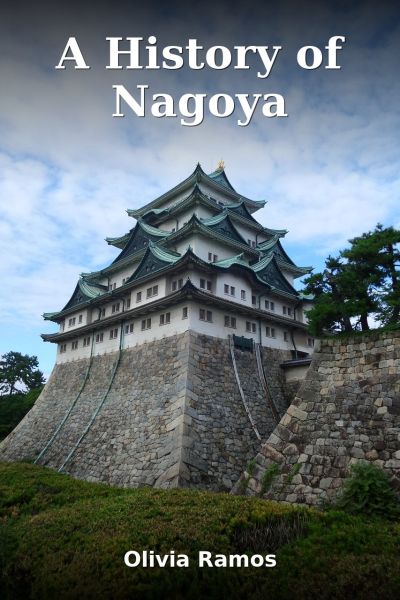
This is one episode in a much longer story. For the full account of the unification of Japan, read “A History of Nagoya” by Olivia Ramos on MixCache.com.
Please log in or create an account to leave a comment.
No comments yet. Be the first to say something.