
On a Friday in April 2024, the Reserve Bank of Zimbabwe unveiled a new currency with a name chosen to evoke permanence: Zimbabwe Gold, or ZiG. The central bank governor stood before cameras and declared that the era of monetary instability was over. The ZiG would be backed by a basket of reserves — physical gold, precious minerals, and foreign currency — and independently audited each year. For a nation that had watched successive currencies dissolve into hyperinflation, the promise felt like a turning point.
The Launch
The ZiG replaced the Zimbabwean dollar, which had lost over 80% of its value in the first quarter of 2024 alone. Officials set the initial exchange rate at 13.56 ZiG to the US dollar. Banks were ordered to convert all existing Zimbabwean dollar balances at that rate. The government mandated that taxes, licence fees, and customs duties be payable in ZiG. For a moment, the official market steadied. Inflation, which had been racing at 55% month-on-month in March, slowed to 2.6% by May. Businesses exhaled. The ZiG appeared to have done what its predecessors — the Zimbabwean dollar, the bond note, the RTGS dollar — could not: hold the line.
But the calm was fragile. The parallel market, where most Zimbabweans actually sourced foreign currency, never fully accepted the official rate. Within weeks, street traders were quoting 18, then 22 ZiG to the dollar. By July, the gap had widened to nearly 40%. Importers who could not access the official interbank market — where allocations were rationed and prioritised for fuel, medicine, and strategic inputs — turned to the parallel market to keep shelves stocked. Their costs rose, and ZiG prices followed.
The Dual-Till Reality
In Harare's supermarkets, the adjustment was visible at every checkout. Cashiers ran two tills: one for ZiG, one for US dollars. A 2kg bag of cooking oil might be priced at US$6.50 or 140 ZiG on Monday, then 155 ZiG by Wednesday. Retailers developed daily conversion rituals, some pegging to the official rate, others to a blended average, others still to the parallel rate they actually paid for forex. Customers, conditioned by years of currency collapses, hoarded US dollars. They paid in ZiG only when forced.
The informal sector, which accounts for an estimated 60% of employment, simply refused the new currency. Vendors at Mbare Musika market displayed handwritten signs: "USD ONLY." Minibus drivers demanded greenbacks. A 2024 survey by the Zimbabwe National Statistics Agency found that 72% of transactions were still conducted in US dollars. The ZiG, despite its golden backing, had become the currency of compliance — used for tax returns, formal salaries, and regulatory filings — while the dollar remained the currency of trust.
The Exporter's Dilemma
The pressure was most acute for exporters. Under long-standing surrender rules, miners and farmers were required to convert 25% of their foreign earnings into ZiG at the official interbank rate. When the parallel market offered 50% more, that surrender requirement functioned as an implicit tax. A lithium exporter earning US$1 million received only US$750,000 in usable forex; the rest was converted at a rate that did not reflect the true cost of replacing those dollars. Mining houses warned that the policy eroded viability. The Chamber of Mines reported that several expansion projects were deferred.
Meanwhile, the ZiG's physical rollout stumbled. Small denominations — coins and low-value notes — were scarce. Shops rounded prices up, or gave change in sweets and airtime. The central bank blamed printing delays; the public saw a familiar pattern. Confidence, once lost, is not rebuilt by decree.
The Liberalisation
By April 2025, the authorities conceded the pricing straitjacket was unsustainable. Statutory Instrument 34 of 2025 removed the requirement that businesses price in ZiG using the official exchange rate. Retailers could now set local-currency prices based on "prevailing market conditions" — code for the parallel rate. The move was framed as a liberalisation; critics called it an admission that the official rate was fiction.
The effect was immediate. Supermarkets adjusted ZiG prices upward by 30-40% overnight. The official interbank rate, previously managed within a tight band, began to depreciate faster, closing the gap with the parallel market. By June 2025, the spread had narrowed to under 15%. But the ZiG continued to lose ground. In September 2025, it traded at 28 to the dollar officially, and 32 on the street. A year after launch, it had lost more than half its value.
The Salary Standoff
The currency war played out most visibly in pay negotiations. Civil servants, paid in ZiG, watched their purchasing power evaporate. Teachers' unions demanded US$-indexed salaries. Private firms with dollar revenues — exporters, tourism operators, some miners — switched to greenback payrolls. Others adopted hybrid models: a base in ZiG, a "transport allowance" in USD. A Harare-based manufacturer told a local business journal: "I spend 40% of my management time just figuring out how to pay people without going broke."
The Reserve Bank insisted the ZiG was here to stay. Governor John Mushayavanhu pointed to the gold reserves — 2.5 tonnes in the vault, plus mineral assets — and the commitment to annual audits. He noted that the ZiG had survived longer than the 2019 RTGS dollar without a catastrophic collapse. But the parallel market, the ultimate verdict in Zimbabwean monetary politics, remained unconvinced.
The Long Shadow of 2008
Every Zimbabwean over thirty remembers November 2008, when monthly inflation hit 79.6 billion percent. They remember the 100 trillion dollar note that couldn't buy a loaf of bread. They remember the day the government abandoned the Zimbabwean dollar and adopted a multi-currency regime dominated by the US dollar. That trauma is the ZiG's true adversary — not economic theory, but collective memory.
In 2024, a street vendor in Bulawayo summed it up: "I'll use the ZiG when the government pays its own workers only in ZiG. Until then, it's play money." The government still pays most salaries in ZiG. The vendor still prices in dollars. The gold in the vault glints, but the greenback walks the streets.
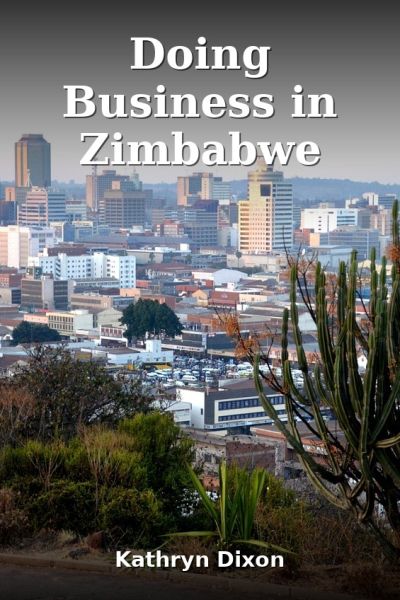
This is one episode in a much longer story. For the full account of Zimbabwe's currency crisis and the ZiG experiment, read “Doing Business in Zimbabwe” by Kathryn Dixon on MixCache.com.
Please log in or create an account to leave a comment.
No comments yet. Be the first to say something.