
The ferrinho scrapes first — a metal rod against a knife, crisp and insistent — then the gaita breathes in, its accordion reeds shuddering with a rhythm that demands movement. On a dirt floor in rural Santiago, couples press close, hips rotating in the da ku tornu, a motion so deliberate and sensual that Portuguese colonial administrators once classified it as a threat to public morality. This is Funaná: the music the empire tried to silence, and the dance that refused to die.
The Sound the Colonizers Feared
Funaná emerged from the agricultural communities of Santiago, the largest and first-settled island, where enslaved Africans and their descendants worked the land. Its instrumentation was portable and poor: a diatonic button accordion called the gaita, the ferrinho for percussion, and voices trading call-and-response verses in Kriolu. The lyrics spoke of daily life — love, betrayal, hunger, resistance — set to syncopated rhythms that drove dancers into a tight, hip-driven embrace.
By the early 20th century, colonial authorities had heard enough. They labeled Funaná "lower-class" and its signature dance "dangerously sensual." The hip rotations of the da ku tornu, performed chest-to-chest with a partner, violated European notions of decorum. More threatening still was the music's role as a communal language among the rural poor, a space where grievances could be sung and solidarity reinforced beyond the watch of the administraçăo. Records from the period are sparse — suppression rarely leaves paper trails — but oral testimony confirms that Funaná was pushed to the margins: banned from radio, excluded from official celebrations, its practitioners harassed.
Survival in the Shadows
The prohibition did not erase Funaná; it drove it deeper into the fabric of Santiago's interior. In valleys beyond the reach of regular police patrols, the gaita still sounded at weddings, baptisms, and festas de quintal — backyard parties where the ferrinho's scrape signaled that the night belonged to the people. Musicians like Tchota Suari and Zé Maria, names now revered in Funaná lore, kept the repertoire alive, passing tunes and techniques to younger players in informal apprenticeships. The music adapted: tempos shifted, lyrics grew more coded, and the dance became a quiet act of defiance. To play Funaná was to remember who you were when the state demanded you forget.
This underground persistence mirrored the fate of other African-derived cultural forms across the Portuguese empire. Batuque, the women's drumming tradition of Santiago, survived a similar ban by substituting cloth bundles for drums. But Funaná's portability — one accordion, one scraper, two voices — made it uniquely resilient. It could appear and vanish in a single evening, leaving no evidence but the sweat on the dancers' shirts.
Independence Changes the Key
July 5, 1975, changed everything. The PAIGC government, led by Aristides Pereira and Pedro Pires, inherited a nation where cultural suppression had been policy. One of their first cultural acts was to rehabilitate the traditions the colonizers had criminalized. Funaná moved from the backyard to the stage. State radio began broadcasting it. The annual Festa da Bandeira on Santiago featured Funaná groups alongside Morna and Coladeira ensembles. The music that had been "lower-class" became "popular culture" — a distinction with political weight.
The transition was not merely symbolic. Young musicians, emboldened by the new legitimacy, began electrifying the sound. Bass guitars replaced the gaita's left-hand bass lines. Drum kits augmented the ferrinho. Keyboards added harmonic density. Bands like Bulimundo and Finaçon, formed in the late 1970s and early 1980s, fused Funaná's driving pulse with rock energy and jazz harmony, creating a high-octane variant that filled dance halls in Praia and Mindelo. The da ku tornu remained, but now it was performed under stage lights, televised, recorded.
From Shame to Symbol
By the 1990s, Funaná had completed a trajectory few banned art forms achieve: it became a national emblem. When Cesária Évora brought Morna to the world, she also carried Funaná tracks on her albums, exposing global audiences to its frenetic joy. In Cape Verde, the genre's rural origins became a point of pride — evidence that the culture's roots had survived five centuries of pressure. Schoolchildren learned the ferrinho rhythm in music classes. The gaita, once hidden, appeared in tourist brochures.
Yet the music never fully shed its edge. Contemporary Funaná lyrics still address poverty, migration, and political disappointment with the directness that once made censors nervous. The dance still draws bodies close in a way that feels deliberate, a reminder that the body was the first site of resistance. At the Baía das Gatas festival on São Vicente each August, thousands gather for Funaná sets that last past dawn, the ferrinho's scrape cutting through the salt air like a declaration.
The Rhythm That Remembers
Today, a visitor to Santiago can still find the old style in a village adega: an aging accordionist, a ferrinho player with calloused fingers, a circle of dancers who know every nuance of the da ku tornu. They play not for tourists but for each other, the way they did when the music was contraband. The difference is that now, no one knocks on the door to make them stop. The rhythm that outlasted an empire continues, unbound, the sound of a people who refused to be silenced.
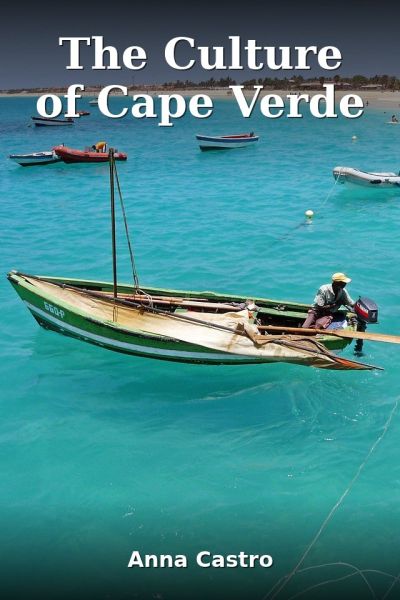
This is one episode in a much longer story. For the full account of Cape Verdean music and cultural resistance, read “The Culture of Cape Verde” by Anna Castro on MixCache.com.
Please log in or create an account to leave a comment.
No comments yet. Be the first to say something.