
The air-raid sirens wailed across Mexico City at 11:00 a.m., exactly as they did every September 19. Millions of office workers, students, and residents flowed into streets and plazas, gathering at green signs marked punto de reunión — the annual memorial drill for the 1985 earthquake that killed at least 10,000 people. It was a solemn ritual, a city practicing grief and preparedness on the anniversary of its greatest trauma. Two hours and fourteen minutes later, the sirens screamed again. This time there was no drill.
The Annual Ritual
Since 2004, Mexico City had formalized its collective memory. Every September 19, at the hour the 1985 quake struck — 7:17 a.m. — the Seismic Alert System (SASMEX) would broadcast its distinctive jarring tone across 12,000 pole-mounted speakers. The city would pause. Schools evacuated to courtyards. Office towers emptied onto sidewalks. People counted heads, checked emergency kits, and rehearsed the three commandments drilled into children since kindergarten: no running, no screaming, no pushing.
The 2017 drill proceeded normally. By early afternoon, the city had returned to its rhythm. The metro hummed, street vendors sold tacos al pastor, and the midday sun baked the concrete of Reforma Avenue. At the National Palace, President Enrique Peña Nieto had already presided over the morning ceremony. The drill was over. The memory was honored. The city moved on.
When the Sirens Meant Business
At 1:14:40 p.m., the ground began to move. The epicenter lay 120 kilometers southeast, near the Morelos-Puebla border, where the Cocos Plate fractures deep beneath the continent — an intraplate quake, magnitude 7.1, fundamentally different from the distant subduction-zone giant of 1985. SASMEX detected the initial P-waves and fired its alert. Depending on where you stood, you had ten to fifteen seconds before the destructive S-waves arrived. For some, the warning came as the shaking had already begun.
The motion was sharper, more vertical than the long, rolling sway of 1985 — a violent "trepidatory" jerk that threw people off balance and sent shelves crashing. In the historic center, dust plumes erupted as cornices and parapets shed onto sidewalks. Forty-four buildings in Mexico City collapsed completely. The Enrique Rébsamen School in Coapa pancaked, killing 21 children and two adults. In the Roma and Condesa neighborhoods, mid-rise apartment blocks from the 1960s and 70s — buildings that had survived 1985 — folded into rubble.
People who had participated in the morning drill now faced the real thing. "The coincidence was unbearable," a surgeon at a makeshift triage center in Alameda Central later said. "We had just practiced this. And then we were living it."
The City Responds
Within minutes, the silence signal appeared: raised fists held high at collapse sites, demanding quiet so rescuers could listen for tapping beneath the concrete. It was the same gesture that had organized the brigadistas in 1985 — spontaneous citizen rescuers who formed human chains, passing buckets of debris hand over hand. In 2017, the response was faster, more organized. Construction workers arrived with cranes and thermal imaging. Architects and engineers volunteered structural assessments. Doctors set up sidewalk clinics. Cyclists couriered medicines and blood through gridlocked streets.
Social media became a dispatch network. Hashtags like #Verificado19S and #RevisaMiGrieta mapped needs in real time: "Trapped family at Álvaro Obregón 142," "Need oxygen tanks at Colonia Doctores," "Structural engineer available, send location." The city's new Civil Protection System, created after the 1985 government failure, coordinated with the Navy, the Army, and the volunteer brigades. The metro ran free. Restaurants fed rescuers. By nightfall, 12,000 soldiers and 3,000 federal police were deployed, but the first 72 hours belonged to the citizens.
A Different Outcome
The death toll reached 370 across the region, 228 in the capital — a fraction of 1985's catastrophe. The early warning system, the stricter 1987 building codes, the annual drills, and the institutional memory all proved their worth. Buildings constructed after 1987 largely stood. The metro suffered no derailments. Hospitals, though damaged, remained functional.
Yet the quake exposed old wounds. Most collapsed structures predated the 1987 code. The soft-story apartments — ground-floor parking topped by residential floors — failed exactly as engineers had warned. In informal settlements like Iztapalapa, where homes are self-built on sinking lakebed without permits or engineering, hundreds of families lost everything. The same geological amplification that doomed the city in 1985 still targeted the poor.
The date itself became its own legend. Seismologists insist the coincidence is statistically meaningless — the earth does not keep calendars. But for chilangos, September 19 is now a date that lives in the body. The morning drill, the afternoon terror, the night of raised fists and flashlights in the dust. The city that practices its own survival found its rehearsal interrupted by reality — and passed the test it had been training for.
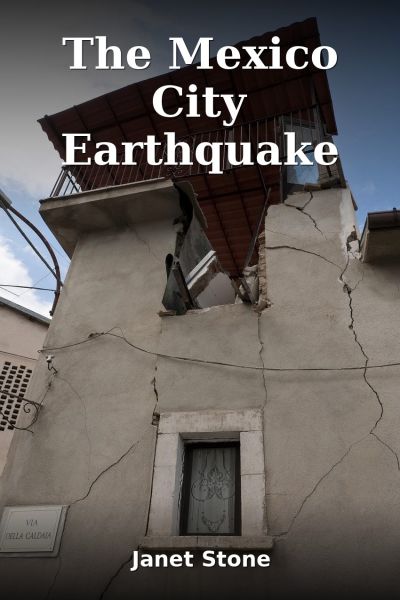
This is one episode in a much longer story. For the full account of the Mexico City earthquakes of 1985 and 2017, read “The Mexico City Earthquake” by Janet Stone on MixCache.com.
Please log in or create an account to leave a comment.
No comments yet. Be the first to say something.