
Meg Lonergan does not throw away prayer cards. When a funeral ends and the mourners drift toward the parking lot, she slips the small, folded card from the program into her purse. Later, it joins the others in a box in her home — dozens of them, each a thumbnail biography of someone she loved or once knew.
They sit beside holiday cards from decades past, their signatures faded but the jokes inside still legible. A stack of children's art projects, lopsided and glitter-glued, occupies a shelf. And on a windowsill, arranged by color and geography, rest shells gathered from beaches across three continents: the pink-fringed conch from a Florida Gulf Coast morning, the black volcanic sand dollar from Hawaii, the spiraled whelk from a windy Maine afternoon.
To a stranger, the collection might look like clutter. To Lonergan, it is the architecture of a sanctuary.
The Accumulation Begins
Lonergan, an interior designer based in the Pacific Northwest, didn't set out to build an archive. The habit started quietly. A prayer card from her grandmother's service in 1998. A postcard from her sister's honeymoon in Bali. A rock her son brought home from kindergarten, painted gold and declared "treasure." Each object carried a moment she didn't want to lose, and the simplest way to keep the moment was to keep the thing.
Over twenty-five years, the practice became a system. She doesn't display everything at once. The prayer cards live in a wooden recipe box on a high shelf, brought down only when she wants to remember a name or a date. The children's art rotates — a few pieces framed in the hallway, the rest stored flat in a portfolio case under the bed. The shells occupy a long, shallow bowl on the living room windowsill, where morning light catches their ridges and salt-whitened curves.
"People think personalizing a space means buying things that look like you," Lonergan has said. "But it's really about keeping the things that already are you."
A Niche for Pottery, A Bowl for Shells
She is not alone in this approach. Another designer, Jeff Andrews, built a custom niche into the den of his own home specifically to hold his collection of studio pottery. Each piece — a lopsided mug from a New Mexico kiln, a glazed vase from a Kyoto workshop — sits on a recessed shelf with integrated lighting. Andrews can tell you the potter's name, the firing technique, the conversation he had while buying it. The niche is not a display case; it's a memory theater.
Both designers treat objects as narrative anchors. A generic throw pillow from a catalog adds color. A pottery mug bought from the artist who threw it adds a story — the smell of the studio, the weight of the clay, the afternoon light through the window. The difference is not aesthetic; it's ontological. One is decor. The other is evidence.
The Curation Problem
The line between sanctuary and storage unit is thin. Lonergan knows this. She has watched clients fill rooms with "meaningful" items until the meaning drowned in volume. Her own rules are strict: every object must earn its square inch. The prayer cards stay because they compress a life into a rectangle of cardstock. The shells stay because each one marks a specific tide, a specific breath of wind. The children's art stays because it documents a developmental arc — scribbles becoming letters, stick figures acquiring fingers.
She applies a rotating curation. Twice a year, she opens the recipe box, the portfolio case, the shell bowl. She asks three questions: Does this still hold the memory? Does the memory still matter? Is there another object that holds it better? A faded holiday card from a friend she hasn't spoken to in fifteen years might be photographed, then released. A shell from a beach she can no longer name goes back to the sand, if she can, or into the garden path.
This is not minimalism. It is editing.
The Sensory Archive
What makes Lonergan's collection unusual is its sensory range. The prayer cards are visual and textual. The shells are tactile — cold, ridged, powdery. The children's art carries the faint ghost of glue and crayon wax. The holiday cards rustle. Together they engage touch, sight, even smell, creating a multi-sensory index of a life.
Design researchers have found that environments rich in personal artifacts reduce cortisol levels more effectively than staged, impersonal spaces. The brain recognizes its own history in the objects and downshifts from vigilance to safety. A home that tells your story is a home that lets you exhale.
Lonergan's windowsill bowl does something else. It brings the outside in, not as a generic "natural element" but as a specific geography. She can run her fingers over the Maine whelk in January and recall the salt air, the cry of gulls, the numbness of her fingertips. The object is a portal.
The Inheritance Question
There is a shadow side. Her son, now in his thirties, has gently asked what happens to the recipe box when she's gone. The prayer cards mean nothing to him — names without faces, dates without context. The shells are pretty but anonymous. The children's art is his own childhood, which he remembers differently.
Lonergan has written a letter to accompany the collection. It explains the system: the box, the portfolio, the bowl. It names the people in the cards. It locates the beaches. It admits that some memories belong only to her. She has instructed her executor to offer the objects to anyone who wants them, then scatter the rest — shells to water, paper to fire, art to the recycling bin.
The sanctuary, she understands, is not the objects. It is the practice of choosing them.
What Remains
On a rainy Tuesday, Lonergan sits at her kitchen table with the recipe box open. She picks up a card: blue border, gold lettering, a Psalm verse. She reads the name, the dates, the phrase "beloved mother and grandmother." She sets it down, picks up another. The stack is thick. She will not read them all today. She doesn't need to. Their presence is the point.
Outside, the wind rattles the windows. The shell bowl catches a slant of gray light. The children's art portfolio rests under the bed. The holiday cards wait in their shoebox. The house is quiet, full, and entirely hers.
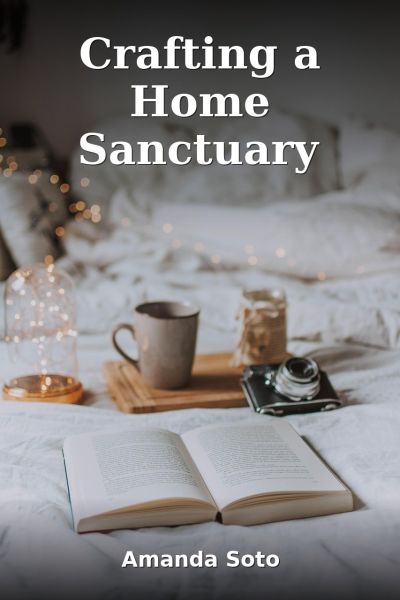
This is one episode in a much longer story. For the full account of the psychology of meaningful objects in home design, read “Crafting a Home Sanctuary” by Amanda Soto on MixCache.com.
Please log in or create an account to leave a comment.
No comments yet. Be the first to say something.