
The phone call that almost doomed the world's largest online retailer came on an ordinary afternoon in a Bellevue garage. Jeff Bezos had spent months building the skeleton of his online bookstore — databases, ordering systems, relationships with distributors — and the company was already incorporated under a name he loved: Cadabra, Inc. He liked the magical echo of "abracadabra," the sense that a customer could wish for any book and have it appear. Then a lawyer on the other end of the line repeated the name back to him, and the magic evaporated. "Cadaver?" the lawyer asked. For a retail business, the association with a dead body was, as Bezos would later put it, less than auspicious.
The Wall Street Departure
The story begins not in a garage but on a trading floor at D.E. Shaw & Co., a quantitative hedge fund in New York City. In 1994, Bezos was a senior vice president in his early thirties, a computer scientist applying rigorous analytical models to financial markets. But the numbers that seized his imagination weren't stock prices. They were internet usage statistics showing 2,300 percent annual growth. He began making lists of products that could be sold online, applying three criteria: large market, high value-to-weight ratio, and a selection far exceeding any physical store. Books won. The global book market was vast, and the number of titles in print — millions — dwarfed the 200,000 a large bookstore could stock.
Leaving a lucrative Wall Street career for an unproven online venture was not a decision Bezos took lightly. He used what he called a "regret minimization framework": at eighty, he would regret not trying far more than trying and failing. So he packed his life into a car and drove west with his wife, MacKenzie, writing the initial business plan on a laptop between highway exits. The open road gave him space to think. He chose Seattle for its tech talent pool, proximity to Ingram Book Group's Oregon distribution center, and a sales-tax advantage in the early days of e-commerce.
The Garage and the Wood Stove
In July 1994, they rented a house in Bellevue, Washington. The garage became headquarters, equipped with a wood-burning stove and extension cords snaking across the floor. Desks were made from Home Depot doors bolted to four-by-four posts — a frugality that would become company legend. The first hire, Shel Kaphan, arrived in late 1994 to architect the site from scratch. Friends and family put in roughly $1 million after Bezos warned them bluntly: there was a 70 percent chance they would lose everything.
The culture was intense, focused entirely on the customer before a single customer existed. Every dollar was stretched. The team built a database capable of holding millions of titles, a secure checkout system, and fulfillment processes that initially meant Bezos himself packing boxes on the garage floor. The company was incorporated as Cadabra, Inc., and the name felt right — until that phone call.
The Dictionary Moment
Bezos needed a new name immediately. He wanted something starting with "A" so it would appear early in alphabetical directories — a practical concern in the pre-search-engine era. He also wanted a word that suggested scale. He began flipping through a physical dictionary. When he landed on "Amazon," the fit was instantaneous. The Amazon River, the largest by discharge volume in the world, perfectly captured the vision of Earth's biggest bookstore and, eventually, Earth's biggest selection of everything. The name was vast, evocative, and started with "A." Amazon.com was registered in November 1994.
The Launch and the First Order
On July 16, 1995, the site went live with no fanfare — just posts on Usenet groups and early internet forums. The first order arrived for "Fluid Concepts & Creative Analogies" by Douglas Hofstadter. In the cramped office, employees packed books by hand, ran to the post office, and debugged code late into the night. The garage days were short; within months they moved to a proper office, but the door desks came with them. The name, born from a misunderstanding and a dictionary, had already begun to carry the weight of a vision that would reshape global commerce.
Looking back, the "cadaver" incident seems almost fitting — a near-death experience for a brand before it took its first breath. The river name that replaced it proved prophetic: like the Amazon, the company would become a vast, unpredictable force, fed by countless tributaries, reshaping the landscape through sheer volume and reach. It all hinged on a lawyer's ear, a founder's quick thinking, and a dictionary opened to the right page.
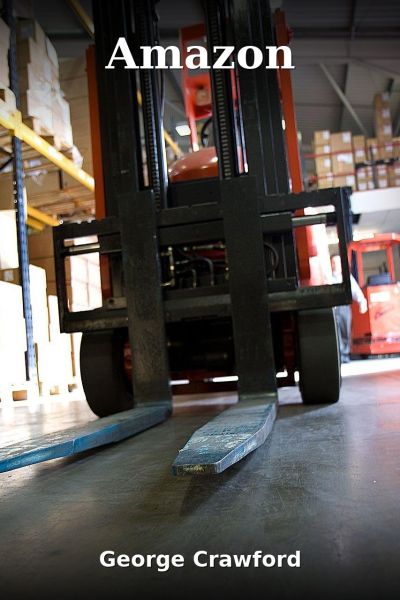
This is one episode in a much longer story. For the full account of the history of Amazon, read “Amazon” by George Crawford on MixCache.com.
Please log in or create an account to leave a comment.
No comments yet. Be the first to say something.