
Seventy feet long, twenty feet high, and painted a grinning shade of azure, the whale rose from a spring-fed pond just off the Mother Road near Catoosa. It had no business being there — Oklahoma is a land of red dirt and cross timbers, not salt water — but there it was, tail flicked mid-dive, mouth agape as if swallowing the sky whole. For decades, travelers pulled over simply to climb inside its jaw and slide down its tongue, a ritual that turned a private gesture of devotion into a public monument.
The Gift
Hugh Davis was a retiree with a sense of humor and a welding torch. His wife, Zelta, collected whale figurines — porcelain, glass, wood, any medium she could find. By the early 1970s, the collection had taken over their home. For their anniversary, Hugh decided to give her the ultimate addition: a whale she could walk into. He chose a spot on their property beside a natural pond, framed by oak trees and the constant hum of Route 66 traffic. Using steel pipe, wire mesh, and a skin of hand-mixed cement, he spent months shaping the beast. The interior was hollow, fitted with a staircase leading up to a platform inside the head. When he unveiled it, Zelta laughed. The whale, she said, was the only one in her collection that could swallow her whole.
The Park
The Davis property became a local swimming hole. Hugh added picnic tables, a diving board anchored to the whale's flank, and a concession stand selling snow cones. Families from Tulsa and Claremore spent summer weekends picnicking in the whale's shadow, kids daring each other to jump from the tail into the cool water. The whale acquired a name — some called it Moby, others just The Whale — and a reputation. Route 66 guidebooks began listing it as a "must-see." By the late 1970s, the Davis pond was less a private retreat and more a roadside institution, the whale's smile fixed forever in concrete benevolence.
Decline and Rescue
Time and weather exacted their toll. The swimming park closed in the 1980s. The concession stand rotted. The whale's cement skin cracked, its paint faded to a sickly pale blue, and graffiti crept up its sides. Vines swallowed the staircase. For years it sat forgotten, a surreal ruin in a pasture, startling the occasional passerby who stumbled down the overgrown path. Then, in the 1990s, a grassroots campaign emerged. Route 66 enthusiasts, local volunteers, and the Hampton Inn franchise (which had built a hotel nearby) raised funds and donated labor. They pressure-washed decades of grime, patched the hull, and repainted the whale in its original vibrant hue. The staircase was rebuilt. A parking lot and interpretive signs appeared. By 1997, the whale smiled again.
Pilgrimage
Today, the Blue Whale draws thousands yearly. Couples pose in its mouth for engagement photos. Children still slide down its tail, though the pond is no longer for swimming. A paved path winds past picnic tables toward the water, where the whale rests on a gentle slope, one eye watching the highway. There is no admission fee, no gift shop, no neon sign. Only the whale, the pond, and the quiet understanding that some of the strangest landmarks on the American road were built not for profit, but for love. Zelta died in 2001, Hugh in 2004. Their whale remains, a 126,000-pound valentine cast in cement, still swimming in an Oklahoma pasture, forever mid-leap.
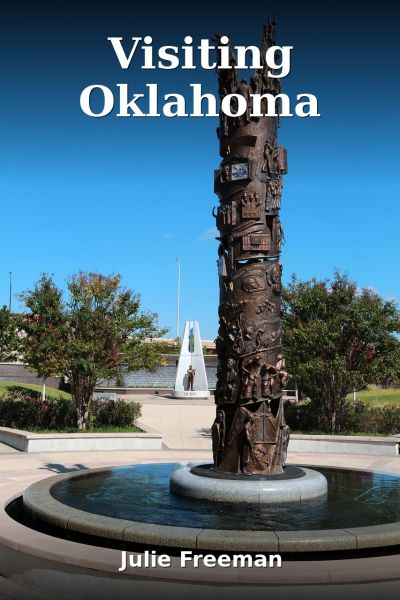
This is one episode in a much longer story. For the full account of Oklahoma's Route 66 roadside attractions, read “Visiting Oklahoma” by Julie Freeman on MixCache.com.
Please log in or create an account to leave a comment.
No comments yet. Be the first to say something.