
On a bright spring morning in 1976, a handful of scientists and local officials gathered at the edge of Monaco’s Larvotto beach. They were not there to celebrate a new casino or a yacht show, but to witness the signing of a decree that would turn a modest strip of seabed into a protected zone. The move was unprecedented: a marine reserve tucked inside one of the most densely populated urban coastlines on the planet.
The Vision Behind the Reserve
The push for protection began the previous year when Prince Rainier III, responding to growing concerns about the health of Monaco’s coastal waters, helped establish the Monegasque Association for the Protection of Nature (AMPN). AMPN’s mandate was clear: safeguard the principality’s shoreline from the creeping pressures of urban development and recreational use. Its first major project took aim at the shallow waters off Larvotto, where a meadow of Neptune grass—known scientifically as Posidonia oceanica—stretched beneath the waves. This underwater prairie, though invisible to most beachgoers, served as a nursery for fish, a refuge for invertebrates, and a stabilizer for the sandy bottom.
Scientists had long warned that anchoring boats, uncontrolled fishing, and coastal construction were fragmenting the meadow and diminishing its ecological value. AMPN’s founders argued that without intervention, the habitat that supported everything from tiny crustaceans to commercially important fish would continue to decline. Their proposal was simple yet bold: designate the area a marine reserve, prohibit extractive activities, and enforce the rules through a dedicated marine police unit.
Building the Reserve
On 12 July 1976 the Larvotto Marine Protected Area officially came into existence, covering roughly 33 hectares of seabed that extended from the shoreline to a depth of about 30 metres. The decree spelled out two core prohibitions: no fishing of any kind and no anchoring of vessels within the marked boundaries. To ensure compliance, the Marine Police Division began regular patrols, checking boats for illegal gear and monitoring diver activity.
Neptune grass meadows thrive when their leaves and rhizomes remain undisturbed, allowing the plants to trap sediment and produce oxygen. By keeping anchors and fishing gear away, the reserve aimed to let the meadow expand naturally. Early surveys conducted by AMPN volunteers showed that shoot density— a key indicator of meadow health—remained stable in the protected zone, while adjacent unprotected areas showed signs of thinning.
The reserve also became a living laboratory. Researchers from the Oceanographic Museum and the Scientific Centre of Monaco began periodic studies, documenting fish populations, invertebrate diversity, and the growth of the seagrass itself. These data would later prove essential when the principality sought to expand its marine protections.
Early Impact and Challenges
Within a few years, the effects of the reserve were visible to those who knew where to look. Divers reported increased sightings of juvenile dusky grouper and corb, two species that had been flagged for overfishing elsewhere in the Mediterranean. The meadow’s complex structure offered shelter for small crustaceans, which in turn attracted foraging fish and birds such as the yellow‑legged gull that frequents Monaco’s harbor.
Nevertheless, the reserve’s urban setting meant constant tension with human activity. Larvotto beach remained a popular destination for sunbathers, and the nearby port welcomed a steady stream of yachts and ferries. AMPN worked with local authorities to install clearly marked buoys and signage, reminding visitors of the no‑anchor zone. Occasional violations still occurred, prompting fines and, in repeat cases, temporary bans from the area.
The reserve’s success did not go unnoticed beyond Monaco’s borders. In 1991, the principality’s waters were folded into the larger Pelagos Sanctuary for Mediterranean Marine Mammals, a transboundary protected area spanning Italy, France, and Monaco. While Larvotto remained a distinct zone, its existence helped demonstrate that even heavily used coastlines could shelter vital ecosystems when given legal protection.
Legacy of the First Urban Marine Reserve
Today, more than four decades after its creation, the Larvotto Marine Protected Area is still cited as a pioneering example of urban marine conservation. Its core lesson—that a city’s shoreline can host a thriving underwater meadow if the right rules are in place—has inspired similar initiatives in other coastal towns facing the same squeeze between development and nature.
The reserve also quietly supports Monaco’s broader environmental goals. By preserving the Neptune grass meadow, it helps maintain water clarity, captures carbon, and stabilizes the seabed against erosion—benefits that extend to both marine life and the people who enjoy the principality’s beaches and waters. Though the original visionaries could not have predicted the scale of today’s global ocean challenges, their 1976 decision proved that protecting nature does not require vast wilderness; sometimes, it only takes a committed community and a stretch of seabed just beyond the bustling promenade.
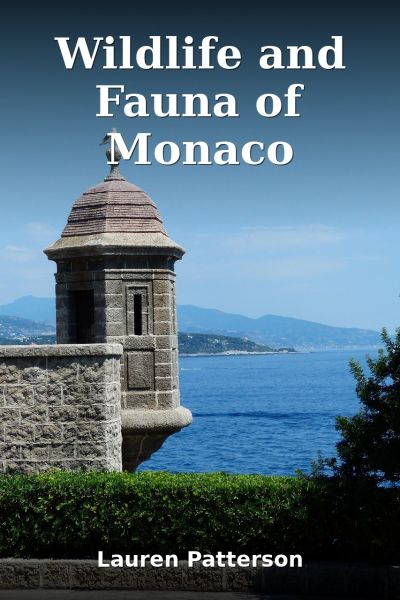
This is one episode in a much longer story. For the full account of the wildlife and fauna of Monaco, read “Wildlife and Fauna of Monaco” by Lauren Patterson on MixCache.com.
Please log in or create an account to leave a comment.
No comments yet. Be the first to say something.