
The morning mist clings low over Mabamba Bay, a vast papyrus swamp on the northern shore of Lake Victoria. From the water, the reeds rise like a green wall, ten metres high in places, their feathery tops brushing the sky. The only sound is the dip of a wooden paddle and the occasional croak of a frog. Somewhere in this labyrinth of channels and lagoons, a bird the size of a small child is waiting — perfectly still, perfectly camouflaged, its massive bill shaped like a wooden clog.
This is the Shoebill, Balaeniceps rex, a creature that looks like it stepped out of the Cretaceous period. Standing up to 1.5 metres tall with a wingspan pushing two metres, it hunches in the shallows on legs that seem too long for its body. Its eyes are pale, unblinking, set deep in a face dominated by that absurd, hook-tipped bill. The whole effect is unsettlingly ancient, as if evolution forgot to update the design.
The Quest Begins at Dawn
Mabamba Bay sits barely an hour's drive from Entebbe International Airport, making it one of the most accessible places on Earth to see a bird that birders rank among the world's most sought-after. The swamp is a Ramsar Wetland of International Importance, a designation that recognises its ecological value but does little to prepare a visitor for the experience of entering it.
The search begins at a modest landing where local fishermen double as guides. They know every channel, every hidden lagoon, every favoured perch. The vessel is a dugout canoe, hewn from a single tree trunk, narrow and low in the water. Two people sit in the bottom; the guide stands at the stern, poling with a long wooden shaft. There is no motor. Silence is the only way to approach a bird that detects vibration through its feet.
The channels twist unpredictably. Papyrus stems press close on both sides, their triangular cross-sections forming a dense, impenetrable thicket. Sunlight filters through in green shafts. The air is humid, scented with wet earth and decaying vegetation. Kingfishers flash electric blue across the bow. A long-tailed cormorant dries its wings on a dead snag. But the guides are scanning the deep shadows between the reed beds, looking for a shape that shouldn't be there — a grey statue in a green world.
A Hunter's Patience
The Shoebill's hunting strategy is built on stillness. It stands for hours in water barely deep enough to cover its ankles, bill tucked against its chest, utterly motionless. Its prey — primarily lungfish, but also catfish, tilapia, snakes, and even baby crocodiles — thrives in the oxygen-poor shallows where other predators struggle. The lungfish must surface to gulp air. The Shoebill waits.
When the strike comes, it is violent and final. The head snaps forward, the bill opens wide, and the sharp edges shear through water and flesh. The bird then tosses its catch, manipulates it with surgical precision, and swallows it head-first. The whole sequence lasts seconds. Then the statue resumes its vigil.
This behaviour makes the bird both easier and harder to find. It doesn't flush. It doesn't flee. But it also doesn't move, and in a swamp the size of Mabamba — over 16,000 hectares — a stationary grey shape in grey-green reeds is a needle in a haystack. The guides' knowledge is the only reason the success rate here exceeds 80 percent.
The Moment of Recognition
After forty minutes of poling through narrowing channels, the guide raises a hand. The canoe slows. He points with the pole, a subtle gesture toward a clump of papyrus thirty metres ahead. Nothing moves. The reeds sway gently in a breeze.
Then the binoculars find it: a bulkier shadow among the stems. The bill — unmistakable, massive, pale grey with dark markings — rests on the breast. The bird is facing away, but the silhouette is unique. No heron, no stork, no crane carries that bill. The canoe drifts closer. The guide stops poling twenty metres out. The bird does not turn. It does not tense. It has already assessed the intrusion and deemed it irrelevant.
Time stretches. The only sound is breathing and the occasional drip from the paddle. The Shoebill's feathers are edged with fine powder down, giving them a soft, velvety texture. Its feet, huge and unwebbed, splay across the submerged vegetation, distributing weight on the unstable mat. A muscle twitches in the neck. The bill lifts a fraction.
Then, without warning, the head explodes forward. Water sprays. The bill closes with a sound like a trap snapping shut. A lungfish, sixty centimetres of mottled muscle, writhes in the grip. The bird shakes it once, twice, repositions, and swallows. The bulge moves visibly down the long neck. The head returns to its resting position. The statue resumes its watch.
Living Fossil, Modern Threats
For all its prehistoric mien, the Shoebill is a modern conservation crisis. Classified as Vulnerable by the IUCN, its global population is estimated at 5,000 to 8,000 mature individuals, scattered across the swamps of central and east Africa. Uganda holds a significant portion, concentrated in the papyrus systems of Lake Victoria, the Nile Delta, and Lake Kyoga.
The threats are familiar: habitat loss as wetlands are drained for rice farming and settlement; disturbance from fishermen who see the bird as a competitor; the illegal live-bird trade, where a single chick can fetch thousands of dollars on the black market; and nest predation by monitor lizards and humans. The bird's slow breeding rate — one or two chicks per year, with only one typically surviving — offers little buffer.
At Mabamba, the community has become an unlikely guardian. The guides who pole the canoes are members of the Mabamba Wetland Ecotourism Association, a local cooperative that earns income from birding tourists. Every visitor pays a fee that funds the association's operations and contributes to a community development fund. The guides patrol the swamp, reporting illegal activity to the Uganda Wildlife Authority. They know that a living Shoebill brings recurring revenue; a dead or captured one brings a single payout.
This arrangement is fragile. Papyrus is harvested legally for thatch and crafts, but over-harvesting degrades the habitat. Water levels fluctuate with Lake Victoria's cycles and upstream dam operations. Pollution from Kampala's runoff reaches the bay. The guides speak of years when the Shoebills nested successfully and years when they vanished, perhaps moving to quieter corners of the swamp.
The Walk Back
The return journey feels different. The light has shifted, penetrating deeper into the channels. The guides point out other specialists of this world: the papyrus gonolek, a flash of crimson and black that flicks between stems; the white-winged warbler, skulking in the undergrowth; the Carruthers's cisticola, its call a dry rattle from the reed tops. Each is a papyrus endemic, found nowhere else. The Shoebill is the flagship, but the swamp sustains an entire hidden ecosystem.
At the landing, the canoe grounds on mud. The guide accepts his fee and a tip, money that will feed his family and maintain the cooperative's patrol boat. He shakes hands, unbothered by the encounter. For him, the Shoebill is a neighbour, a colleague, a source of pride. For the visitor, the image lingers: a bird that has outlasted dinosaurs, standing in the silence of a Ugandan swamp, waiting for a lungfish to breathe.
The mist lifts as the vehicle pulls away. The papyrus wall recedes, replaced by the tarmac road, the towns, the airport. But the statue in the shallows remains, patient, ancient, indifferent to the world beyond the reeds.
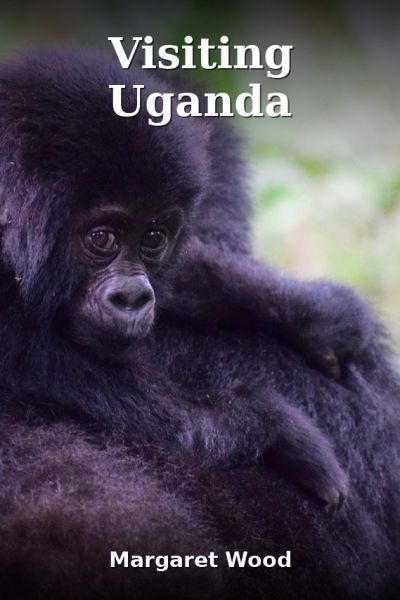
This is one episode in a much longer story. For the full account of birdwatching in Uganda's wetlands, read “Visiting Uganda” by Margaret Wood on MixCache.com.
Please log in or create an account to leave a comment.
No comments yet. Be the first to say something.