
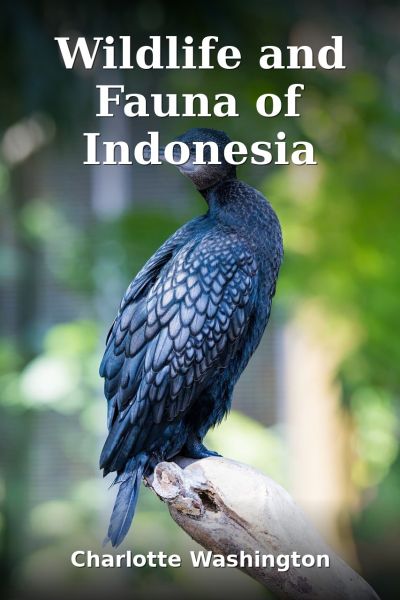
The maleo does not build a nest. It builds a furnace. On the Indonesian island of Sulawesi, a monogamous pair of these chicken-sized birds will walk kilometers from the rainforest to a communal breeding ground — an open stretch of black sand heated by the sun, or, more remarkably, by volcanic hot springs bubbling just beneath the surface. There, the female lays a single egg roughly five times the volume of a chicken's, and the pair buries it a meter deep. Then they leave. They never return.
The geothermal incubator
Sulawesi sits in Wallacea, the transition zone between Asia and Australia where deep ocean trenches have isolated islands for millions of years. The maleo, Macrocephalon maleo, is endemic to this island and nearby Buton. Its most striking feature is not its black plumage or the bare pink skin around its eye, but the bony casque atop its head — a structure that may help regulate temperature as the bird digs in scorching sand.
The nesting grounds are traditional, used for generations. At sites like Libuun on the east coast, the sand temperature at egg depth stabilizes around 33°C, maintained by solar radiation and geothermal flux. The egg's enormous yolk sustains the embryo for 60 to 80 days. When the chick hatches, it is not a helpless naked hatchling. It emerges fully feathered, eyes open, wings developed enough for powered flight. Its first act is to tunnel upward through a meter of sand, break the surface, and fly directly into the forest canopy. The entire process — from egg to independent flight — takes place without a single parental visit.
A delicacy that nearly erased a species
For centuries, local communities harvested maleo eggs as a prized delicacy. The eggs are large, rich, and predictable: the birds return to the same sandy clearings year after year, often in the same week. By the late 20th century, harvesting had intensified. At some nesting grounds, virtually every egg was dug up within hours of being laid. The maleo's strategy — extreme investment in a single offspring, zero parental defense — became its fatal vulnerability. Populations collapsed across Sulawesi. By the 1990s, the species had vanished from many historic sites, and the global population was estimated below 10,000 mature individuals.
Guardians of the hot sand
Conservationists realized that protecting the maleo meant protecting the nesting grounds themselves — not just the forest. In the early 2000s, a partnership between Indonesian NGOs, the Wildlife Conservation Society, and village leaders established a new model at the Taima nesting ground near Bogani Nani Wartabone National Park. Villagers agreed to stop taking eggs in exchange for a daily stipend and support for alternative livelihoods, such as coconut farming and ecotourism. Former egg collectors became nest guardians, patrolling the beaches day and night.
The results were rapid. At Taima, the number of eggs laid annually rose from fewer than 200 in 2006 to over 2,000 by 2015. Hatching success, monitored by temperature loggers buried beside the eggs, exceeded 70 percent. Similar programs have since expanded to four other key nesting sites. At each, the formula is identical: secure the sand, involve the people, let the volcano do the rest.
The chick that knows the way
No one has ever observed a maleo parent teaching its young. The chick's first flight carries it straight to the forest edge, where it begins foraging for insects and fallen fruit. It will not breed for several years. When it does, it will find its way back to the same communal ground — or another heated beach — guided by cues scientists still do not fully understand. Magnetic fields? Olfactory memory? Social following? The maleo keeps its secrets.
What is clear is that the species' survival depends on a fragile contract: the forest must remain connected to the coast, the sand must stay hot and undisturbed, and humans must choose stewardship over harvest. On Sulawesi's volcanic shores, that contract is being rewritten, one buried egg at a time.
This is one episode in a much longer story. For the full account of wildlife of Indonesia, read “Wildlife and Fauna of Indonesia” by Charlotte Washington on MixCache.com.
Please log in or create an account to leave a comment.
No comments yet. Be the first to say something.