
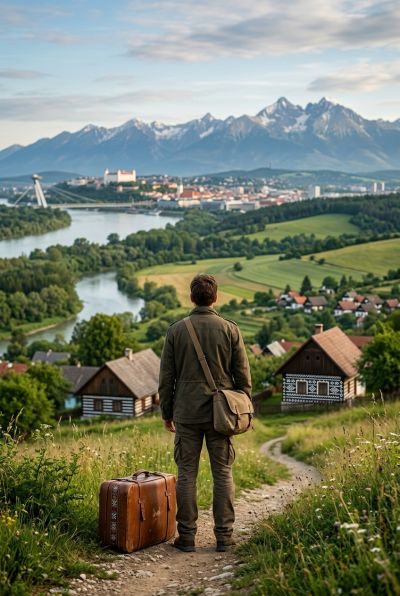
If you’ve ever wondered what it really feels like to trade your hometown for a country where carp spend Christmas in the bathtub and the room‑counting system defies intuition, Alex Bugeja’s Moving to Slovakia offers a candid, step‑by‑step companion. Written for anyone staring down a visa application or a flat‑hunting spreadsheet, the book mixes hard‑won practical advice with a dry wit that keeps the paperwork from becoming soul‑crushing.
What the Book Is About
The guide follows the chronological arc of an expatriate’s journey, opening with the “Great Slovak Paper Chase” of visas and residence permits and closing with a pre‑departure checklist and notes on reverse culture shock. Each of its twenty‑five chapters tackles a concrete facet of life—housing, language, healthcare, utilities, work etiquette, holidays, and making friends—while weaving in cultural explanations, humor, and warnings about outdated information. Bugeja assumes readers have done the basic tourist research and focuses on the “nitty‑gritty” that only surfaces when you stand in the wrong queue holding the wrong form. The tone is consistently third‑person, conversational, and never claims to replace official advice; instead, it frames itself as that friend who already made the mistakes so you don’t have to.
Taming the Bureaucratic Beast
Chapter 1 dives into the visa and residence‑permit process, distinguishing EU from third‑country nationals and laying out the exact documents needed: proof of purpose, accommodation, financial means, criminal record, apostille, and official translation. Bugeja stresses the importance of treating the embassy’s checklist as a “sacred text” and warns that rules change constantly, advising readers to double‑check with official sources before any appointment. He captures the surreal nature of the process with lines like, “You will be armed with a folder—a very, very thick folder—of documents. This folder will become your life.” The chapter also details the post‑arrival steps: registering your address within three days, obtaining a medical report, and securing Slovak health insurance within three working days of receiving your residence card—deadlines that, if missed, can jeopardize your permit.
Housing and the Room‑Counting Riddle
In Chapter 2, the author unpacks Slovakia’s housing landscape, from the ubiquitous panelák to brick apartments, new builds, and family houses. The central puzzle for newcomers is the Slovak way of counting rooms: a “2‑room apartment” (2‑izbový byt) actually contains one bedroom plus a living room, while the kitchen is never counted as a room. Bugeja offers the memorable formula: “Number of rooms in a Slovak ad = Number of bedrooms you think it has + 1.” He also walks through the practicalities of deposits, agency fees, utility advances (energie), and the annual reconciliation (vyúčtovanie) that can bring either a refund or an unexpected bill. The advice is grounded in real‑world tactics: always inspect the flat, sign a written contract, and complete a handover protocol noting meter readings and existing damage.
Language Survival Kit
Chapter 3 confronts the intimidating Slovak language head‑on, acknowledging that initial confidence will likely “be whisked away, bundled into a tiny car, and driven to a remote village in the Tatra mountains.” Bugeja breaks down the phonetic challenges—diacritics like the mäkčeň (ˇ) and dĺžeň (´), the rolled ‘r’, and intimidating consonant clusters in words like zmrzlina (ice cream). He outlines the seven grammatical cases, gender assignments, and verb aspect, yet quickly reassures readers that perfection isn’t the goal: “Your clumsy, grammatically disastrous attempt to order a beer will be met with far more warmth than a perfectly fluent ‘One beer, please’ in English.” The survival kit includes essential greetings (Dobrý deň, Ahoj), magic words (prosím, ďakujem), and the crucial distinction between formal vy and informal ty, noting that misuse with a police officer is ill‑advised.
Healthcare, Utilities, and Everyday Logistics
Chapters 6 and 12 cover the systems that keep daily life running. The healthcare section explains the mandatory public insurance, the three insurers (VšZP, Dôvera, Union), the role of the GP as gatekeeper, and the need for a referral slip (výmenný lístok) to see specialists. Bugeja notes the cultural quirk of bringing a small gift to a doctor—a holdover from bygone eras that is now optional. The utilities chapter demystifies the advance payment model for electricity, gas, water, and heating, the annual vyúčtovanie that can yield a refund (preplatok) or a bill (nedoplatok), and the surprising mandatory RTVS fee tied to every electricity connection. He also walks through setting up internet, noting the tyranny of the 24‑month contract and the usefulness of a prepaid SIM card for immediate connectivity.
Holidays, Food, and Making Friends
The final thematic cluster appears in Chapters 8, 13, and 20. Chapter 8 moves beyond the national dish
Read “Moving to Slovakia” on MixCache.com →
Please log in or create an account to leave a comment.
No comments yet. Be the first to say something.