
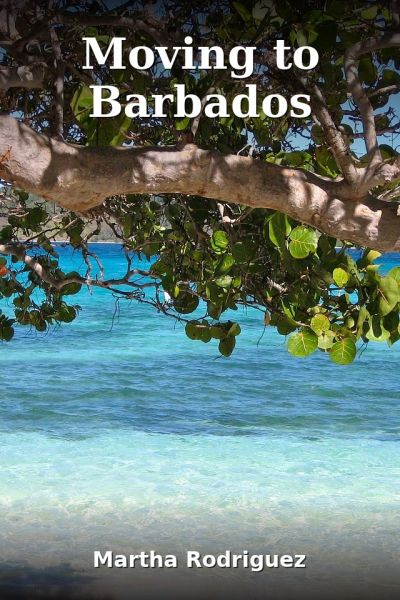
Most books about moving abroad sell the dream; this one hands you the toolkit. Martha Rodriguez's Moving to Barbados: A Comprehensive Guide skips the Instagram-filter fantasy and dives straight into the bureaucratic, financial, and cultural realities of making the island home. The result is a reference you'll dog-ear, not a memoir you'll forget.
What the book is about
Organized into 25 chapters, the guide moves logically from first impressions to long-term settlement. Early chapters cover geography, climate, and the distinct personalities of Barbados's eleven parishes — critical context before you sign a lease. The middle section tackles the paperwork gauntlet: work permits, the Welcome Stamp for remote workers, permanent residency, citizenship, and the mountain of documents each requires. Practical chapters follow on budgeting (with a clear-eyed breakdown of why imported goods cost double), the rental and property markets, job hunting for expats, and Bajan office culture. Later sections address healthcare, education, banking, taxes, driving on the left, public transport (including the legendary ZR vans), buying or importing a car, food culture, recreation, shipping belongings and pets, and a final troubleshooting chapter for when things go sideways. The tone is conversational but precise, aimed at remote workers, retirees, families, and professionals who need actionable details, not encouragement.
The "island time" framework as a planning tool
Rodriguez treats "island time" not as a joke but as a structural variable you must budget for. In the Introduction she warns that government websites "sometimes update at the speed of continental drift," and Chapter 3 notes that work-permit processing "can vary wildly, influenced by workload at the Immigration Department… and the occasional intervention of 'island time.'" Chapter 25 returns to the theme, advising readers to "build buffer time into all your plans involving official processes. Assume things will take longer than stated." This recurring motif reframes a cultural quirk into a project-management constraint: if a permit takes three months, plan for six. The book's insistence on verifying everything with official sources — repeated in nearly every chapter — reinforces that the guide is a starting map, not the territory itself.
The import-dependency economics that drive daily costs
Chapter 6 and Chapter 7 lay out the financial anatomy of the island with unusual candor. Because Barbados imports most consumer goods, prices carry layered costs: shipping, import duties (up to 60% on some items), 17.5% VAT, and environmental levies. Rodriguez writes, "That BBD $20 price tag might feel like USD $10, but its purchasing power within Barbados is its own entity." The guide quantifies the impact: a familiar box of cereal can cost double the North American price, while local chicken, root vegetables, and rum remain affordable. Electricity — generated largely from imported fuel — is the biggest utility variable; running air-conditioning constantly "is a surefire way to experience bill shock." The takeaway is a concrete budgeting framework: anchor housing first, then model grocery and energy spend around local versus imported consumption patterns, and keep a 10–15% contingency for "island surprises."
Two distinct immigration lanes with different trade-offs
Chapters 3 and 4 contrast the traditional Work Permit with the newer Welcome Stamp, making the choice between them surprisingly clear. The Work Permit is employer-led, tied to a specific role, requires a labour-market test proving no qualified Bajan is available, and plugs you into the local tax and National Insurance Scheme. The Welcome Stamp is individual-led, requires proof of USD $50,000 annual foreign income, carries a USD $2,000–$3,000 non-refundable fee, grants 12 months (renewable) of remote-work residency, and generally keeps you outside the Barbadian tax net — but explicitly does not lead to permanent residency. Rodriguez notes the Welcome Stamp "is explicitly not a pathway to permanent residency or citizenship." For someone weighing a local job offer against a portable remote career, this side-by-side comparison is worth the price of the book alone.
Cultural fluency as a survival skill, not a nice-to-have
Chapters 12 and 21 argue that understanding Bajan communication norms determines whether you merely reside or actually integrate. The workplace chapter observes that "diving straight into business without acknowledging the person first can be perceived as abrupt or even rude," and that disagreement is often expressed indirectly: "Well, that might be difficult" instead of "No." Chapter 21 expands this to daily life: a neighbour's "Well, I suppose it might be alright…" likely means "I'd really rather you didn't." The guide decodes greetings ("Good morning" is mandatory, not optional), forms of address (Mr./Ms. until invited otherwise), rum-shop etiquette, and the art of "dropping remarks" — gentle teasing that signals acceptance. Rodriguez frames these not as quaint customs but as operational knowledge: "Taking offense or reacting defensively often misses the point and can mark you as overly sensitive."
The property market's hidden friction points
Chapters 8, 9, and 10 reveal that finding housing — whether renting or buying — involves friction most expats don't anticipate. Rental listings "aren't always updated with lightning speed"; viewings move at "island time"; and a "perfect" property can vanish in hours. For buyers, the Central Bank permission required for non-resident mortgages adds a layer of paperwork, and closing costs (legal fees, Property Transfer Tax, Stamp Duty) can reach 5–10% of purchase price. Chapter 10's parish-by-parish breakdown is ruthlessly practical: the West Coast is "the most expensive real estate market on the island," the South Coast offers convenience but noise and traffic, the East Coast trades amenities for tranquility, and inland parishes demand a car. The guide's insistence on a detailed inventory and condition report at move-in — "photograph everything" — is the kind of specific advice that prevents deposit disputes months later.
Who should read this
This guide is built for anyone seriously planning a move to Barbados — remote workers evaluating the Welcome Stamp, professionals chasing a work permit, retirees comparing parishes, families researching schools — and who wants the unvarnished logistics before they commit. It's less useful for casual dreamers or short-term tourists; the depth on tax residency, customs concessions for household goods, and pet import protocols assumes you're packing your life, not a suitcase. If you need a single reference that treats bureaucracy, budgeting, and cultural fluency as equally critical, this is the one to keep on your desk (and in your carry-on) from application to arrival.
Read “Moving to Barbados” on MixCache.com →
Please log in or create an account to leave a comment.
No comments yet. Be the first to say something.