
The platform at Paddington Station smelled of coal smoke and cheap perfume, and the air thrummed with a noise that was not quite cheering and not quite weeping. A boy of six stood in a crocodile line, a cardboard box hung around his neck by a string, a label pinned to his lapel bearing his name, school, and a destination he could not pronounce. Beside him, a girl clutched a doll with a cracked porcelain face. Neither of them knew that they were part of the largest organised movement of civilians in British history, nor that the war they were fleeing would not arrive for months, and when it did, it would find many of them already back in the city.
The Plan and the Departure
For years, British planners had assumed the next war would begin with a knockout blow from the air. The memory of Guernica, the Spanish town obliterated by German and Italian bombers in 1937, haunted Whitehall. By the summer of 1939, a scheme code-named Operation Pied Piper was ready: a three-day window to empty the "danger zones" — London, Manchester, Liverpool, Birmingham, and other industrial centres — of their most vulnerable residents. When war was declared on 3 September, the machinery engaged at once.
Children gathered at schools and church halls with the few things they were allowed: a change of clothes, nightwear, house shoes, a toothbrush, a towel, and a packet of food for the journey. The gas mask, issued in a rectangular cardboard box with a string handle, became the universal accessory. Teachers, mostly women, became instant shepherds, checking registers, tying labels, and marching columns of children through streets lined with curious neighbours to the railway stations. At the barriers, mothers kissed cheeks already wet with tears, then turned away before the guards could see them break. The trains, requisitioned from the big railway companies, pulled out filled to the windows with small faces pressed against the glass.
Arrival and the Billeting Lottery
In village halls and schoolrooms across the reception areas — rural counties like Cornwall, Devon, and East Anglia — local billeting officers waited with clipboards. The evacuees filed in, tired and dusty, and were lined up for inspection. Foster parents walked along the rows, choosing. A clean face, a polite manner, a sturdy build counted in a child's favour; a runny nose, a Cockney accent, or a sullen expression could mean being left until last. One evacuee recalled the feeling of being "sold at market." The government paid host families ten shillings and sixpence a week for the first child, eight and sixpence for each additional one, but money did not guarantee kindness.
For some, the lottery paid off. A miner's family in South Wales gave a London boy his own bed, hot baths, and a place at the Sunday school treat. A vicar's wife in Sussex taught her charges to make jam and identify birdsong. These children wrote home about fields without fences, milk straight from the cow, and the strangeness of silence at night. Others found themselves in cold spare rooms, expected to work before school and after, fed leftovers, and scolded for wetting the bed — a common symptom of the homesickness that swept through the billets like a fever. Welfare officers were too few to police every household, and complaints often vanished in the bureaucratic shuffle.
Schools and the Phoney War
Education improvised. Village schools doubled their rolls overnight. In many places, local children attended in the morning and evacuees in the afternoon, or vice versa, sharing desks and textbooks that had not been designed for such numbers. Teachers, already stretched, managed the cultural collision: urban children who had never seen a cow, rural children who had never heard an air-raid siren. Lessons were punctuated by gas-mask drills, the children sitting at their desks with the rubber masks clamped to their faces, learning to breathe through the filter while the teacher timed them.
By Christmas 1939, the anticipated bombing had not come. The "Phoney War" settled over Britain, and parents, missing their children and hearing reports of neglect, began to bring them home. By January 1940, nearly half the evacuees had returned to the cities. The government pleaded with them to stay, but the pull of family was stronger than official advice. Then, in May 1940, the Blitz began in earnest. The sirens wailed for real. A second, more chaotic evacuation scattered children again, some for the third or fourth time. This time, many did not go by train; they went in private cars, on lorries, or on foot, fleeing the nightly fires that turned the London sky orange.
The Long Shadow
When the war ended, the evacuees returned to homes that had been bombed or to parents who had aged years in six. The labels were gone, the gas masks discarded, but the separation had rewired something fundamental. Studies later showed that children evacuated young — under five — often struggled more with attachment and identity than those who stayed. They had learned to call a stranger "Auntie" and a strange house "home," then had to unlearn it all. Some never spoke of it; others, decades later, still remembered the taste of their first fresh egg, or the sound of a foster father's boots on the stairs.
Operation Pied Piper saved lives — there is no doubt of that. The Blitz killed over 40,000 civilians, and the evacuation removed a million and a half children from the target zone. But it also inflicted a wound that was not on any casualty list. The boy on the Paddington platform grew up, had children of his own, and perhaps one day found himself pinning a label to a grandchild's coat for a school trip, his fingers trembling with a memory he could not explain. The war had come to the children, as the planners feared, but it arrived not in the bombs they fled, in the wrench that took them from their mothers' arms.
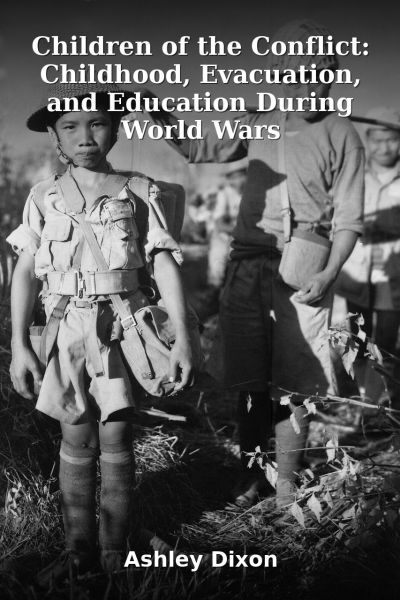
This is one episode in a much longer story. For the full account of children in world wars, read “Children of the Conflict: Childhood, Evacuation, and Education During World Wars” by Ashley Dixon on MixCache.com.
Please log in or create an account to leave a comment.
No comments yet. Be the first to say something.