
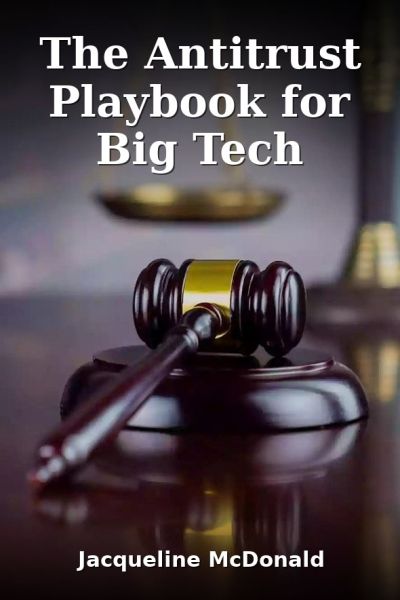
The antitrust conversation has moved far beyond the Microsoft browser wars of the 1990s. Today's enforcers are targeting the structural architecture of the digital economy — search defaults, app store fees, ad tech vertical integration, and the data moats that entrench platform power. McDonald's book arrives as a practical field guide for anyone trying to understand where the law is heading and why.
What the book is about
The book spans 25 chapters organized as a progressive playbook. It opens with legal foundations — the Sherman, Clayton, and FTC Acts — then moves through the distinct sources of market power in tech: network effects, data accumulation, and customer lock-in. Chapters 5 through 10 dissect the major enforcement actions: United States v. Microsoft, the DOJ and state cases against Google's search and ad tech monopolies, the Epic Games lawsuits against Apple and Google's app stores, the FTC's challenge to Meta's Instagram and WhatsApp acquisitions, the Within/Meta VR case, and Amazon's marketplace self-preferencing. Later sections cover remedies (behavioral vs. structural, interoperability, data portability), global rulebooks (EU DMA/DSA, UK CMA, Australian ACCC), merger scrutiny (HSR, second requests, gun-jumping), and emerging frontiers including algorithmic collusion, privacy-antitrust convergence, AI foundation models, cloud and chip vertical integration, and SEP/FRAND licensing. The final chapters offer compliance frameworks, advocacy strategies, startup playbooks, and scenario planning for enforcement trends. The intended audience is explicitly non-lawyers and corporate leaders who need "clarity rather than case citations" and must "make decisions under uncertainty."
The Microsoft precedent still shapes every platform case
Chapter 5 revisits United States v. Microsoft not as history but as a "field manual" for modern platform enforcement. The book traces how the case established that a dominant operating system could leverage its gatekeeper position to foreclose competition in an adjacent market — the browser — through tying and exclusionary agreements with OEMs and ISPs. The appeals court ultimately rejected the per se tying claim but affirmed the exclusionary conduct findings, leading to behavioral remedies (API licensing, non-retaliation provisions) rather than the district court's structural breakup. McDonald draws six lessons: platform monopolies endure; software tying requires rule-of-reason analysis; exclusionary conduct evidence is paramount; remedies are hard in fast-moving markets; innovation and competition are intertwined; and antitrust is a marathon. These lessons "resonate profoundly in today's platform economy," where app stores, search engines, and cloud providers occupy analogous gatekeeper roles.
Google's search and ad tech cases reveal the anatomy of modern monopolization
Chapters 6 and 11 together show how enforcers are dismantling the "interconnected web of products and services" that reinforces Google's dominance. The search case centers on default agreements — billions paid to Apple, Samsung, carriers, and browsers — that "effectively block competitors from gaining the scale necessary to improve their own search algorithms." The ad tech case goes further, targeting vertical integration across the full stack: publisher ad server (Ad Manager), exchange (AdX), and advertiser tools (Google Ads, DV360). The DOJ alleges self-preferencing through "Project Bernanke" (using rival bid data to inform Google's own bidding) and "Jedi Blue" (a secret agreement with Meta to manipulate header bidding). A 2025 Virginia court found Google "willfully engaged in anticompetitive acts" to control the publisher ad server and ad exchange markets and "illegally tied them together." The remedies phase, concluded in October 2025, weighs structural divestiture of the ad exchange and publisher ad server against behavioral mandates like open-sourcing auction logic and mandated interoperability.
Nascent competition theory is reshaping merger review
Chapters 8, 9, and 16 track a fundamental shift: regulators now scrutinize acquisitions of small, pre-revenue startups not for their current market share but for their potential to become future rivals. The FTC's Meta lawsuit alleges a "buy or bury" strategy, citing internal communications where Zuckerberg reportedly stated "it is better to buy than compete." The Within/Meta VR fitness app challenge applied the "actual potential competition" doctrine — arguing Meta would have built its own fitness app absent the acquisition. Chapter 16 details how this translates into practice: second requests now demand millions of documents on nascent competitive threats, the Hart-Scott-Rodino thresholds capture fewer deals but the "size-of-person" test is less relevant in digital markets, and the EU's DMA requires gatekeepers to notify even small acquisitions. Gun-jumping traps — premature integration or information sharing before clearance — carry escalating penalties. The message: "acquisitions in nascent markets, even of seemingly small players, will be scrutinized under the lens of potential competition."
Remedies are moving from behavioral to structural — and global
Chapters 12, 13, and 14 illustrate a decisive turn. Behavioral remedies (non-discrimination clauses, interoperability mandates, transparency requirements) are criticized for high monitoring burdens and easy circumvention — "like playing whack-a-mole." Structural remedies (divestiture, unwinding past mergers) are gaining traction: the DOJ seeks Google ad tech divestitures; the FTC pursues Instagram and WhatsApp spinoffs; the CMA blocked Meta/Giphy and initially Microsoft/Activision. The EU's Digital Markets Act codifies this shift legislatively, designating "gatekeepers" and imposing ex-ante obligations: self-preferencing bans, messaging interoperability, data portability, third-party app store access, and FRAND access to essential APIs. Fines reach 10-20% of global turnover. The "Brussels Effect" means these rules become de facto global standards as companies adopt the strictest regime worldwide. Meanwhile, the UK's Digital Markets, Competition and Consumers Bill and Australia's ACCC inquiries add jurisdiction-specific conduct requirements and mandatory bargaining codes.
Compliance by design and scenario planning are now strategic imperatives
The final chapters translate enforcement trends into operational playbooks. Chapter 22 advocates embedding antitrust into governance: board-level oversight, cross-functional compliance committees, product review gates, algorithmic audit trails, and KPIs tracking third-party ecosystem health, new entrant success rates, and interoperability adoption. Chapter 23 frames advocacy as essential — not just lobbying but shaping public narrative through transparency, coalition building, and engaging critics. Chapter 24 gives startups a playbook: document platform interactions, engage regulators informally, form coalitions, and assess acquisition offers for "killer acquisition" risk. Chapter 25 outlines three scenarios — "Digital Utility" (heavy ex-ante regulation), "Structural Breakup" (aggressive deconsolidation), and "AI Governance" (competition for intelligence) — with cross-cutting preparation: strengthen compliance by design, invest in economic and data science expertise, cultivate ethical competition culture, and conduct regular scenario workshops. The book's closing argument: "passively reacting to this dynamic environment is a recipe for disruption."
Who should read this
Corporate strategists, product leaders, legal and compliance teams, and investors at technology companies of any size will find this book immediately useful. It assumes no legal background but does not oversimplify — the economic frameworks and case details are rigorous enough for specialists while remaining accessible to generalists. Startup founders navigating platform dependencies or acquisition talks will benefit from the dedicated playbook chapter. Readers seeking a purely academic treatise on antitrust theory or a narrative history of Big Tech's rise should look elsewhere; this is a working reference built for decision-making under active regulatory pressure.
Read “The Antitrust Playbook for Big Tech” on MixCache.com →
Please log in or create an account to leave a comment.
No comments yet. Be the first to say something.