
The pork arrived at the slave quarters in pieces the plantation owner's kitchen had no use for: ears, snouts, tails, feet. These were the cuts left over after the prime meat went to the big house, the parts deemed fit only for the enslaved workers who had raised and slaughtered the animals. In the sweltering kitchens of the senzalas, women took these discards and combined them with black beans — another humble staple — and slow-cooked everything together until the tough cartilage melted into gelatin, the beans softened to creaminess, and a broth emerged so rich it seemed to defy its origins.
The Master's Table and the Slave Quarters
Brazil received more enslaved Africans than any other nation in the Americas — nearly five million people between the 16th and 19th centuries. On the sprawling plantations of the Southeast, particularly in Rio de Janeiro and Minas Gerais, the rhythm of daily life was marked by the cultivation of sugarcane and coffee, and by the relentless labor of the people who produced it. Food was one of the few arenas where the enslaved could exercise a measure of creativity. The plantation lords ate well: fresh beef, tender pork loin, imported olive oil, wheat bread. Their waste became the larder of the quarters.
Pork was central to the Portuguese colonial diet, and every part of the animal was used somewhere. The prime cuts — loin, tenderloin, ham — graced the master's table. The head, feet, tail, ears, and offal were handed down. Black beans, introduced from Africa or adapted from native varieties, grew easily in the tropical climate and stored well. They were cheap, nourishing, and familiar to many of the enslaved, who came from West African regions where beans and stewed meats were dietary cornerstones.
A Stew Born of Necessity
The cooking method was dictated by circumstance. The quarters had no ovens, only open hearths and heavy iron pots. A stew could simmer all day while people worked in the fields, requiring only occasional attention. The long, slow cooking accomplished two things: it rendered the tough, collagen-rich cuts into something tender and flavorful, and it allowed the beans to absorb the pork's fat and smoke, creating a broth of remarkable depth.
Garlic, onions, and malagueta peppers — ingredients that could be grown in small garden plots near the quarters — added brightness. Bay leaves and cilantro, when available, layered in herbaceous notes. The dish was eaten with farofa, toasted manioc flour that stretched the meal further, and orange slices to cut the richness. It was sustaining food, designed to fuel bodies for another day of forced labor, but it was also food made with intention, seasoned by memory and technique carried across the Atlantic.
From Quarters to National Symbol
Abolition came late to Brazil — 1888, the last nation in the Western Hemisphere to end slavery. By then, feijoada had already migrated beyond the slave quarters. Freed men and women carried the recipe into the cities, where it became a staple of working-class neighborhoods. In Rio's cortiços — crowded tenements — communal pots of feijoada fed families on Sundays, the one day many had off. The dish began to change. As former slaves entered the wage economy, some could afford better cuts: pork shoulder, ribs, linguiça sausage, smoked bacon. The ear and snout remained, valued now for their texture and flavor rather than their price, but they were joined by meatier pieces.
By the early 20th century, feijoada had crossed class lines. Intellectuals and politicians in Rio's bohemian districts adopted it as a symbol of authentic Brazilian identity, distinct from the European models the elite usually emulated. Modernist writers like Mário de Andrade celebrated it as a genuinely national creation — African in technique, Indigenous in its use of manioc and beans, Portuguese in its pork tradition. The dish became a weekend ritual, particularly on Saturdays, when families and friends gathered for hours-long meals that stretched into the afternoon.
The Dish That Holds a Nation
Today, a proper feijoada is a project. The beans soak overnight. The meats — often seven or eight different cuts — are desalted, blanched, and added in stages so each retains its character. The stew simmers for four, sometimes six hours. It arrives at the table in a clay pot, accompanied by white rice, couve (collard greens sautéed with garlic), orange wedges, farofa, and a pepper sauce. It is not a dish for one person; it demands a crowd.
In São Paulo's traditional restaurants, in Rio's beachside botequins, in homes from the Amazon to the pampas, Saturday feijoada remains a fixed point in the Brazilian week. Tourists seek it out as a cultural experience; Brazilians eat it as a reminder of who they are. The pig's ear in the bowl is no longer a mark of degradation but a badge of honor — proof that something whole and beloved can be built from what the powerful discarded. The stew holds the history of a country that tried to erase the people who fed it, and failed. Every spoonful tastes like survival.
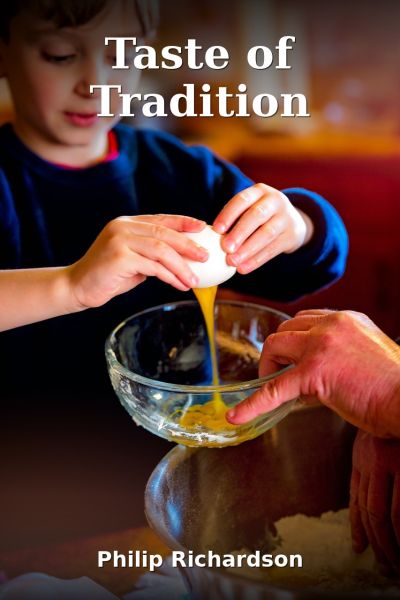
This is one episode in a much longer story. For the full account of culinary heritage preservation across cultures, read “Taste of Tradition” by Philip Richardson on MixCache.com.
Please log in or create an account to leave a comment.
No comments yet. Be the first to say something.