
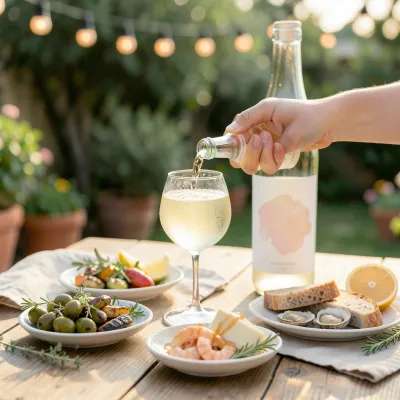
The year was 1815, the place a dim tavern near the Grand Canal, and the problem was simple: the wine was too strong. Austrian soldiers garrisoned in Venice after the Congress of Vienna had grown accustomed to lighter wines back home. The robust reds of the Veneto hit them harder than expected. Their solution was improvised and literal — they asked the barkeep to splash water into the glass, a gesture they called spritzen, German for "to spray." The locals watched, skeptical at first, then curious. Within a generation, the practice had migrated from military necessity to civilian habit, and the word had been Italianized into spritz.
The Occupation and the Custom
Venice had changed hands between Napoleon and the Habsburgs more than once by the time the Austrians settled in for a long stay. Their troops — conscripts from Vienna, Prague, the Tyrol — drank wine as a daily staple, but the alcohol levels of Venetian reds, often 13 or 14 percent, exceeded what they were used to. Water was safer than wine in many barracks, but wine was the social currency. Diluting it solved both problems: it stretched the ration and kept the head clear for duty. The verb spritzen entered the dialect of the dockside osterie, and the diluted pour became a recognizable order. No recipe existed yet — just wine, water, and the soldier's thumb over the carafe spout to control the spray.
From Necessity to Ritual
By the 1880s, the spritz had shed its military origins. Venetians adopted it as an aperitivo, a pre-dinner pause that stimulated appetite without dulling the senses. The water evolved into selz, the artificially carbonated water from the Selters springs that had become fashionable across Europe. The fizz added lift and carried aromatics to the nose, turning a flat dilution into something brighter. Still, the drink remained wine-heavy — typically three parts red or white to one part selz — and the choice of wine varied by neighborhood and season. It was a household ritual, not a branded cocktail.
The Modern Spritz Emerges
The transformation accelerated in 1919, when the Barbieri brothers of Padua launched Aperol, a bright-orange bitter liqueur at 11 percent ABV flavored with gentian, rhubarb, and bitter orange. Its lower strength and assertive bitterness made it an ideal modifier for the spritz. By the 1950s, the "spritz al Aperol" had a loose formula: three parts sparkling wine (often Prosecco), two parts Aperol, one part soda, served over ice with an orange slice. The sparkling wine replaced still wine, the selz became soda water, and the bitter liqueur provided the complexity that plain dilution lacked. Venice's tourism boom cemented the drink's identity; visitors expected the orange glow in a stemmed glass, and bars standardized the pour to meet demand.
A Global Phenomenon
Today the spritz is the flagship of low-ABV drinking worldwide. Its architecture — wine base, bitter or aromatic liqueur, carbonated water — remains infinitely adjustable. A version built with dry vermouth (15–18 percent ABV) and tonic leans savory; one with a zero-proof aperitif and dealcoholized sparkling wine drops the alcohol near zero. The garnish — orange twist, olive, rosemary sprig — releases oils that shape the first impression before the sip. What began as a soldier's expedient in a Habsburg-occupied tavern has become a template for intentional moderation: a drink that delivers ceremony, complexity, and refreshment without the fog. The spray of water that once masked a rough wine now signals a choice to taste more by taking less.
This is one episode in a much longer story. For the full account of the history of the spritz cocktail, read “Low-ABV Living: Food and Wine for Light Drinking” by Terry Black on MixCache.com.
Please log in or create an account to leave a comment.
No comments yet. Be the first to say something.