
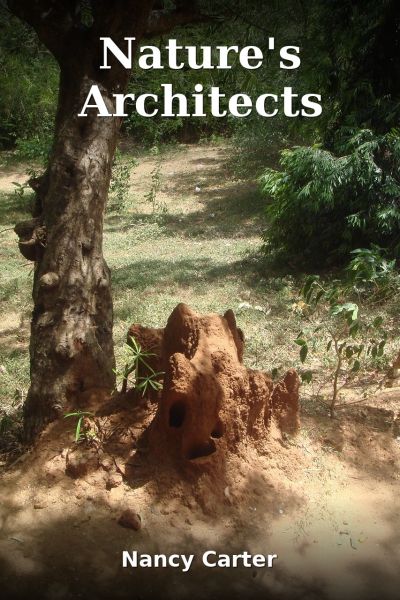
When we think of engineering marvels, skyscrapers and bridges often come to mind, but some of the most sophisticated designs exist far from human drafting tables. Nature's Architects invites readers to see the animal kingdom as a vast library of built solutions, honed by evolution and ripe for inspiration.
What the book is about
The book surveys a wide range of animal builders, beginning with beavers and moving through ants, coral, prairie dogs, mussels, weaver birds, termites, spiders, paper wasps, caddisfly larvae, bees, and many others. Its twenty-five chapters are grouped thematically—ecosystem engineering, superorganism architecture, biomimicry, defensive structures, and material innovation—allowing readers to follow how specific solutions arise in nature and how they have been adapted by humans. Written for anyone who enjoys accessible science writing, the text assumes no specialist background but rewards careful reading with concrete examples and clear explanations of the underlying principles.
Ecosystem Engineering: Building Worlds That Support Life
Beavers reshape streams into ponds, creating wetlands that become nurseries for fish, amphibians, and waterfowl. As the book notes, "They are, in essence, nature’s civil engineers, armed with little more than powerful incisors, dexterous paws, and an unwavering drive to build." Prairie dogs construct vast underground towns with lookout mounds and ventilation shafts that serve thousands of individuals, while coral reefs, though covering less than 0.1% of the ocean's surface, provide a home for at least 25% of all marine species. Mussels bind together with byssal threads to form living breakwaters that dissipate wave energy, and mangroves trap sediments with their tangled roots, literally building new land. These examples show how animal constructions are not isolated shelters but ecosystem engineers that regulate water flow, support biodiversity, and stabilize coastlines.
Superorganisms: When Individuals Act as One
Ants, termites, naked mole rats, and bees illustrate how simple rules can produce complex, coordinated societies. The text describes ant networks as "a city where every street and alleyway is dug by hand, leading to countless rooms for specialized functions," highlighting the scale of their subterranean cities. Naked mole rat colonies feature a central nest chamber surrounded by food stores and toilet chambers, reflecting a highly structured society. Bee hives achieve geometric perfection in the honeycomb, a shape that "perfectly fills a two-dimensional space without any gaps." Termite mounds, meanwhile, maintain stable internal temperatures through porous walls that act like a giant lung, inhaling cool air and exhaling warm air. Together, these cases demonstrate how decentralized individuals can generate architecture that regulates climate, manages waste, and defends the group.
Learning from Nature: Termite Mounds, Spider Silk, and Beyond
Biomimicry runs throughout the book, showing how human designers have borrowed animal solutions. The Eastgate Centre in Harare, Zimbabwe, uses a ventilation system modeled on termite mounds; the book states, "The Eastgate Centre uses significantly less energy for ventilation compared to traditional buildings of its size, demonstrating the potential for termite-inspired designs to create more energy-efficient and sustainable human structures." Spider silk is presented as a material that, pound for pound, is five times stronger than steel and incredibly elastic, capable of stretching up to 40% of its original length without breaking. Such properties have inspired research into sutures, bullet-resistant fibers, and lightweight aerospace composites. The book also explores how robotics takes cues from gecko adhesion, ant swarm behavior, and fish locomotion, pointing to a future where machines move, sense, and build with the efficiency of their biological counterparts.
Fortresses and Nurseries: Architecture for Survival and Reproduction
Defensive architecture appears in many forms. Meerkat burrows rely on multiple entrances for escape, a feature the book calls "a critical defensive design feature." Trapdoor spiders camouflage their burrows with a hinged lid of soil, silk, and vegetation, turning a simple hole into a concealed fortress and ambush platform. Pufferfish males construct intricate sand circles to attract mates; the precision and symmetry achieved by a fish with no apparent measuring tools are truly astonishing, highlighting a profound instinctive understanding of spatial organization. Swallows, meanwhile, assemble mud nests reinforced with saliva that harden into weather-resistant shells, providing safe nurseries clinging to vertical surfaces. These structures reveal how animals balance protection, reproduction, and environmental constraints through clever design.
Living Materials: Shells, Silk, and Self-Healing Design
The book devotes attention to the materials animals use to build their homes. A turtle’s shell is described as "far more than just a bony covering; it is an extraordinary example of biological engineering, meticulously formed and fused with its skeleton." Snail shells layer calcium carbonate and protein to create a tough, impact-resistant composite, with the outer layer resisting abrasion and the inner nacre layer offering exceptional resilience. If a shell is damaged, the mollusk can often repair it by secreting new shell material from its mantle. Spider silk, beyond its mechanical brilliance, is biodegradable and produced at ambient temperatures, offering a model for sustainable fiber production. These living materials illustrate how nature combines strength, flexibility, and self-repair in ways that continue to inspire modern material science.
Who Should Read This
Readers who enjoy popular science that bridges biology and engineering will find much to appreciate here. The writing is clear and example-driven, making it accessible to those without a technical background while still offering concrete takeaways for architects, designers, and sustainability enthusiasts. Those looking for a tightly argued theoretical treatise or a narrative-driven account may find the chapter-by-chapter survey less focused, but the book remains a solid starting point for anyone curious about how the natural world solves design problems and what we can learn from it.
Read “Nature's Architects” on MixCache.com →
Please log in or create an account to leave a comment.
No comments yet. Be the first to say something.