
On the west side of Toluca's main plaza, behind a row of colonial arches, stands a building that refuses to be categorized. Its iron ribs and glass skin once sheltered the city's busiest market. Today, they cradle a forest of cacti, ferns, and tropical trees, all bathing in light filtered through half a million pieces of stained glass. The Cosmovitral Jardín Botánico is one of the largest stained-glass installations on Earth, and it exists because an artist refused to let a landmark die.
The Market That Wouldn't Stay Dead
The structure began life in 1909 as the Mercado 16 de Septiembre, an Art Nouveau showcase built for Mexico's independence centennial. For decades, vendors shouted over piles of produce beneath its vaulted ceiling. But by 1975, the market had outgrown its elegant shell. Sanitation issues forced a move to the outskirts, and the building stood empty — a candidate for demolition.
Leopoldo Flores Valdés, a painter from the State of Mexico known for monumental murals, saw something else. He proposed sheathing every window and the ceiling in stained glass, turning the market into a single immersive artwork about humanity's place in the cosmos. The interior would become a botanical garden. The government agreed.
Half a Million Fragments
Work began in 1978. The iron frame was stripped, reinforced, and restored. Flores designed 71 stained-glass modules covering 3,000 square meters — roughly 32,000 square feet. Glass arrived from Mexico, Italy, Germany, France, Belgium, Canada, and the United States. Artisans cut and soldered an estimated 500,000 individual pieces by hand. The ceiling alone took another decade, completed around 1990.
The palette shifts as you move through the space: deep blues and purples for the night sky, greens for nature, explosive oranges and reds for the central figure — the Hombre Sol, or Sun Man. Positioned on the west wall, this fiery human form aligns with the setting sun during the spring equinox, a moment when art and astronomy briefly merge.
A Narrative in Light
Flores didn't illustrate religious doctrine. He built a cyclical narrative of dualities: day and night, creation and destruction, life and death. Galaxies swirl across walls. Abstract figures grapple with cosmic forces. The story has no beginning or end; it wraps around the visitor, changing with every hour as the sun arcs overhead.
On a bright afternoon, the colors blaze, projecting patterns onto the pathways. Under cloud cover, the light turns diffuse and mystical. The botanical collection — over 400 species from the Americas, Africa, and Asia — grows within this chromatic envelope. Cacti share beds with tropical flowers, sustained by a microclimate the building now provides. A central fountain adds the sound of water to the silence.
From Commerce to Contemplation
The Cosmovitral opened to the public in 1980, though the ceiling work continued. It sits on Avenida Lerdo de Tejada, between calles Juárez and Rayón, a full block adjacent to Plaza España. Entry is modestly priced. Photography is allowed without flash. Most visitors stay an hour or two; some return at different times of day to watch the light transform the space.
Flores died in 2016. The market building, once slated for the wrecking ball, is now a cultural emblem of Toluca and the State of Mexico — proof that a city's discarded infrastructure can become its most transcendent monument, if someone dares to imagine it differently.
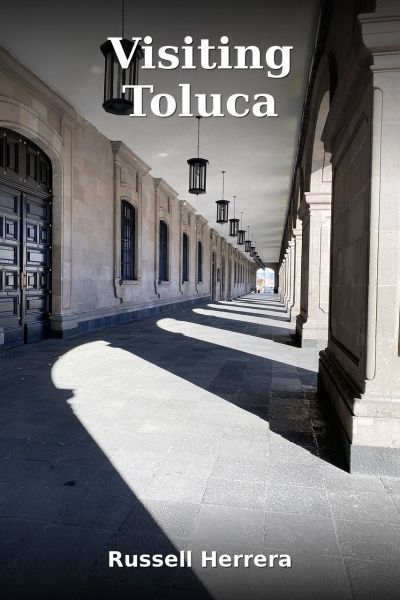
This is one episode in a much longer story. For the full account of the transformation of Toluca's Mercado 16 de Septiembre into the Cosmovitral, read “Visiting Toluca” by Russell Herrera on MixCache.com.
Please log in or create an account to leave a comment.
No comments yet. Be the first to say something.