
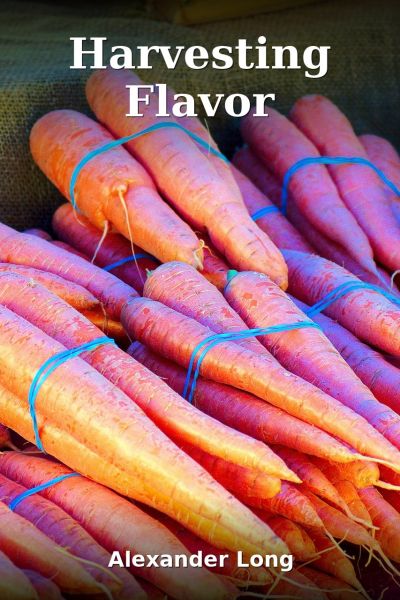
Supermarket shelves offer strawberries in January and asparagus in December, but convenience has dulled more than just our palates. Alexander Long's Harvesting Flavor: A Comprehensive Guide to Seasonal Cooking and Sustainable Eating frames seasonal cooking not as a passing trend but as a conscious practice that reconnects the kitchen to the land, the farmer, and the calendar. The book promises a practical path back to eating with the earth’s rhythms.
What the Book Is About
Harvesting Flavor is a 25-chapter nonfiction guide built around a simple premise: eating with the seasons improves flavor, nutrition, and environmental outcomes. The introduction frames the project as empowerment—giving home cooks the knowledge to select, prepare, and preserve foods at their peak rather than relying on out-of-season imports. Part I establishes the philosophy, covering seasonal rhythms, sustainable eating beyond the calendar, home gardening and foraging, and how to build a sustainable kitchen and community. Part II moves into technique, with dedicated chapters on roasting, grilling, sautéing, baking, slow cooking, and fermentation. Part III walks through the year season by season, from spring’s first asparagus to winter’s larder, and adds a chapter on identifying regional seasonality where you live. Part IV is a preservation toolkit, spanning canning, freezing, drying, jam-making, and fermentation, followed by chapters on reducing food waste, ethical shopping, root-to-stem and nose-to-tail cooking, understanding your foodprint, and advocating for food-system change. The intended reader is a home cook of any experience level who wants to eat with care and intention, whether in a city apartment or a rural kitchen.
Flavor Follows the Calendar
The opening chapter argues that “seasonal eating is, at its core, a return to the natural order of things,” and Long spends the next several chapters proving that flavor is the strongest reason to do it. He contrasts a January tomato—grown thousands of miles away, picked green, and gassed with ethylene—with a vine-ripened summer tomato full of “vibrant color, juicy texture, and complex sweetness.” The seasonal breakdown is concrete: spring brings tender greens, asparagus, peas, and rhubarb; summer delivers tomatoes, corn, berries, and stone fruit; autumn offers apples, squash, and root vegetables; winter relies on citrus, hardy greens, and stored roots. Long also cautions that seasonality “isn’t a one-size-fits-all concept” and devotes Chapter 15 to regional variation, urging readers to learn what actually grows near them rather than applying a national calendar blindly.
Cooking With What’s Actually There
Chapter 2 shifts from theory to market logistics, teaching readers how to shop at farmers’ markets without a rigid list. Long advises a “flexible plan,” suggesting that a shopper headed for zucchini might leave with vibrant peppers or an unfamiliar plum instead. He also champions imperfect produce: a bruised tomato or a twisted carrot “holds just as much, if not more, flavor than its perfectly sculpted counterpart” and helps reduce waste. Once home, the cooking philosophy stays simple. Chapter 6 explains roasting as a way to concentrate natural sugars, with the critical rule to “do not crowd the pan” so vegetables caramelize instead of steam. Chapter 8 covers sautéing and stir-frying as fast, high-heat methods that preserve crispness and color in tender spring and summer vegetables. Across these chapters, Long treats recipes as adaptable templates rather than strict commands, encouraging substitutions like roasted Brussels sprouts for out-of-season green beans.
Putting the Harvest by for Later
The book’s preservation section treats storage as an extension of flavor, not just a backup plan. Chapter 16 breaks down canning into water bath and pressure methods, stressing that the choice depends on a food’s acidity and that safety rules are non-negotiable. Long calls canning “a vital, rewarding, and deeply satisfying skill” for turning summer tomatoes into winter sauces. Chapter 17 describes freezing as a way to “hit the pause button” on freshness, with blanching recommended for most vegetables and flash-freezing for berries; vacuum sealing is presented as an add-on that removes oxygen and slows freezer burn. Chapter 18 covers drying and dehydrating as a means of “transforming the essence of fresh produce into concentrated bursts of flavor,” while Chapter 19 details jams, preserves, and syrups as sweet seasonal memories. Chapter 20 rounds out the toolkit with fermentation, walking readers through sauerkraut, kimchi, and herbal tonics as probiotic-rich ways to preserve vegetables.
Using Every Part of the Plant and Animal
Chapter 23 makes the case for “root to stem” and “nose to tail” cooking as thoughtful resourcefulness rather than deprivation. Long points out that carrot tops, often discarded, can be turned into “a vibrant pesto” or tossed into salads, while beet greens can be sautéed like chard and broccoli stems peeled and sliced for stir-fries or slaws. On the animal side, he recommends saving chicken carcasses and vegetable scraps to simmer into “a rich, nourishing bone broth,” and he highlights organ meats and lesser-known cuts such as oxtail and beef cheek as flavorful, economical options when slow-cooked. The chapter frames these practices as a way to extract maximum value from every purchase, reduce waste, and honor the resources that went into producing the food.
Sustainable Eating Is About More Than Seasons
Chapters 3 and 24 widen the ethical scope past seasonal timing. Long defines sustainable eating as a holistic view of the food journey, from soil and water to packaging and disposal. He discusses food miles—the distance food travels to reach a plate—as a tangible driver of greenhouse gas emissions, and notes that water-intensive crops such as almonds and avocados carry hidden environmental costs. Packaging is treated as another variable: minimal, reusable, or recyclable containers reduce landfill burden. Chapter 24 introduces the concept of a “foodprint,” the cumulative environmental impact of kitchen choices, and connects it to everyday decisions like eating more plant-based meals, choosing pasture-raised or ethically certified animal products, and selecting sustainable seafood. The book is clear that the goal is not perfection but incremental, informed improvement.
Taking Seasonal Cooking Beyond the Home Kitchen
The final section widens the lens from personal meals to community systems. Chapter 5 covers sustainable kitchen hardware—energy-efficient appliances, reusable storage, beeswax wraps, and water conservation—while Chapter 25 argues that “building community around food is an ongoing, evolving process.” Long suggests farmers’ markets, community supported agriculture (CSA) shares, food cooperatives, and potlucks as ways to turn individual habits into collective action. He also encourages teaching friends to can or ferment, volunteering with food banks and community gardens, and supporting policies that improve food access and reduce waste. The message is that seasonal eating scales up when it moves past a single pantry and into shared spaces, kitchens, and advocacy.
Who Should Read This?
Readers who want a reference for aligning meals with regional harvests—and who are willing to preserve surplus, cook with imperfect vegetables, and think about where their food comes from—will get the most from Harvesting Flavor. It suits home cooks, gardeners, foragers, and anyone interested in canning, freezing, or fermenting without treating those skills as mystical. The book also rewards readers who enjoy understanding why a technique works, not just how to execute it, because Long explains the science behind blanching, canning acidity, and fermentation without becoming academic. Readers seeking only a quick collection of seasonal recipes, or those uninterested in preservation, foodprints, or community advocacy, may find the book broader than they need. For anyone ready to treat the kitchen as a place of ongoing relationship with the seasons, Long’s guide offers concrete, season-by-season tools.
Read “Harvesting Flavor” on MixCache.com →
Please log in or create an account to leave a comment.
No comments yet. Be the first to say something.