
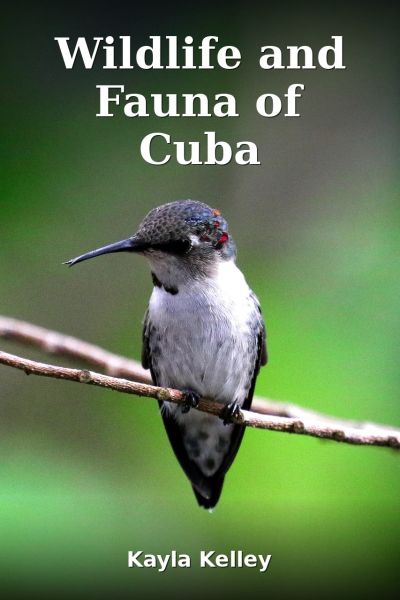
Amid the turquoise waters of the Caribbean, Cuba harbors a surprising wealth of creatures found nowhere else on Earth. From the venomous solenodon, a mammal that walks alongside dinosaurs in evolutionary time, to the bee hummingbird, the world’s tiniest bird, the island’s fauna tells a story of isolation and adaptation. Wildlife and Fauna of Cuba offers a detailed, chapter‑by‑chapter look at these wonders and the pressures they now endure.
The book is organized into twenty‑five chapters that move from Cuba’s geography and ecoregions through its major animal groups—mammals, birds, reptiles, amphibians, fish, and invertebrates—before turning to habitats, protected areas, and conservation threats. It blends natural history with data on endemism, species profiles, and the human impacts shaping the island’s ecosystems. Readers who enjoy field guides, travel narratives, or conservation science will find a comprehensive reference that assumes curiosity but no specialist background.
Endemism and Evolutionary Isolation
Chapter two lays out the central theme that defines Cuba’s natural story: its astonishing level of endemism. The text notes that "approximately half of Cuba’s plants and nearly one‑third of its vertebrate fauna are endemic—a living testament to the island’s unique evolutionary journey." This high proportion results from millions of years of isolation, which allowed ancestral colonizers to diversify into forms found nowhere else. The author explains concepts like the founder effect and adaptive radiation, showing how barriers such as mountain ranges and the surrounding sea further split populations and drove speciation. The chapter emphasizes that this endemism also makes species intrinsically vulnerable, as any threat to their limited habitat can jeopardize the entire global population.
Flagship Species: Solenodon, Bee Hummingbird, Painted Snails
Several chapters spotlight iconic creatures that embody Cuba’s evolutionary distinctiveness. Chapter four presents the Cuban solenodon as a "living fossil" whose lineage split from other placental mammals 73 to 76 million years ago, describing its venomous saliva, nocturnal habits, and the threats from habitat loss and invasive mongooses. Chapter ten introduces the bee hummingbird, "the smallest bird on Earth," weighing just 1.6 to 2 grams and capable of wingbeats up to 80 per second, detailing its iridescent plumage, nectar‑dependent lifestyle, and role as a pollinator. Chapter twenty celebrates the painted snails of the genus Polymita, calling their shells "miniature works of art" with vibrant bands of blues, greens, yellows, reds, oranges, whites, and blacks, while also warning that illegal collection for the souvenir trade threatens these arboreal grazers despite legal protections.
Ecosystems and Ecoregions: From Zapata Swamp to Coral Reefs
The book’s geographic foundation appears early, with chapter one mapping the archipelago’s mountains, plains, wetlands, and coastal zones. It describes the Zapata Swamp as "the largest wetland in the Caribbean" and a haven for birds, reptiles, and the ancient Cuban gar. Chapter twenty‑one dives into coral reefs, explaining how reef‑building coral polyps create habitats for sponges, crustaceans, mollusks, and echinoderms, and noting that Cuba’s reefs are "often cited as being in relatively better condition" than many Caribbean counterparts due to less coastal development and proactive marine protected areas. Chapter twenty‑two focuses on Jardines de la Reina, "The Queen’s Gardens," where shark densities are reported to be "ten times as many" as in surrounding waters, illustrating how effective protection can restore trophic complexity. Together, these sections show how varied habitats—from humid forests to arid cactus scrub—support the island’s endemic assemblages.
Conservation Challenges: Invasive Species, Habitat Loss, Climate Change
Chapters eight, fifteen, and twenty‑five outline the pressures on Cuba’s wildlife. Chapter eight details how the Indian mongoose, introduced in 1872 to control rats, became a "devastating predator" of native solenodons, hutias, amphibians, and reptiles, while feral cats, dogs, and pigs add further predation and habitat degradation. Chapter fifteen compiles the status of endangered reptiles and amphibians, noting that the Cuban crocodile faces "hybridization with the American Crocodile" and that the Monte Iberia eleuth frog is critically endangered due to its reliance on specific rainforest microhabitats. Chapter twenty‑five synthesizes these issues, identifying habitat loss from agriculture and infrastructure, overexploitation, pollution, and climate change as "the overarching and increasingly urgent threat," with rising sea levels, intensifying hurricanes, and ocean acidification endangering coastal wetlands, coral reefs, and species with narrow climatic tolerances.
Protected Areas and Hope
The final chapters offer a counterpoint, highlighting Cuba’s conservation infrastructure. Chapter twenty‑four describes the National System of Protected Areas (SNAP), noting that it covers "around 20 to 22 percent of the national territory" and includes national parks, biosphere reserves, and wildlife refuges that together protect "nearly 90 percent of native plant species" and "over 78 percent of endemic animal species." Chapter twenty‑two revisits Jardines de la Reina as a marine reserve where fishing is prohibited, allowing fish stocks to rebound and providing larvae to replenish reefs regionally. Chapter fifteen mentions captive‑breeding programs for the Cuban crocodile and iguana, and chapter twenty‑four stresses that continued research, enforcement, and community engagement are essential for these refuges to remain effective. The book thus presents a realistic picture: while threats are formidable, a network of protected areas and dedicated science offers a basis for optimism.
Who should read this book? It will appeal to anyone interested in island biogeography, tropical ecology, or conservation case studies—whether a traveler planning a visit to Cuba, a student of biology, or a general reader curious about how isolation shapes life. Those seeking a light coffee‑table picture book may find the depth of detail more than they need, but readers who appreciate well‑sourced natural history and want concrete takeaways about endemism, threats, and protection will find it rewarding.
Read “Wildlife and Fauna of Cuba” on MixCache.com →
Please log in or create an account to leave a comment.
No comments yet. Be the first to say something.