
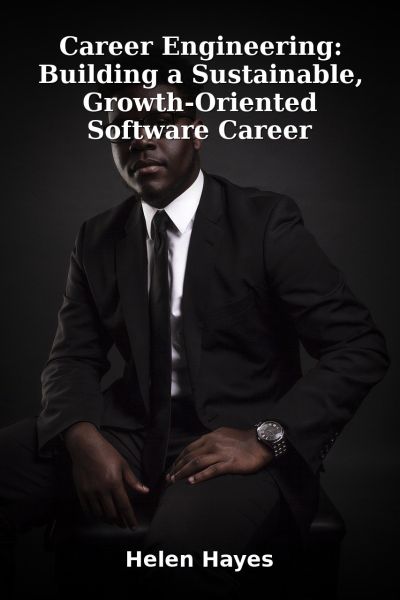
Most career advice for software engineers feels like scattered tips: learn this framework, network there, negotiate your salary. Helen Hayes' 'Career Engineering' takes a radically different approach - treating your professional journey as a system to be deliberately designed, optimized, and maintained, much like the software you build. This isn't another collection of anecdotes or generic self-help; it's a structured methodology for navigating tech's relentless evolution with intention and resilience.
The book positions itself as a comprehensive guide for software engineers at all stages who reject passive career drift. Organized into 25 chapters progressing from foundational mindsets to long-term sustainability, it covers technical skill development, soft skills mastery, mentorship dynamics, leadership transitions, burnout prevention, career pivots, and alternative paths. Hayes expects readers to engage actively with concepts like SMART goal setting, deliberate practice, and T-shaped skill development - treating career growth as an iterative engineering process requiring regular reflection and adjustment.
The T-Shaped Developer: Depth with Purpose
Hayes moves beyond the superficial specialization-vs-generalization debate by advocating for the T-shaped developer model as a strategic career foundation. This approach cultivates deep expertise in one or two domains (the vertical bar) while maintaining broad, functional knowledge across related areas (the horizontal bar). As she explains, "A T-shaped developer possesses deep expertise in one or two specific areas (the vertical bar of the 'T') and a broad understanding across many other related domains (the horizontal bar)." This isn't about collecting random skills but intentional balance: depth provides authority and problem-solving value, while breadth enables collaboration, adaptability, and resilience against obsolescence. The book details how to identify your vertical bar through passion and market demand, then systematically build both bars through targeted learning sprints, cross-functional collaboration, and side projects that stretch your comfort zone.
Deliberate Practice: Beyond Passive Learning
Chapter 8 dismantles the myth that mere experience equals growth, introducing deliberate practice as the engine of skill acquisition. Hayes distinguishes this from routine work or passive consumption: "This isn't just about showing up and coding; it's about focused, intentional effort aimed at pushing your boundaries, identifying weaknesses, and systematically improving your performance." The approach involves selecting projects slightly beyond current ability, seeking immediate feedback (through code reviews, algorithmic challenges on platforms like LeetCode, or teaching others), and crucially, reflecting on outcomes. For example, she describes how explaining a concept to a colleague "forces you to solidify your understanding and identify gaps in your knowledge" - transforming passive learning into active mastery. This mindset applies equally to technical skills (refactoring messy code for optimization) and soft skills (requesting specific feedback on communication style), making growth a continuous, measurable process rather than a hopeful byproduct of tenure.
Mentorship: Giving and Receiving Growth
Rather than treating mentorship as a one-way transfer of wisdom, Hayes frames it as a reciprocal developmental tool that benefits both parties at any career stage. She notes, "Mentorship isn't a monolithic relationship; it can take many forms, and your needs will likely evolve with your career stage." For mentees, the book advises seeking specific, situational guidance rather than demanding a formal mentor - asking for advice on a particular technical challenge or career decision builds organic relationships. For mentors, Hayes highlights how teaching reinforces expertise: "When you're tasked with explaining a complex technical concept to someone else, you're forced to articulate your understanding with clarity and precision." This process reveals knowledge gaps and refines the mentor's ability to simplify complex ideas - a critical leadership skill. The text emphasizes that effective mentorship requires active listening, empathy, and teaching learning strategies (not just solutions), ultimately strengthening the mentor's own problem-solving and communication abilities while accelerating the mentee's growth.
Work-Life Balance as Career Infrastructure
Chapter 22 reframes burnout prevention not as a luxury but as essential career maintenance - a perspective shift Hayes argues is critical for long-term sustainability. She states bluntly: "Ignoring this aspect of your professional journey is akin to designing a high-performance engine without a cooling system; eventually, it will overheat and seize." The book moves beyond vague "take breaks" advice to concrete strategies: setting explicit working hours and disengaging fully afterward, prioritizing sleep and physical activity as non-negotiable self-care, and proactively communicating workload concerns to managers before reaching breaking point. Hayes also addresses organizational factors, urging engineers to evaluate company culture during job searches for signs of psychological safety and genuine commitment to well-being. Crucially, she positions boundary-setting and self-care not as weaknesses but as professional necessities - the "coping mechanisms and alternative pathways" that make a career strategy resilient when inevitable challenges arise, much like error handling in robust software systems.
Long-Term Planning: Building Career Optionality
In the final chapter, Hayes rejects rigid five-year plans in favor of adaptive, iterative career engineering grounded in building optionality. She emphasizes that "Long-term planning mandates a lifelong commitment to learning—not just about the next hot framework, but about foundational computer science principles, new paradigms (like quantum computing or advanced AI architectures), and the evolving landscape of best practices." The approach involves regular self-assessment (asking "Am I still passionate about the problems I'm solving?"), cultivating transferable skills through the T-shaped model, and viewing career pivots as natural evolutions rather than failures. Hayes introduces "career optionality" as a key goal: developing a diverse skill set and reputation that opens multiple doors, allowing graceful navigation of industry shifts or personal changes without feeling trapped. This mindset treats career planning like software development - a continuous process of gathering feedback (from mentors, peers, and self-reflection), adjusting based on new data, and releasing updated versions of your professional trajectory as you grow.
Who should read this: Software engineers feeling stuck in reactive career patterns - those who constantly chase the next trend without a cohesive strategy will find Hayes' systems-thinking approach transformative. It's equally valuable for mid-career professionals considering leadership transitions or pivots, offering concrete frameworks for skill assessment, mentorship engagement, and sustainable growth. Engineers seeking only quick technical tips or promotion hacks should look elsewhere; this book demands active participation in self-reflection and deliberate practice. For anyone committed to building a resilient, growth-oriented tech career that evolves with the industry, 'Career Engineering' provides the blueprint - not as a prescriptive path, but as a toolkit for intentional professional design in an uncertain landscape.
Read “Career Engineering: Building a Sustainable, Growth-Oriented Software Career” on MixCache.com →
Please log in or create an account to leave a comment.
No comments yet. Be the first to say something.