
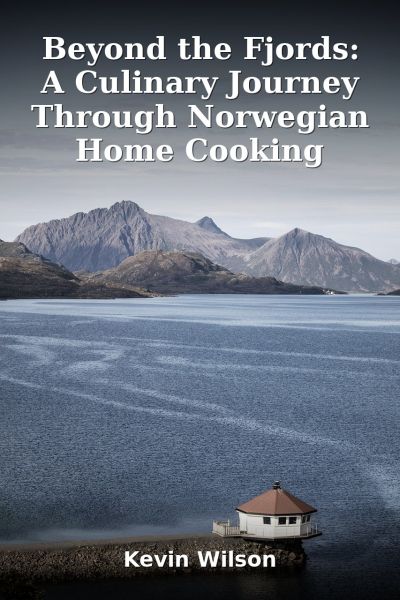
Norwegian home cooking has long been reduced abroad to a handful of stereotypes: pickled herring, brown cheese, and the infamous lutefisk. Kevin Wilson's Beyond the Fjords dismantles those clichés with a systematic, generous exploration of a food culture forged by extreme geography, centuries of preservation necessity, and a calendar of celebrations that still structures family life. The result is less a conventional cookbook than a cultural atlas with recipes as its coordinates.
What the Book Covers and How It's Organized
The book moves across 25 chapters that progress from foundational ingredients (fish, grains, dairy, berries, roots) through preservation techniques (smoking, curing, pickling, fermentation), then into a sweeping historical arc from Viking-age diets through medieval spice trade, 19th-century national romanticism, and urbanization. Regional chapters follow — Western fjords, Sami Arctic territories, central heartland valleys, mountain highlands, and Oslo's contemporary scene — before settling into everyday cooking categories: soups and stews, bread-butter-brunost rituals, home-style fish and meat mains, porridges, and sweet traditions. Seasonal chapters (spring foraging, summer salads, autumn game and mushrooms, winter warmers) close with a final look at New Nordic innovation. Each chapter weaves recipes with interview snippets, food history, and family stories, assuming a reader who wants context as much as instruction.
Preservation as Culinary Identity, Not Just Necessity
Chapter Two makes the case that Norway's preservation methods — drying, salting, smoking, fermenting — produced flavors so distinctive they outlasted the survival need that created them. The text notes that stockfish (tørrfisk) "remains a significant traditional food" even though refrigeration arrived in the 1950s, and that rakfisk, fermented trout, "is a delicacy often served during winter months, accompanied by potatoes, sour cream, and onions." Wilson traces klippfisk (salted dried cod) to Viking voyages and shows how root cellars (jordkjeller) and ice harvesting became "strategic" infrastructure. The chapter reframes these techniques as a deliberate flavor palette: cold-smoked salmon's "delicate, smoky flavor" and fenalår's months-long dry cure are now chosen for taste, not shelf life.
Christmas as a Regional Map, Not a Single Menu
Chapter Seven reveals that "there isn't one universal 'Christmas dinner' in Norway; instead, traditions vary significantly from east to west, and north to south." Eastern Norway centers on ribbe — "succulent roasted pork belly, slow-cooked until the skin is wonderfully crisp and crackling" — while Western Norway serves pinnekjøtt, "salted and dried lamb ribs, which are traditionally rehydrated and then steamed over birch sticks." Further north, lutefisk appears despite being "perhaps the most polarizing of Norwegian Christmas dishes." The chapter details the seven-cookie tradition (syv slag kaker), the almond-in-the-porridge game, and the nisse bowl left for the barn gnome, showing how each ritual encodes history: pinnekjøtt reflects "the region's farming traditions and its ingenious methods of food preservation," while the cookie spread demonstrates "a desire for warmth and indulgence during the darkest time of the year."
The Sami and Arctic Kitchen Built on Whole-Animal Ethics
Chapter Twelve positions Sami cuisine as a distinct, sophisticated system shaped by reindeer herding's zero-waste philosophy. "Every part of the reindeer is traditionally utilized, a practice that reflects a deep-seated commitment to sustainability and zero waste that predates modern environmental movements," Wilson writes. Bidos, the celebratory stew, is seasoned "only with salt, allowing the rich, earthy taste of the reindeer and the vegetables to shine through." Blood sausages, blood pancakes, and dried meat strips extend the animal's utility. The chapter also documents Arctic char from the Alta River, king crab from the Barents Sea, and cloudberries ("Arctic Gold") gathered from marshlands — ingredients that cannot be farmed, only foraged. Gáhkku, the flatbread baked over open fire, anchors meals the way flatbrød does farther south.
Porridge as the Oldest Continuous Dish in the Norwegian Diet
Chapter Nineteen traces grøt from Viking-era crushed grain and water to the festive rømmegrøt and Christmas risgrøt. The author calls it "quite possibly the oldest hot dish in the Norwegian diet" and recounts the 19th-century "Norwegian Porridge Feud" — public debates over proper technique. Vassgraut (water porridge) was daily fuel; rømmegrøt, made by "slowly cooking sour cream until butter fat separates, then whisking in flour to create a roux," was reserved for births, hay harvest, and Midsummer. The almond-in-the-risgrøt tradition — "whoever finds the almond wins a prize, traditionally a marzipan pig" — turns a simple rice porridge into a ritual. Even today, risgrøt appears as "a common and comforting meal throughout the year, often enjoyed as a warm Saturday lunch."
New Nordic as Evolution, Not Replacement
The final chapter frames the New Nordic movement as a continuation of Norwegian resourcefulness rather than a break from it. Chefs like Esben Holmboe Bang at three-star Maaemo serve "Norwegian langoustine or rømmegrøt with delicate shavings of reindeer heart," blending "traditional ingredients with innovative techniques." The movement's manifesto champions "purity, simplicity, freshness, ethics, and sustainability" — values already embedded in home cooking. Wilson notes that globalization has made "pasta, pizza, and tacos... as common as traditional meatballs and cod," with "Taco Fridays" now a "beloved modern tradition." Food festivals (Trøndelag, Gladmat, Matstreif) and the "short-traveled food" trend show the cuisine expanding while keeping its anchor: "a deep respect for natural resources, a commitment to quality ingredients, and the comforting ritual of shared meals."
Who Should Read This
Cooks who want reliable recipes for fårikål, krumkaker, or plukkfisk will find them, but the book's real value is for readers who treat food as a lens on history, geography, and identity. It rewards the curious generalist more than the technique-obsessed specialist — there are no step-by-step photos or knife-skill tutorials. Anyone planning travel to Norway will finish with a mental map of what to eat where and why. Readers seeking only glossy styling or quick weeknight meals may find the historical density heavy going; this is a book to read at the table, not just prop open at the stove.
Read “Beyond the Fjords: A Culinary Journey Through Norwegian Home Cooking” on MixCache.com →
Please log in or create an account to leave a comment.
No comments yet. Be the first to say something.