
The rusting shipping containers on Nauru’s plateau baked under the equatorial sun, converted into living quarters for people who had survived the ocean only to be stranded in legal limbo. On Manus Island, Papua New Guinea, families slept in vinyl tents beside a Lombrum naval base, their children growing up behind wire fences monitored by private security contractors. This was the Pacific Solution — Australia’s radical experiment in offshore processing — and for nearly two decades it has functioned as both a deterrent and a moral injury.
The Policy Takes Shape
In August 2001, the Norwegian freighter MV Tampa rescued 433 asylum seekers from a sinking Indonesian fishing boat in international waters. When the vessel approached Christmas Island, an Australian territory, the government refused entry, deploying special forces to board the ship. The standoff became a national crisis. Within weeks, Parliament passed legislation excising external territories from the migration zone, denying arrivals the right to apply for asylum on Australian soil. By September, the first group of asylum seekers was flown to Nauru, a phosphate-depleted island nation of 10,000 people, 3,000 kilometers northeast of Sydney. A second facility followed on Manus Island in 2002. The message was explicit: no one who arrived by boat would ever settle in Australia.
The architecture was deliberate. Australia funded construction, paid private firms to manage daily operations, and negotiated memoranda of understanding with Nauru and PNG that placed legal responsibility for asylum claims on those nations — neither of which had functioning refugee determination systems at the time. The arrangement was transactional: Canberra provided aid, medical support, and budgetary assistance in exchange for hosting duties. For Australia, the calculus was political. Boat arrivals had become a flashpoint in federal elections, and the government promised voters control.
The Deterrence Effect
By the narrow metric of arrivals, the policy worked. Annual boat arrivals dropped from 5,516 in 2001 to zero by 2008. The Rudd government briefly dismantled the system in 2008, only to restart it in 2012 after a surge in crossings and a spate of drownings at sea. The Abbott government then launched Operation Sovereign Borders in 2013, placing the military in charge of interceptions and turning boats back to Indonesia when possible. Between 2013 and 2019, only one venture reached the mainland. Smuggling networks, deprived of a viable product, largely collapsed. Australian officials cited the decline as proof that harsh measures save lives by discouraging dangerous voyages.
But the deterrence logic concealed a parallel system. Over 3,000 men, women, and children were transferred to Nauru and Manus between 2012 and 2018. Some spent more than seven years in facilities designed for temporary stays. Children were born and raised in detention, knowing no other world. Medical care was rationed; specialist treatment required ministerial approval. A 2018 Senate inquiry heard testimony of self-harm, suicide attempts, and deteriorating mental health so severe that doctors described the conditions as torture. The United Nations High Commissioner for Refugees concluded that Australia’s arrangements violated the Convention against Torture.
The Human Toll
By 2019, most detainees had been recognized as refugees. Yet they could not stay in Nauru or PNG — both countries lacked integration pathways and faced local resentment toward the newcomers. The United States agreed to resettle up to 1,250 people under a deal brokered by the Obama administration, but the process was slow and selective. Others were transferred to Australia for medical treatment under court order, only to be held in hotel rooms under guard, sometimes for years, their futures unresolved. As of 2023, dozens remained in limbo, neither returned nor resettled, their lives suspended by a policy that had achieved its political objective but left its human subjects in permanent suspension.
The financial cost was also staggering. Estimates place the cumulative expenditure above 10 billion Australian dollars — roughly 3 million per person detained. Contracts with security firms, healthcare providers, and logistics companies created a vested industry with incentives to maintain the system. Meanwhile, Nauru and PNG became dependent on Australian aid tied to the arrangement, complicating any unilateral exit.
The Unresolved Legacy
The Pacific Solution has been replicated in rhetoric if not in exact form. The United Kingdom explored similar offshore arrangements with Rwanda. The European Union funded Libyan coastguard interceptions and detention centers. The United States implemented "Remain in Mexico" policies that forced asylum seekers to wait in dangerous border cities. Each iteration borrows Australia’s core insight: sovereignty can be extended outward, and deterrence can be outsourced. But the Australian case also reveals the endpoint of that logic. When the boats stop, the people remain — in containers on a plateau, in tents beside a naval base, in hotel rooms in Melbourne and Brisbane, waiting for a resolution that the system was never designed to provide. The deterrence worked. The question, still unanswered, is what happens to the people it deterred.
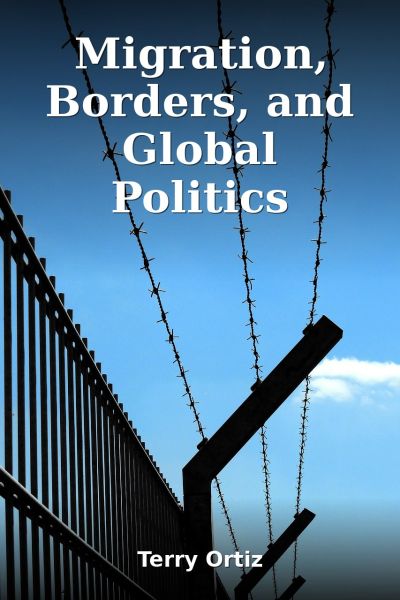
This is one episode in a much longer story. For the full account of migration policy and border control, read “Migration, Borders, and Global Politics” by Terry Ortiz on MixCache.com.
Please log in or create an account to leave a comment.
No comments yet. Be the first to say something.