
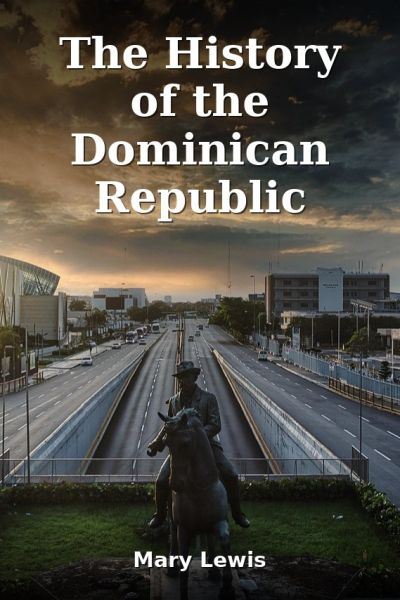
The following is an excerpt from “The History of the Dominican Republic” by Mary Lewis, available on MixCache.com.
Introduction
The Dominican Republic, nestled on the eastern portion of the island of Hispaniola, stands as one of the most culturally dynamic and historically significant nations in the Caribbean. Its vibrant society is the product of centuries of dramatic upheaval and transformation, shaped by indigenous heritage, European ambition, African endurance, and the persistent drive for self-determination and progress. To understand the present-day Dominican Republic is to embark on a journey through epochs marked by extraordinary challenges and remarkable resilience.
The island's earliest known inhabitants, the Taíno people, forged a deeply rooted civilization based on agriculture, communal living, and spiritual rites long before the name "Hispaniola" ever echoed across the Atlantic. Their world was forever altered in 1492 when Christopher Columbus set foot on their shores, inaugurating the era of European colonization. What followed was a period of profound trauma: the near-eradication of the Taíno, the imposition of foreign governance, and the importation of African peoples whose forced labor and cultural contributions would come to define the colonial experience.
Over subsequent centuries, Hispaniola became a stage for imperial rivalry, brutal exploitation, and revolutionary fervor. Spain and France vied for dominion, while the rise of sugar plantations and the transatlantic slave trade transformed both the population and the land itself. The Haitian Revolution, one of the most momentous events in the New World, swept across the island, catalyzing decades of political realignment, repeated annexations, and, ultimately, the emergence of a uniquely Dominican identity.
The 19th and 20th centuries brought their own trials: tumultuous wars of independence, cycles of civil unrest and authoritarian rule, foreign occupations, and the iron-fisted regime of Rafael Trujillo—a dictatorship as infamous for its cruelty as for its effect on national development. Yet the Dominican story is not merely one of suffering, but of tenacity. In the decades that followed Trujillo’s fall, Dominicans struggled—and often sacrificed—to build a more just, democratic society.
Today, the Dominican Republic is a country at once proud of its heritage and intent on forging a new path into the twenty-first century. Its history continues to inform contemporary debates over identity, governance, economics, and the often-complex relationship with its neighbor, Haiti. This book aims to provide a comprehensive account of the Dominican Republic from its earliest beginnings to the present day, revealing the rich layers of struggle, adaptation, fusion, and hope that define this remarkable nation.
“The History of the Dominican Republic: The Dominican Republic from its Earliest Beginnings to the Present Day” endeavors not only to document key events and figures, but to examine the forces—internal and external—that have shaped Dominican society across the span of more than five centuries. In exploring pre-Columbian cultures, the devastation of conquest, transformations under colonialism, revolutionary ferment, and the ongoing quest for democracy, this book lays bare the complexity and vitality at the core of the Dominican experience.
Through this narrative, readers are invited to witness the enduring spirit of a people who have continually redefined themselves and their nation, forging out of adversity a vibrant, multifaceted society. In tracing this long and sometimes turbulent journey, we gain not only a deeper understanding of the Dominican Republic's past, but also a sense of its enduring aspirations—socially, culturally, and politically—for the future.
Read “The History of the Dominican Republic” on MixCache.com →
Please log in or create an account to leave a comment.
No comments yet. Be the first to say something.