
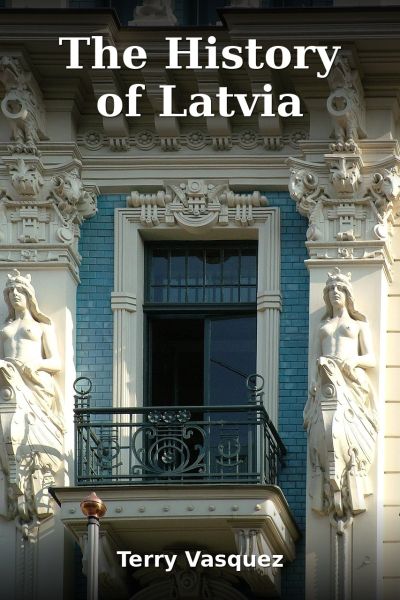
The following is an excerpt from “The History of Latvia” by Terry Vasquez, available on MixCache.com.
Introduction
Latvia’s history is a remarkable account of endurance, adaptation, and recurring quests for autonomy. Situated on the eastern shores of the Baltic Sea, Latvia has for millennia been at the crossroads of great historical forces and empires—its territory shaped by migratory currents, trade routes, wars, and revolutions. While often overshadowed by its larger neighbors, the story of Latvia is one of unique cultural richness, persistent resilience, and enduring identity.
From the first hunter-gatherer groups who settled after the last Ice Age to the emergence of the Baltic tribes, Latvia has been a site of continuous human habitation for thousands of years. The land’s fertile plains, dense forests, and strategic rivers fostered ancient communities whose trade in precious amber connected Latvia to distant civilizations. Those ancient roots remain visible in the Latvian language, one of the oldest living Indo-European tongues, and in the continued vibrancy of national folklore.
For much of its history, Latvia was shaped not only by its native peoples but by outside powers vying for dominance. The arrival of German crusaders in the 13th century heralded centuries of foreign rule, bringing both violence and integration. Castles, cities, and an urban culture flowered even amidst subjugation. Over the ensuing centuries, control of Latvia shifted among Swedes, Poles, Lithuanians, and Russians. Each regime left its indelible mark on the land, its governance, and the Latvian people.
Yet throughout these turbulent eras, there persisted a core Latvian identity—a sense of language, song, and community that transcended shifting political boundaries. In the 19th century, this spirit reawakened in a national movement that sought self-determination and cultural renewal. The creation of the Latvian Republic in 1918 was the fulfillment of long-held aspirations, but it, too, faced daunting trials through war, occupation, and tyranny in the devastating decades that followed.
The latter half of the 20th century brought new traumas: mass deportations, the Holocaust, and decades of forced assimilation under Soviet rule. However, the nation’s instinct for survival never waned. The late 1980s saw an extraordinary rebirth in the form of the Singing Revolution—a peaceful assertion of national rights and dignity, culminating in the restoration of Latvia’s independence.
Today, Latvia stands as a fully sovereign democracy and a proud member of the European Union and NATO. Its history is both cautionary and hopeful, a testament to the enduring strength of a small nation against formidable odds. This book seeks to chart the journey of Latvia from its most ancient origins through the crucibles of conquest and suppression, to the triumph of national rebirth and its modern place in the family of nations.
Read “The History of Latvia” on MixCache.com →
Please log in or create an account to leave a comment.
No comments yet. Be the first to say something.