
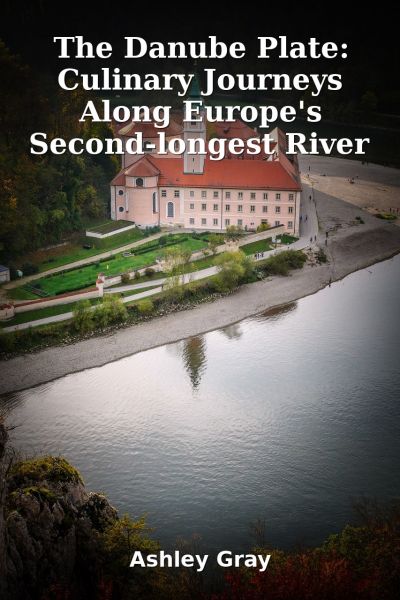
The following is an excerpt from “The Danube Plate: Culinary Journeys Along Europe's Second-longest River” by Ashley Gray, available on MixCache.com.
Introduction
The Danube River is more than a ribbon of water snaking across the European landscape—it is a living artery that connects forests, mountains, plains, and deltas, simultaneously dividing and uniting the people who settle along its banks. As Europe’s second-longest river, the Danube binds together a mosaic of cultures, languages, and histories. It has served as a border and a bridge, a source of sustenance and a highway for migration, trade, and stories. Nowhere are the fruits of this connectivity more flavorful or more varied than at the dinner table.
From its modest, spring-fed beginnings in Bavaria’s Black Forest to its sprawling maze-like delta that kisses the Black Sea, the Danube winds through ten countries and countless culinary worlds. Here, cuisine is a living memory of centuries of empire and occupation, migration and welcome, hardship and celebration. As the river flows, so too do tales of old Austro-Hungarian grandeur whisper through Viennese coffee houses, the scent of paprika drifts above Hungarian kitchens, and the sizzle of grilled meats mingles with laughter in Serbian riverfront towns.
This book is an invitation: to taste, to learn, and to connect. Along the Danube, we encounter dishes that are both deeply local and intriguingly global, shaped by the steady flow of ideas and ingredients. You will meet bakers in Regensburg and fishermen in the Danube Delta; listen to the memories of Hungarian grandmothers and the visions of young Romanian chefs; visit bustling markets, rural festivals, and cozy taverns where recipes have been passed down through generations. We will see how border crossings, both forced and voluntary, have left indelible marks on what is grown, cooked, and shared.
But this journey is not only about food—it is about the geography and the rhythm of the river itself, the natural abundance it provides, and the creative responses of cooks when political borders shift, harvests thin, or new neighbors arrive. You will find stories of resilience: how paprika came from the east and found a home, how a delicacy such as Sacher Torte became a symbol of Viennese sophistication, or how the simple act of grilling fish binds communities that speak different tongues but share the same water.
Each chapter blends storytelling with practical guidance, offering firsthand travelogues, family snapshots, clear recipes for home cooks, and the historical context that brings every plate alive. The Danube Plate is a passport to a region continually reinventing itself through its food: where tradition and innovation, memory and adaptation, coexist on every table.
Wherever you are—be it on a houseboat in Tulcea, in a Vienna café, or in your own kitchen—may these stories and flavors inspire both curiosity and connection, drawing you into the great, ever-flowing conversation that is life along the Danube.
Read “The Danube Plate: Culinary Journeys Along Europe's Second-longest River” on MixCache.com →
Please log in or create an account to leave a comment.
No comments yet. Be the first to say something.