
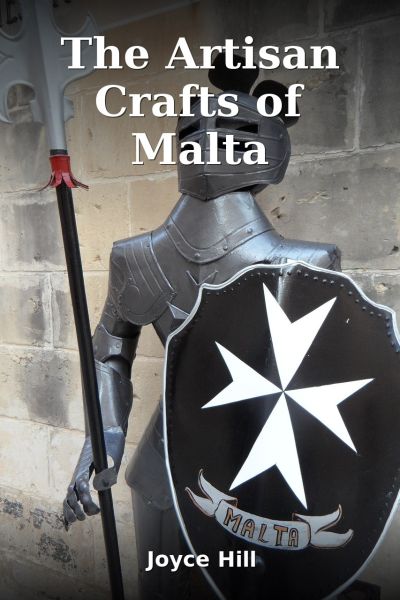
The following is an excerpt from “The Artisan Crafts of Malta” by Joyce Hill, available on MixCache.com.
Introduction
Malta’s artisan traditions—lace, filigree, stone carving and a constellation of complementary crafts—are woven into the island’s fabric as surely as Globigerina limestone underpins its streets. These crafts are not museum pieces; they are active, evolving practices carried out in small workshops, family homes and studio spaces from Valletta to Gozo. This book takes the reader behind the shopfronts and into the hands, tools and stories of the people who sustain those practices, while also offering practical guidance for anyone who wants to learn, commission, or responsibly support Maltese makers.
The first part of the book situates the crafts historically and materially: how patterns and techniques arrived with seafarers and settlers, how the peculiarities of Maltese materials—fine linen threads, high-purity silver and the island’s soft limestone—shaped local forms, and how centuries of contact with Italy, North Africa and Britain created distinctive Maltese expressions. Chapters 1–8 trace those origins and technical lineages, showing how past and present overlap in motifs like the Maltese cross, the wheat-ear stitch of galleria, and the sinuous scrolls of filigree.
Practical, hands-on knowledge forms the core of the middle sections. Chapters 9–17 examine associated crafts (glass, pottery, woven fibre), the anatomy of a working workshop, the tools and safety practices every beginner should know, and the concrete steps required to make a living from craft. For readers who want to try lacemaking, filigree or basic stone carving, Chapter 21 provides approachable starter projects and lists of resources; Chapter 22 explains how to commission and maintain handmade objects so they endure as heirlooms rather than souvenirs.
No account of Maltese artisanal life can ignore the pressures and opportunities of tourism, global markets and contemporary design. Chapters 13, 14 and 17 explore how makers negotiate tourist demand, adapt traditional forms to modern tastes, and balance authenticity with commercial viability. Equally important are the structural supports that allow crafts to survive: apprenticeships, formal and informal training routes, certification and craft associations (examined in Chapters 11, 18 and 24). These mechanisms are central to the book’s argument that skill transmission and fair economic models are as vital as technical mastery.
The final chapters broaden the frame from individual makers to community and policy. Case studies (Chapter 20) highlight exemplary workshops and makers who combine tradition with innovation. Chapters 23 and 25 look at cooperative models, ethical supply chains and municipal or national policies that can strengthen craft economies while respecting cultural identity. Throughout, the book stresses that sustaining Malta’s living traditions requires coordinated action: makers, cultural institutions, shoppers and policymakers all play a role.
Whether you are a curious traveller, a student of material culture, an aspiring maker, or someone seeking to support Malta’s craft economy, this book is a practical and human-centred guide. It records techniques and histories, but it is also a call to action: to learn, to buy thoughtfully, and to participate in the apprenticeships, markets and networks that will keep Malta’s lace, filigree and stone carving alive for generations to come.
Read “The Artisan Crafts of Malta” on MixCache.com →
Please log in or create an account to leave a comment.
No comments yet. Be the first to say something.