
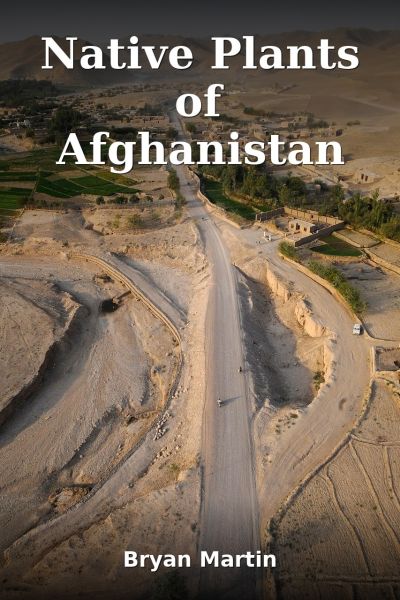
The following is an excerpt from “Native Plants of Afghanistan” by Bryan Martin, available on MixCache.com.
Introduction
Afghanistan is a land of profound contrasts, both in its topography and its cultural legacy. Though widely associated with its rugged mountains and arid landscapes, the country’s flora tells a story that is far richer and more complex. Nestled at the nexus of Central and South Asia, Afghanistan boasts a remarkable diversity of native plant life—one that has shaped local traditions, livelihoods, and even the global understanding of botany. Yet, in the tumult of recent decades, the nation’s native flora has hovered precariously between resilience and vulnerability, with many unique species now facing unprecedented threats.
Spanning barren deserts, subtropical valleys, windswept steppes, alpine meadows, and dense forests, Afghanistan's ecological diversity underpins a flora estimated at between 3,500 and 5,000 species of vascular plants. Up to a third of these species are endemic, found nowhere else on Earth—a testament to millennia of evolutionary adaptation and the country’s multitude of microclimates. The sheer variety of habitats, from the salt flats of the Turkestan plains to the treeline grasslands of the Hindu Kush, has fostered an extraordinary array of plant communities, each evolved to withstand the region’s harsh environmental conditions.
The native plants of Afghanistan are not only significant from a scientific and conservation standpoint; they are woven into the everyday fabric of Afghan life. Wild pistachios, aromatic herbs, and traditional medicinal plants sustain rural economies and provide critical resources for local communities. Beyond their economic and practical value, these plants are inextricably linked to Afghan cuisine, medicine, culture, and folklore. Yet, this intricate interplay between people and plants is increasingly under threat as deforestation, overgrazing, climate change, and decades of conflict converge to erode the country’s biological heritage.
This book is an effort to shed light on this rich but little-known world of Afghan native flora. Based on comprehensive scientific sources, local knowledge, and field research, it offers both a botanical overview and an exploration of the cultural, ecological, and economic roles of native plants. We will explore Afghanistan’s greatest botanical treasures—from ancient conifer forests and endemic irises to steppe shrubs and the famed wild tulips—while confronting the stark realities of habitat loss, species extinction, and the urgent need for conservation.
By examining the dominant plant families, habitat types, and unique species that compose Afghanistan’s flora, and by documenting both traditional uses and emerging economic opportunities, this book aims to provide a comprehensive resource for botanists, conservationists, students, and general readers alike. Ultimately, it is our hope that this guide will contribute to the preservation of Afghanistan's remarkable botanical legacy, encouraging renewed respect, research, and responsible stewardship of one of Asia’s most biodiverse and historically significant landscapes.
Read “Native Plants of Afghanistan” on MixCache.com →
Please log in or create an account to leave a comment.
No comments yet. Be the first to say something.