
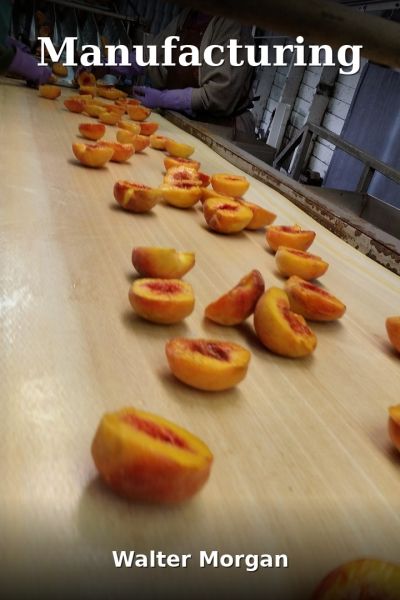
The following is an excerpt from “Manufacturing” by Walter Morgan, available on MixCache.com.
Introduction
Manufacturing stands as one of humanity’s most impactful and enduring enterprises. At its core, manufacturing is the deliberate transformation of raw materials into usable, often essential, objects—products that shape daily life, enable industry, and fuel economic development. Across history, the evolution of manufacturing has mirrored the broader journey of civilization, progressing from the primitive handiwork of stone tools to today’s connected, data-driven, and highly automated factories. This book sets out to explore the manifold dimensions of manufacturing as a global industry, providing a comprehensive portrait that spans eras, continents, and technologies.
The roots of manufacturing run deep, stretching back to the workshops of early humans crafting implements from stone, metal, and clay. Each age brought incremental innovations, with pivotal moments like the Industrial Revolution fundamentally altering how goods were produced and distributed. These transformations not only revolutionized industry but also reshaped societies, migration patterns, and even our very concept of work. As we trace these developments, it becomes clear that manufacturing is not just a technical pursuit; it is a force that has propelled human progress and shaped the contours of modern life.
In the contemporary era, manufacturing remains a linchpin of the global economy, responsible for trillions of dollars in output and millions of jobs. It is the engine behind urbanization, the backbone for global supply chains, and the laboratory for countless technological innovations. Yet the industry faces extraordinary volatility: economic cycles, shifting consumer demands, resource constraints, and the twin pressures of globalization and localization all factor into how and where things are produced. These complexities demand nimble adaptation and strategic vision from both policymakers and business leaders.
Today’s manufacturing environment is characterized by rapid transformation. Industry 4.0, with its confluence of artificial intelligence, smart sensors, automation, and data analytics, is leading a new revolution in how goods are designed and made. Driven by the need for greater agility, efficiency, and sustainability, manufacturers are reimagining their processes and business models. The digital interconnectedness of machines and supply networks allows for real-time decision making, predictive maintenance, and unprecedented customization. However, this progress is not evenly distributed across the world, and significant disparities remain between regions and economies.
As environmental and societal pressures mount, manufacturing’s responsibilities extend beyond economic growth. The sector is under intense scrutiny for its environmental footprint, spurring investment in green technologies, circular economy strategies, and efforts to decarbonize production. At the same time, a new global consuming class is emerging, demanding not only fresh products but also transparency, sustainability, and adaptability. The industry’s ability to innovate in the face of these challenges will be instrumental in shaping a more resilient and inclusive global economy.
This book aims to shed light on the manufacturing industry’s vibrant past, dynamic present, and possible futures. By examining its history, mapping current trends, and analyzing the forces shaping its trajectory, we seek to provide readers—business professionals, policymakers, students, and curious minds alike—with a nuanced and compelling understanding of manufacturing as a global phenomenon. Whether you are an industry veteran or a newcomer to the topic, this exploration will reveal the indispensable role manufacturing plays in our interconnected world.
Read “Manufacturing” on MixCache.com →
Please log in or create an account to leave a comment.
No comments yet. Be the first to say something.