
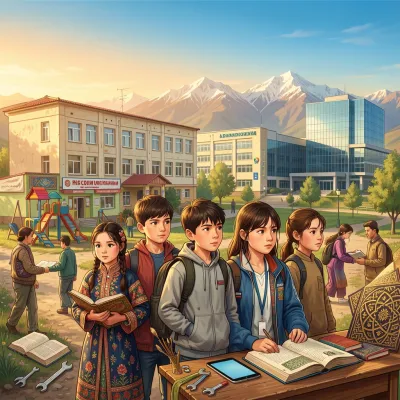
The following is an excerpt from “Education In Tajikistan” by Marie Clark, available on MixCache.com.
Introduction
Education is a cornerstone of societal development, a powerful catalyst for individual growth, and a key determinant of a nation's future. In Tajikistan, a country rich in history and culture nestled in the heart of Central Asia, the educational landscape reflects a complex interplay of historical legacies, Soviet-era influences, post-independence reforms, and contemporary global trends. This book, "Education In Tajikistan: A Comprehensive Overview from Early Childhood to Higher Education," embarks on an exhaustive exploration of this vital sector, offering readers an in-depth understanding of its evolution, current structure, and future trajectory.
Tajikistan's educational journey is a compelling narrative, marked by periods of significant transformation. From the traditional schooling practices prevalent before the 20th century to the standardized and comprehensive system established during the Soviet era, and subsequently, the independent nation's efforts to forge its unique educational identity, each phase has left an indelible mark. This book delves into these historical foundations, providing context for the present-day system and illuminating the enduring impact of past policies and philosophies. We examine how a nation, having gained independence, has navigated the complexities of reforming its educational framework to meet the demands of a rapidly changing world while preserving its distinct cultural heritage.
The scope of this comprehensive overview spans the entire spectrum of learning, from the foundational experiences of early childhood education to the specialized pursuits of higher education. We begin by exploring the critical role of nurseries and kindergartens in shaping young minds, then transition through the various stages of general education, from primary grades to basic and secondary schooling. Beyond the traditional academic pathways, the book also dedicates considerable attention to vocational education and training, recognizing its crucial role in workforce development. Furthermore, a significant portion is devoted to higher education, dissecting the intricacies of universities and institutes, admission processes, and the demographic shifts within student populations.
Beyond structural analysis, "Education In Tajikistan" delves into the multifaceted aspects that define a robust educational system. We investigate curriculum development and the establishment of educational standards, the vital importance of teacher training and continuous professional development, and the financial mechanisms that underpin the entire enterprise through detailed examination of funding and budget allocation. The pervasive influence of government policy is also explored, alongside the increasing significance of international cooperation and exchange programs that connect Tajikistan's educational system to global networks. The book also confronts the persistent challenges within Tajik education, from issues of gender equality and disparities between rural and urban areas to the crucial provision of special education and inclusive practices.
In an increasingly interconnected world, technology's impact on education is undeniable, and this book scrutinizes its role in Tajikistan's classrooms and learning environments. We also examine the complexities of language of instruction and the growing prevalence of bilingual education, as well as the emerging landscape of private education and its evolving contribution. The concept of lifelong learning and adult education is addressed, highlighting efforts to foster continuous skill development and knowledge acquisition throughout an individual's life. Ultimately, this book aims to provide not only a detailed snapshot of the present but also a forward-looking perspective on the strategic development of education in Tajikistan, exploring research, innovation, and the critical link between educational attainment and employment outcomes.
This book is intended for a diverse audience, including policymakers, educators, researchers, students, and anyone with a vested interest in understanding the dynamics of education in Central Asia. By offering a rich tapestry of information, analysis, and insight, "Education In Tajikistan" seeks to contribute to a deeper appreciation of the country's efforts to educate its populace and to inspire further dialogue and collaboration in fostering a brighter future for all learners.
Read “Education In Tajikistan” on MixCache.com →
Please log in or create an account to leave a comment.
No comments yet. Be the first to say something.