
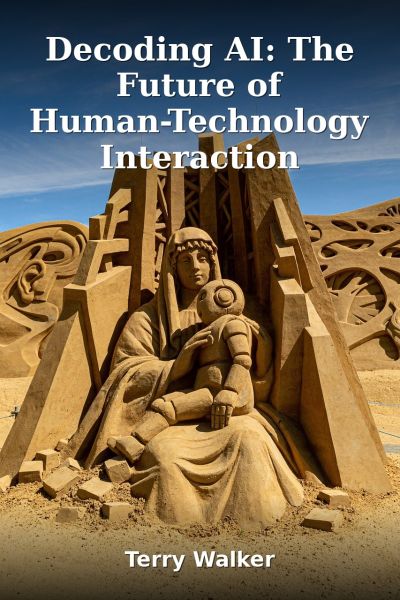
The following is an excerpt from “Decoding AI: The Future of Human-Technology Interaction” by Terry Walker, available on MixCache.com.
Introduction
Artificial Intelligence (AI) stands as a defining force of the 21st century, fundamentally reshaping the way we engage with technology and, by extension, with each other. No longer confined to the pages of science fiction, AI has emerged as a central player in our digital age—powering voice assistants, diagnosing diseases, optimizing transportation, and shaping the flow of global information. As machines grow more capable and their influence more pervasive, understanding the essence, capabilities, and implications of AI becomes not only a fascinating intellectual pursuit but a societal imperative.
The story of AI is one of visionary ambition, remarkable technological progress, periodic setbacks, and stunning breakthroughs. From its early conceptual roots in the mid-20th century to the explosive advances of recent decades, AI has evolved through cycles of optimism and disillusionment, culminating in today’s era of deep learning, ubiquitous machine intelligence, and rapidly expanding real-world applications. This evolution has been spurred by advances in computing power, the availability of massive datasets, and new methods that allow machines to learn, adapt, and even create.
Yet the rise of AI is not merely about technical achievement; it is a human story. AI now touches nearly every facet of our daily lives, often in ways that are invisible yet profound. Smart assistants tailor recommendations to our tastes, healthcare systems harness algorithms for faster, more accurate diagnoses, and factories employ intelligent robots to manufacture goods efficiently. Education, finance, agriculture, and entertainment—no sector remains untouched by the promise of AI-driven transformation.
But alongside opportunity come critical challenges and deep ethical questions. As AI systems are entrusted with sensitive data and consequential decisions, concerns around privacy, fairness, transparency, and accountability intensify. The impact of AI on employment and the economy stirs conversations about inequality, reskilling, and the very nature of meaningful work. Moreover, as capabilities advance, new dilemmas emerge around autonomy, safety, and the global governance of increasingly powerful algorithms.
This book, “Decoding AI: The Future of Human-Technology Interaction,” is designed as a comprehensive guide for anyone seeking to understand what AI truly is, how it evolved, where it serves us today, and where it may lead us tomorrow. We will journey through the core technical concepts—from machine learning to natural language processing and robotics—while grounding our exploration in vivid real-world examples and expert insights. We’ll investigate AI’s role across key industries, unpack pressing ethical considerations, and envision the transformations ahead.
By the end of this book, you will possess not only a concrete understanding of how AI works, but also a nuanced perspective on its opportunities and challenges—empowering you to engage thoughtfully with the AI-driven world unfolding before us. Whether you are a tech enthusiast, business leader, policymaker, or simply a curious observer, this book aims to illuminate the intricate tapestry of human-technology interaction that defines our present and will shape our shared future. Together, let us decode AI and its profound impact on our lives.
Read “Decoding AI: The Future of Human-Technology Interaction” on MixCache.com →
Please log in or create an account to leave a comment.
No comments yet. Be the first to say something.