
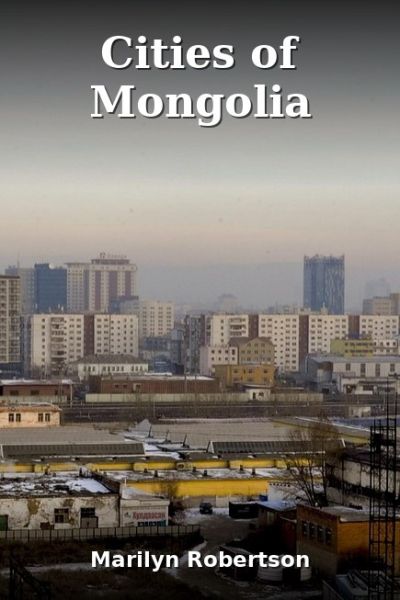
The following is an excerpt from “Cities of Mongolia” by Marilyn Robertson, available on MixCache.com.
Introduction
Mongolia, a vast expanse of steppe, mountains, and desert at the heart of Asia, is widely known for its legendary nomads, Genghis Khan, and the sweeping beauty of its untouched landscapes. Yet, hidden within this narrative of pastoral tradition is a lesser-known but equally compelling story: the emergence, growth, and transformation of Mongolia’s cities. As the country enters the twenty-first century, urban Mongolia has become both the engine of modernity and a crucible for the nation’s enduring cultural identity, facing opportunities and challenges unparalleled in its history.
Despite the general image of Mongolia as a land of endless horizons and flowing herds, the roots of urban life here stretch back over two thousand years. From the ancient towns of the Xiongnu and Uighur periods, through the storied rise of Karakorum—the imperial capital founded by Genghis Khan—to the planned cities of the socialist era, Mongolia’s urban landscape has always been shaped by the interplay of local tradition and foreign influence. Today, cities like Ulaanbaatar, Erdenet, and Darkhan are not just geographical centers but vital nexuses of economy, education, culture, and political power.
The contemporary urbanization of Mongolia is rapid and profound. Since the 1990s, the country has witnessed an unprecedented migration from countryside to city, with nearly three-quarters of its population now living in urban areas. Ulaanbaatar, in particular, has burgeoned into a sprawling metropolis that accounts for nearly half of the national population, its skyline bristling with new developments while its outskirts grow with vast districts of traditional gers. This complex urban growth brings immense promise, fueling economic development, creating jobs, and fostering an explosion of creativity and multicultural life. At the same time, it brings daunting obstacles: severe air pollution, traffic congestion, infrastructure strain, and the social challenges of rapid demographic change.
Yet the dynamism of Mongolian cities is not just measured by statistics. Visitors to these centers will encounter vivid contrasts: glittering high-rises rise beside old Soviet blocks, bustling markets pulse with the energy of new commerce, and festivals—like the spectacular Golden Eagle Festival in Ölgii—bridge past and present with pageantry and pride. Urban Mongolia reveals a society balancing ancestral heritage with aspiration and innovation, where nomadic spirit and urban ambition coexist, often uneasily, but unmistakably.
This book embarks on a journey through the great cities of Mongolia—from the iconic capital to remote cultural heartlands—exploring their history, present-day life, and future. Whether you are a traveler planning your first visit, a student of history, or simply a curious reader, 'Cities of Mongolia' aims to be both a guide and a narrative, mapping a vibrant urban world that complements the country’s celebrated wilds. Join us as we traverse the streets, alleys, and open squares of Mongolia’s urban centers, discovering the remarkable cities that are shaping the nation’s destiny.
Read “Cities of Mongolia” on MixCache.com →
Please log in or create an account to leave a comment.
No comments yet. Be the first to say something.